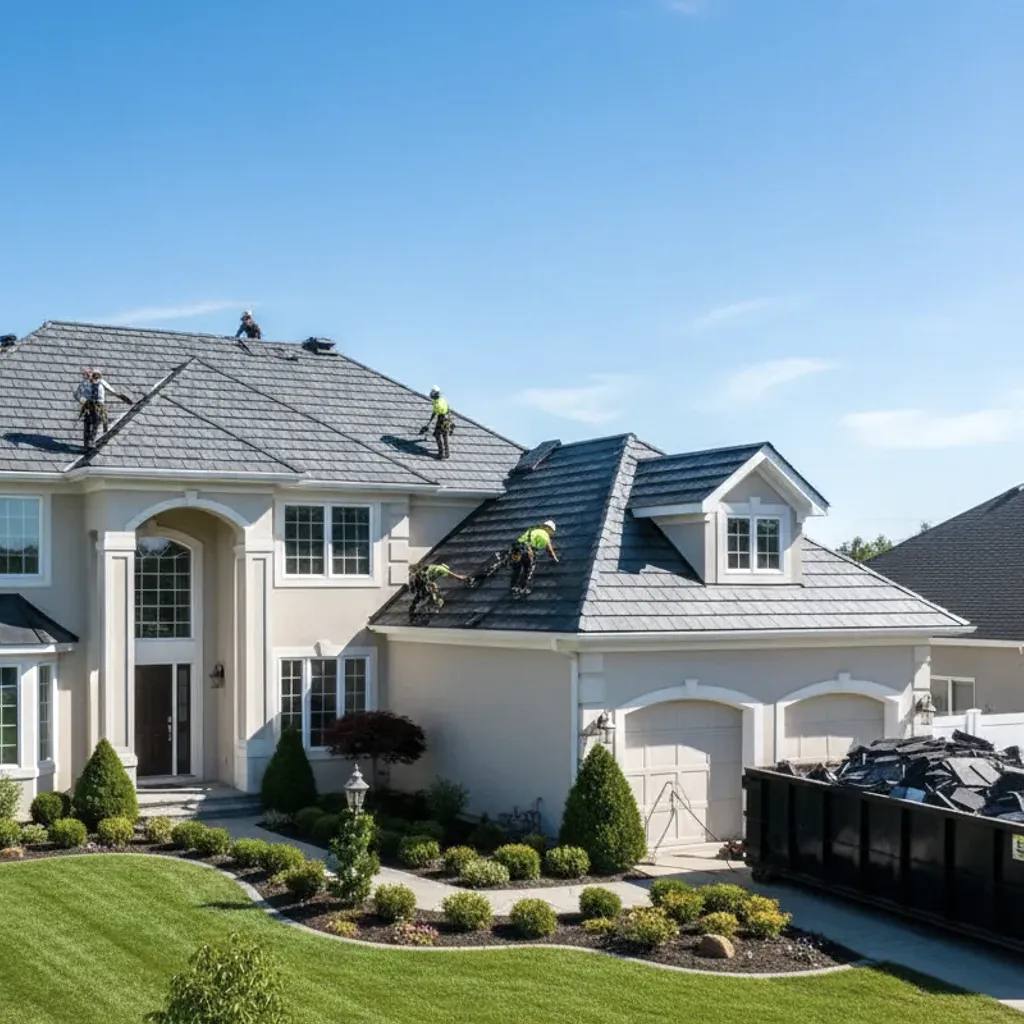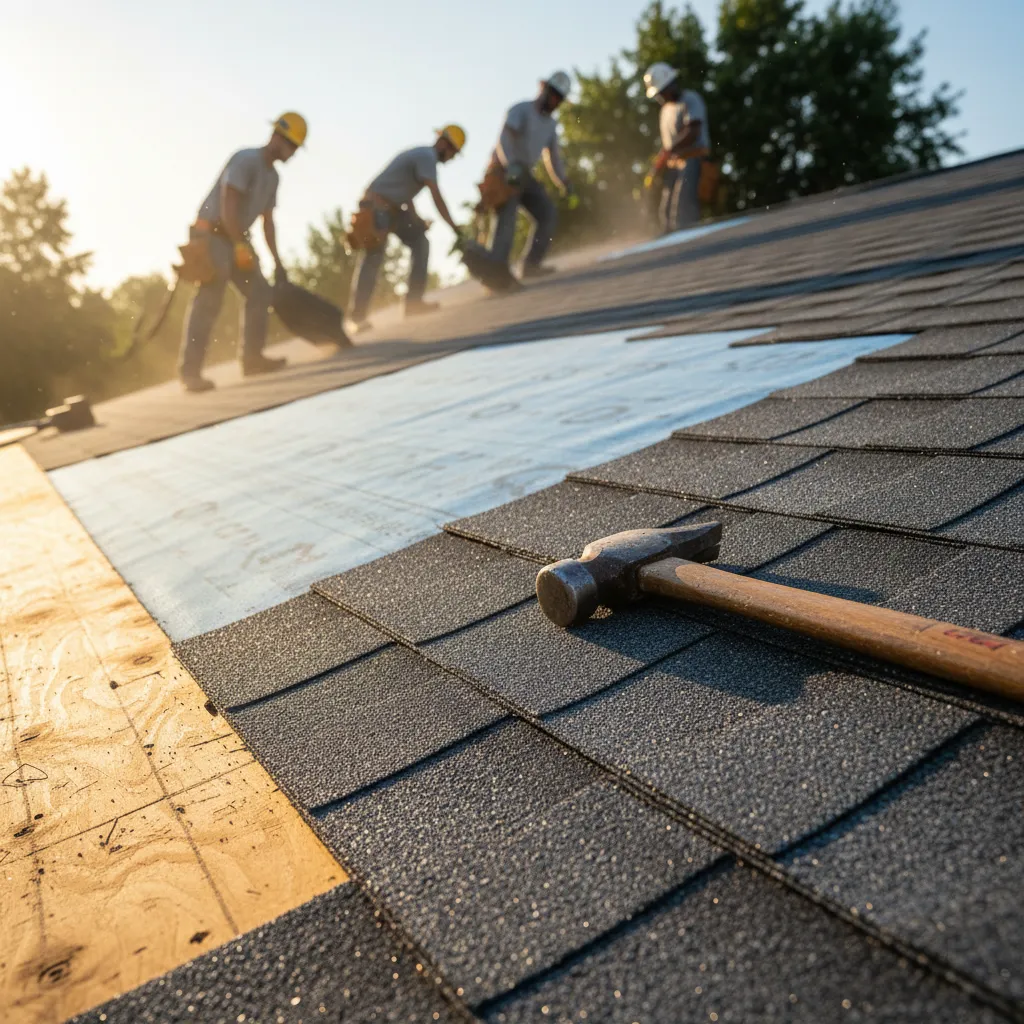
It is easy to forget about your roof. It sits up there quietly doing its job, protecting your home from Georgia’s intense summer sun, spring hailstorms, and winter freezes. But like every part of your home, it has a finite lifespan. Ignoring the warning signs of a failing roof does not just risk water damage — it can lead to structural problems, mold, and repair bills that dwarf the cost of a timely replacement.
So how do you know when repairs are no longer enough? After decades of inspecting roofs across Cherokee County, Ellijay, and the surrounding North Georgia mountains, our team has identified seven telltale signs that almost always point to a full roof replacement.
1. Your Roof Has Passed the 20-Year Mark
This is the most straightforward factor. A standard asphalt shingle roof in Georgia lasts 20–25 years for three-tab shingles and 25–30 years for architectural (dimensional) shingles. If your roof is approaching or has surpassed that range, it is likely nearing the end of its effective life — even if there are no obvious problems visible from the ground.
Here is why age matters so much in Georgia specifically: our climate subjects roofing materials to extreme UV radiation in summer (degrading the asphalt binder), thermal cycling year-round (expansion and contraction loosens nail seals), and occasional hail and high winds that accelerate wear. A roof rated for 30 years in a mild northern climate may only deliver 22–25 years of reliable service in North Georgia.
What to check: If you do not know your roof’s age, look for installation records in your home purchase documents, or ask your roofer to estimate age based on the shingle type and condition during an inspection.
2. Curling, Clawing, or Buckling Shingles
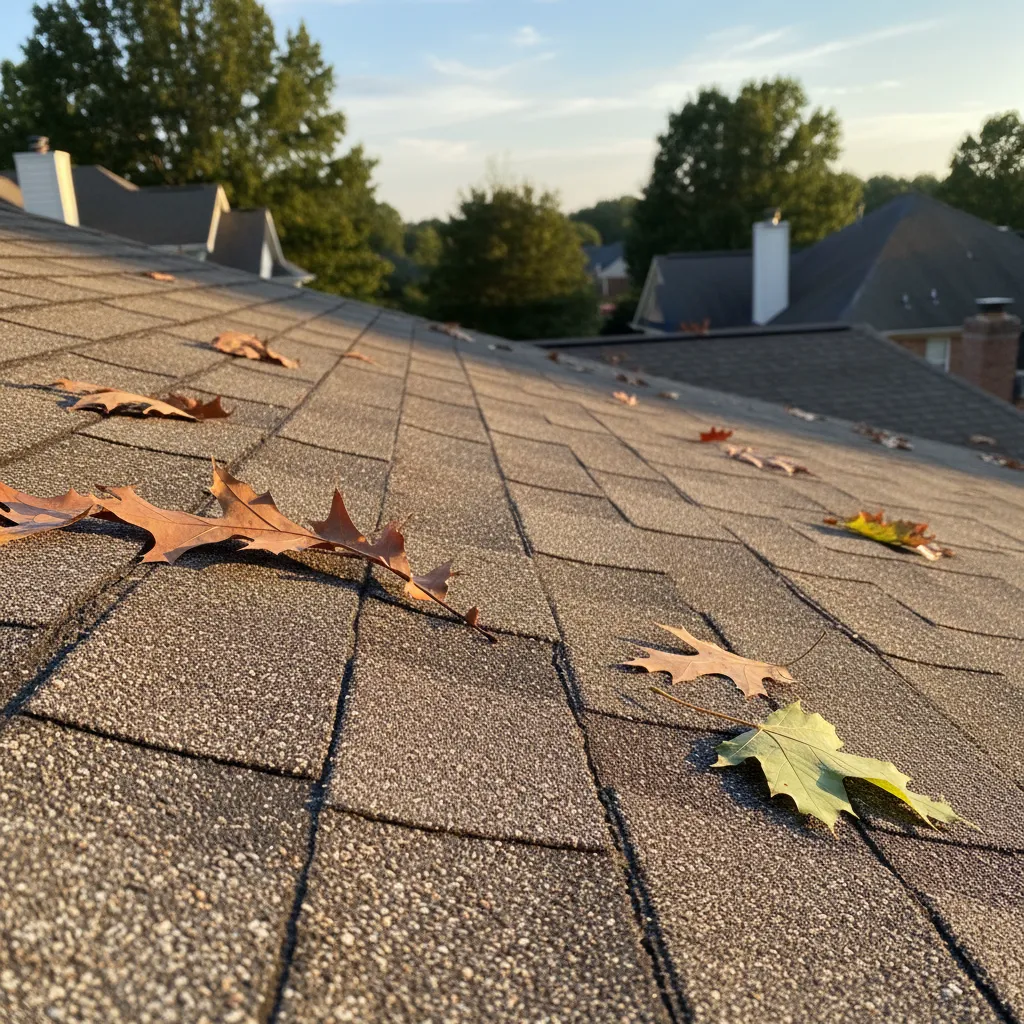
Take a look at your roof from ground level, using binoculars if needed. Are the shingle edges curling upward? Are the center tabs popping up in a “claw” shape? Do you see any shingles that appear wavy or buckled?
These deformations happen when the asphalt mat dries out and loses flexibility after years of UV exposure. Once a shingle curls, it can no longer lay flat against the roof surface, creating gaps where wind-driven rain can penetrate. Curling also makes shingles far more vulnerable to wind uplift — a curled shingle can be torn off in winds as low as 40–50 mph, well below the threshold for a straight-line storm.
If curling is limited to a small section (5–10 shingles), a targeted repair may suffice. But when you see curling across multiple slopes of the roof, it signals a systemic material failure that repairs cannot reverse.
3. Widespread Granule Loss
The tiny granules on your asphalt shingles are not just decorative — they are the primary shield against UV radiation. As granules erode, the exposed asphalt mat heats up faster, dries out more quickly, and cracks. It is a self-accelerating cycle: the more granules you lose, the faster the remaining shingles deteriorate.
Signs of advanced granule loss:
- Heavy granule accumulation in your gutters and at the base of downspouts, especially after rain
- Visible dark “bald spots” on the shingle surface where the black asphalt mat is exposed
- Uneven coloration across the roof, where some areas appear significantly darker or lighter than others
Some granule shedding is normal on a new roof during the first year. But on a roof that is 15+ years old, heavy granule loss is a clear indicator that the shingles are in their final years. Once roughly 30–40% of the granule coverage is gone from a section, that section has effectively zero UV protection and will fail rapidly.
4. Cracked or Broken Shingles
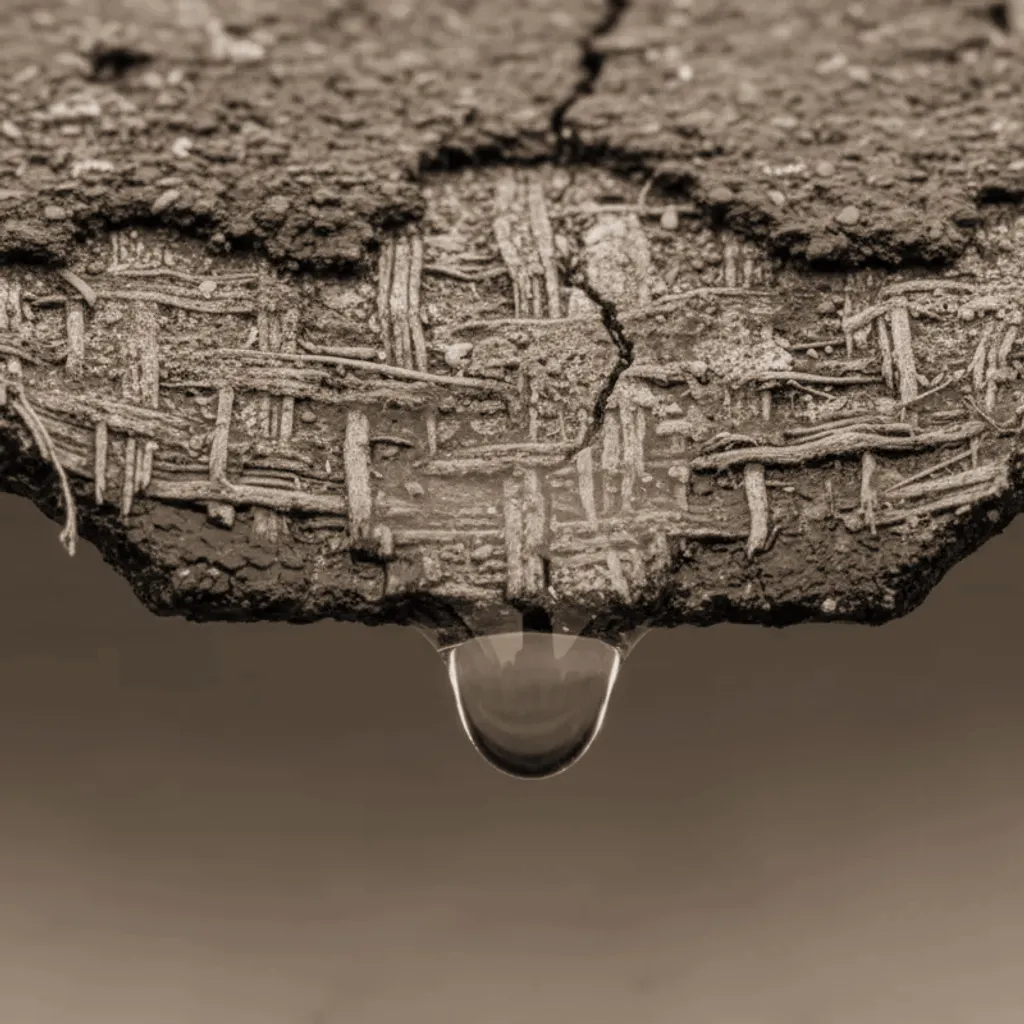
Cracked shingles are typically caused by years of thermal shock — the daily expansion and contraction cycle as temperatures swing from 30°F overnight to 70°F by afternoon during Georgia’s transitional seasons. Hail impact and high winds also cause cracking, sometimes in ways that are not visible from the ground.
A few cracked shingles in an isolated area can be repaired for $150–$400. But when you see cracking scattered across your entire roof — on the front slope, the back, around vents, and along edges — it indicates the shingle material itself has become brittle throughout. Each crack is a direct path for water to reach the decking underneath.
The repair-vs-replace math: If you are spending $300 or more per year on spot repairs for cracked, missing, or damaged shingles, you have likely reached the point where a replacement is the more cost-effective long-term investment. A new roof eliminates the compounding repair cycle and comes with a manufacturer’s warranty of 25–50 years.
5. A Sagging Roof Deck
This is the most serious sign on this list and requires immediate professional attention. Stand at the curb and look at the ridgeline and slopes of your roof. If you see a visible dip, droop, or “saddleback” in what should be a straight, clean line, your roof deck or the structural supports beneath it may be compromised.
Sagging is usually caused by:
- Prolonged water intrusion that has rotted the plywood or OSB decking
- Inadequate structural support (undersized rafters for the span)
- Excessive weight from multiple shingle layers or ice/snow accumulation
A sagging roof is not a repair situation — it almost certainly requires a full replacement, and the underlying structural issue must be addressed during the process. Decking replacement typically adds $1,000–$3,000 to a replacement project, depending on how many sheets need to be swapped, but it is essential for a safe, long-lasting new roof.
6. Daylight Visible Through the Roof Deck
During your next attic visit, turn off all lights and let your eyes adjust. If you can see pinpoints of daylight coming through the roof deck, those are active or imminent water entry points. Each point of light represents a gap — a missing shingle, a cracked decking joint, or a failed seal — that will funnel water into your home during the next rain.
While you are up there, check for these additional warning signs:
- Spongy or soft spots in the decking when you press on it (indicates moisture-damaged wood)
- Dark staining on the underside of the decking, even if no active dripping is present
- Mold or mildew on rafters or decking, which confirms prolonged moisture exposure
A single soft spot near a plumbing vent might be a localized repair. But multiple soft spots, widespread staining, or visible mold across a large area are strong indicators that the deck has sustained enough damage to warrant a full tear-off and replacement.
7. Recurring Leaks and Mounting Repair Bills
Perhaps the most telling sign is not something you see on the roof itself — it is the pattern in your repair history. If you have had your roofer out two or more times in the past 12 months, or if you are seeing new water stains in different areas of your home after each storm, your roof is telling you something: individual repairs are no longer keeping up with the rate of failure.
A roof is a complete, integrated system. When one section fails, it puts additional stress on adjacent areas — accelerating wear on flashings, sealants, and surrounding shingles. At a certain point, repairing individual failures becomes an expensive game of whack-a-mole. The cost-effective answer is replacing the entire system.
The tipping point: If your annual repair costs are approaching $500 or more, compare that against the monthly cost of financing a full replacement ($8,000–$15,000 over 5–10 years works out to roughly $100–$200/month). In most cases, the replacement pays for itself within 3–5 years in eliminated repair costs, improved energy efficiency, and increased home value.
The Repair vs. Replacement Decision
Not every issue means a full replacement. Here is a general framework:
| Situation | Likely Solution | Estimated Cost |
|---|---|---|
| 1–2 missing or damaged shingles | Spot repair | $150–$400 |
| Isolated leak at a single penetration | Targeted repair | $300–$800 |
| Localized damage from one storm event | Section repair | $500–$2,000 |
| 3+ signs from this list present | Full replacement | $8,000–$15,000 |
| Sagging deck or structural concerns | Replacement + structural work | $10,000–$20,000+ |
The only way to know for certain is a thorough, honest inspection by a qualified roofing professional. Not a drive-by glance from the ground — a comprehensive assessment that includes the roof surface, flashings, decking condition (from the attic), gutters, and ventilation.
When to Call a Professional
If you have noticed any of the signs above, the best course of action is to schedule a professional, no-obligation roof inspection before the next storm season. A trained expert can give you an honest assessment of your roof’s remaining life and help you decide whether a repair is sufficient or a replacement is the smarter investment.
Our team brings over 40 years of combined roofing experience serving homeowners across Cherokee County, Ellijay, and Jasper. We provide detailed inspection reports, transparent pricing, and zero pressure — just straight answers about your roof’s condition.
Ready to know for sure? Contact True Hand Roofing for a free, comprehensive roof inspection, or get an instant estimate to see replacement costs for your specific roof.
Related reading: What to Expect During Your Roof Replacement | How Much Does Roof Replacement Cost in Georgia? | 5 Overlooked Problems Found During a Professional Roof Inspection