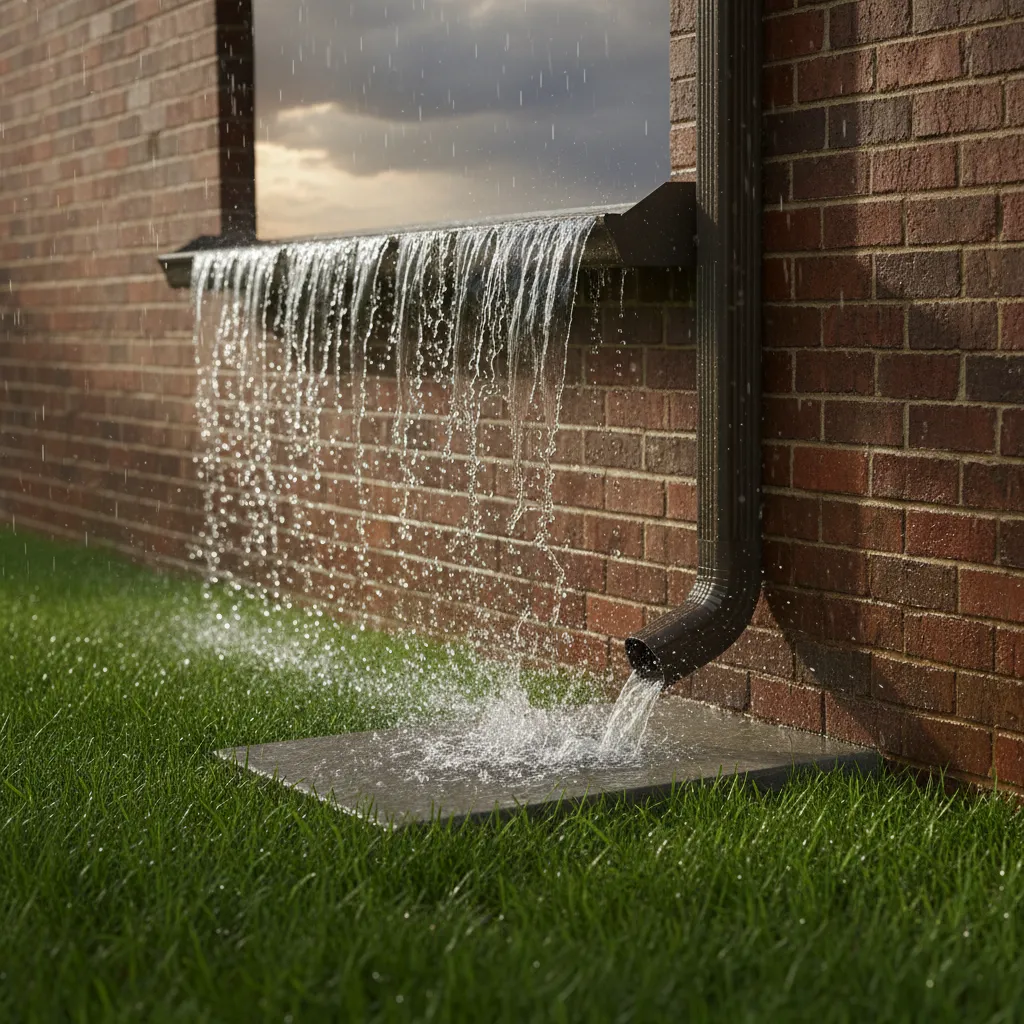
If you have trees anywhere near your home in North Georgia, you know the struggle. Every spring and fall, your gutters fill with leaves, pine needles, sweet gum balls, oak catkins, and other debris. Clogged gutters overflow, water cascades down your siding, pools around your foundation, and creates damage that can cost $5,000-$15,000 to repair. And the only solution? Climbing a ladder two to three times a year to scoop out handfuls of decomposing gunk.
It is no wonder that gutter guards are such an appealing investment. But with so many types on the market — from $3 plastic screens to $15 micro-mesh systems — how do you know what actually works? At True Hand Roofing, our team has 40+ years of combined experience installing and evaluating gutter protection systems across Ellijay, Dawsonville, Cherokee County, and throughout North Georgia. Here is an honest breakdown of what works, what does not, and whether the investment makes sense for your home.
What Are Gutter Guards?
Gutter guards are protective coverings installed over or inside your existing gutters. They are designed with screens, perforations, mesh, or surface tension technology to allow rainwater to enter the gutter while blocking leaves, needles, and debris from getting inside and causing clogs.
The concept is simple, but execution varies dramatically. The right system for your home depends on the types of trees in your yard, your roof pitch, rainfall volume, and budget.
Types of Gutter Guards: A Comparison
Not all gutter guards perform equally. Here is how the most common types stack up, with pricing for a typical North Georgia home with 150-200 linear feet of gutters:
| Guard Type | Cost/ft | Total Cost | Pine Needle Performance | Lifespan |
|---|---|---|---|---|
| Plastic screen | $3-$6 | $450-$1,200 | Poor | 3-5 years |
| Foam insert | $2-$5 | $300-$1,000 | Very poor | 2-4 years |
| Perforated aluminum | $5-$9 | $750-$1,800 | Fair | 15-20 years |
| Surface tension (reverse curve) | $8-$12 | $1,200-$2,400 | Good | 15-20 years |
| Micro-mesh (stainless steel) | $7-$15 | $1,050-$3,000 | Excellent | 20-25 years |
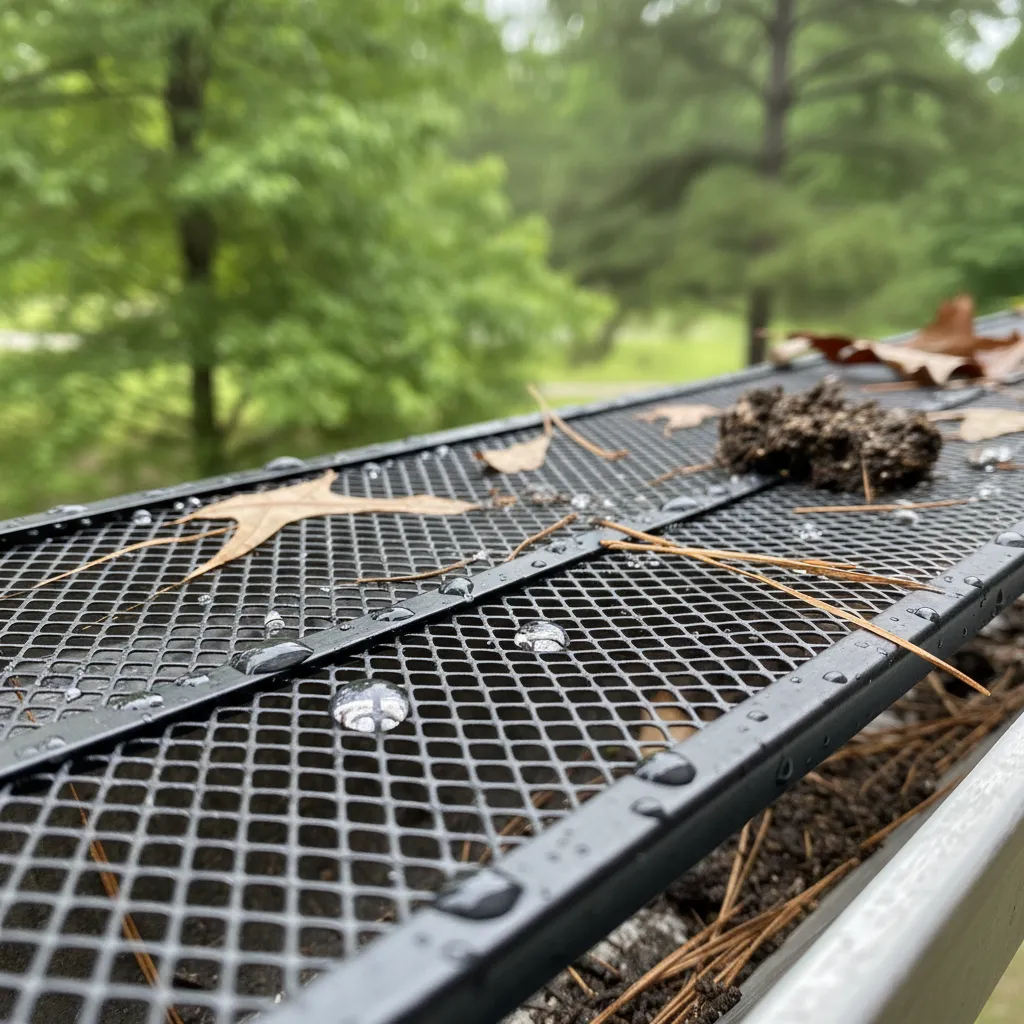
For most homes in North Georgia — where pine needles, oak leaves, and sweet gum balls are the primary culprits — stainless steel micro-mesh guards are the clear winner. The fine mesh (typically 50-mesh or finer) blocks even the smallest debris while handling heavy Georgia rainfall without overflow.
Georgia-Specific Debris Challenges
North Georgia’s dense tree canopy creates unique gutter challenges that many national gutter guard companies do not adequately address:
Pine needles: The most problematic debris for gutters in our region. White pine, Virginia pine, and loblolly pine shed needles year-round, not just in fall. Pine needles are thin enough to slip through large-hole screens and perforated covers, lodging inside the gutter and creating dense, water-damming mats. Only fine micro-mesh effectively blocks pine needles.
Oak leaves and catkins: Oak trees shed large leaves in fall, but they also drop tiny pollen catkins in spring that can clog coarser screens. Oak leaves tend to mat down and decompose on top of guards, requiring occasional brushing.
Sweet gum balls: These spiky seed pods are common throughout North Georgia. They are too large to enter any gutter guard system, but they can accumulate on top of flat guards and restrict water flow if not periodically cleared.
Roof grit and shingle granules: Over time, asphalt shingles shed granules that wash into gutters with every rainstorm. This fine grit accumulates as sludge in the bottom of unprotected gutters. Micro-mesh guards block most granules on the surface, where they eventually wash off or blow away.
The Pros: Why Gutter Guards Are a Smart Investment
1. Eliminates a dangerous chore
Gutter cleaning requires climbing a ladder — one of the most dangerous household tasks. According to the Consumer Product Safety Commission, ladder falls cause over 164,000 emergency room visits annually in the United States. For homeowners over 65, the risk is even greater. Gutter guards allow you to stay safely on the ground and eliminate the need for 2-3 cleanings per year at $150-$300 per professional visit.
2. Prevents costly water damage
Clogged gutters are one of the leading causes of preventable home damage. When gutters overflow, water saturates the soil around your foundation, leading to cracks, settling, and water intrusion into basements and crawl spaces. Foundation repair in North Georgia costs $5,000-$15,000. Clogged gutters also cause rotted fascia boards ($500-$2,000 to replace), stained and damaged siding, and landscape erosion. For more on how gutters protect your home, read our article on how gutters protect your home’s foundation.
3. Stops pest infestations
The damp, decaying organic matter in a clogged gutter is a breeding ground for mosquitoes, carpenter ants, wasps, and even rodents. Standing water in gutters provides ideal conditions for mosquito larvae, and decomposing leaves attract insects that can eventually migrate into your attic and walls. Clean, protected gutters eliminate this habitat entirely.
4. Extends gutter lifespan
Debris sitting in gutters holds moisture against the metal, accelerating corrosion and rust. Gutters that are constantly clogged and overflowing develop rust spots, joint failures, and sagging from excess weight. Guards keep gutters dry and debris-free, extending their useful life by 5-10 years on average.
The Cons: What to Consider Before Buying
1. Upfront cost is significant
A professional micro-mesh system at $1,050-$3,000 is a real investment. For homeowners on tight budgets, this can be a hurdle. However, weighed against the cost of 2-3 professional cleanings per year ($300-$900 annually), the system typically pays for itself within 3-5 years — even before factoring in the water damage it prevents.
2. Not 100% maintenance-free
No gutter guard system eliminates all maintenance forever. Surface debris — particularly pine needles and oak catkins — can accumulate on top of micro-mesh guards over time and may need to be brushed off every 2-3 years. However, this is a quick task that can often be done from the ground with a telescoping brush, versus the ladder climbing and hand-scooping required without guards.
3. Cheap guards can make problems worse
Budget plastic screens warp in Georgia’s summer heat, pop out during storms, and create gaps that funnel debris directly into the gutter. Foam inserts trap moisture, encouraging mold growth and decomposition inside the gutter — creating worse clogs than having no guards at all. Avoid the temptation of “cheap and easy” solutions. The difference between a $3/ft plastic screen and a $10/ft micro-mesh system is the difference between a frustration multiplier and a genuine solution.
The ROI: Do Gutter Guards Pay for Themselves?
Here is a simple payback calculation for a typical North Georgia home:
- Annual cleaning costs eliminated: $300-$900/year (2-3 professional cleanings at $150-$300 each)
- Micro-mesh guard cost: $1,050-$3,000 (one-time installation)
- Payback period: 3-5 years from cleaning savings alone
- 20-year savings: $4,000-$15,000 in avoided cleanings, plus the avoided risk of water damage to foundation ($5,000-$15,000), fascia ($500-$2,000), and landscaping
When you factor in the avoided water damage risk and the safety benefit of never climbing a ladder again, gutter guards deliver one of the strongest returns on investment of any home exterior upgrade.
Seamless Gutters and Guard Compatibility
If your existing gutters are old, leaking, or undersized, it may make sense to replace them with a new seamless gutter system and install guards at the same time. Seamless gutters eliminate the joint failures that cause leaks, and installing guards during the gutter installation saves labor costs versus adding them later. A combined seamless gutter and micro-mesh guard system is the gold standard for long-term gutter performance.
When to Call a Professional
If you are spending $300-$900 per year on gutter cleanings, noticing water overflow during storms, seeing foundation staining or erosion below your gutters, or simply tired of the dangerous ladder-climbing routine, it is time to evaluate gutter guards for your home.
Ready to stop cleaning gutters for good? Contact True Hand Roofing for a free gutter assessment and guard estimate, or get started with our free instant estimate tool. We serve homeowners across Ellijay, Dawsonville, Cherokee County, and all of North Georgia.
Frequently Asked Questions
How much do gutter guards cost in Georgia?
What is the best type of gutter guard for pine needles?
Do gutter guards really work?
Can gutter guards cause problems?
How long do gutter guards last?
Related reading: How Gutters Protect Your Home's Foundation | Seamless vs. Sectional Gutters: Which Is Right for Your Georgia Home?