When homeowners think about their roofing system, they picture the shingles — the visible barrier that keeps rain and sun out of their living space. But there’s an equally critical component that most people overlook until something goes wrong: the gutters.
Your gutter system has one primary job that goes far beyond keeping water from cascading over your front door. Its most important function is protecting your home’s foundation — the literal structure that everything else sits on. Without properly functioning gutters, every rainstorm sends hundreds of gallons of water directly into the soil around your foundation, creating a slow-motion disaster that can cost $5,000-$15,000 or more to repair.
Georgia receives 50-60 inches of rainfall annually, with North Georgia mountain communities often at the higher end. For homeowners in Canton, Ellijay, and Blue Ridge, understanding how gutters protect your foundation isn't optional — it's essential. At True Hand Roofing, our team brings 40+ years of combined experience installing gutter systems designed to handle North Georgia's demanding rainfall. Here's why your gutters matter far more than you might think.
The Numbers: How Much Water Are We Talking About?
Most homeowners drastically underestimate the volume of water their roof collects during a storm. The math is eye-opening.
For a typical 2,000-square-foot roof, every inch of rainfall produces approximately 1,250 gallons of water. During a moderate Georgia thunderstorm that drops 2-3 inches of rain in an hour, that's 2,500-3,750 gallons of water sheeting off your roof in 60 minutes. During a heavy downpour — and North Georgia gets plenty of those — the volume can be even higher.
Over the course of a year, your roof collects 62,000-75,000 gallons of water based on Georgia's 50-60 inches of annual rainfall. Every single gallon of that water needs to go somewhere. With gutters, it's channeled safely away from your home. Without gutters — or with clogged, damaged, or improperly installed gutters — it goes directly into the soil surrounding your foundation.
Now imagine that volume of water being deposited within inches of your foundation walls, year after year, storm after storm. That's the problem gutters solve.
How Uncontrolled Water Attacks Your Foundation
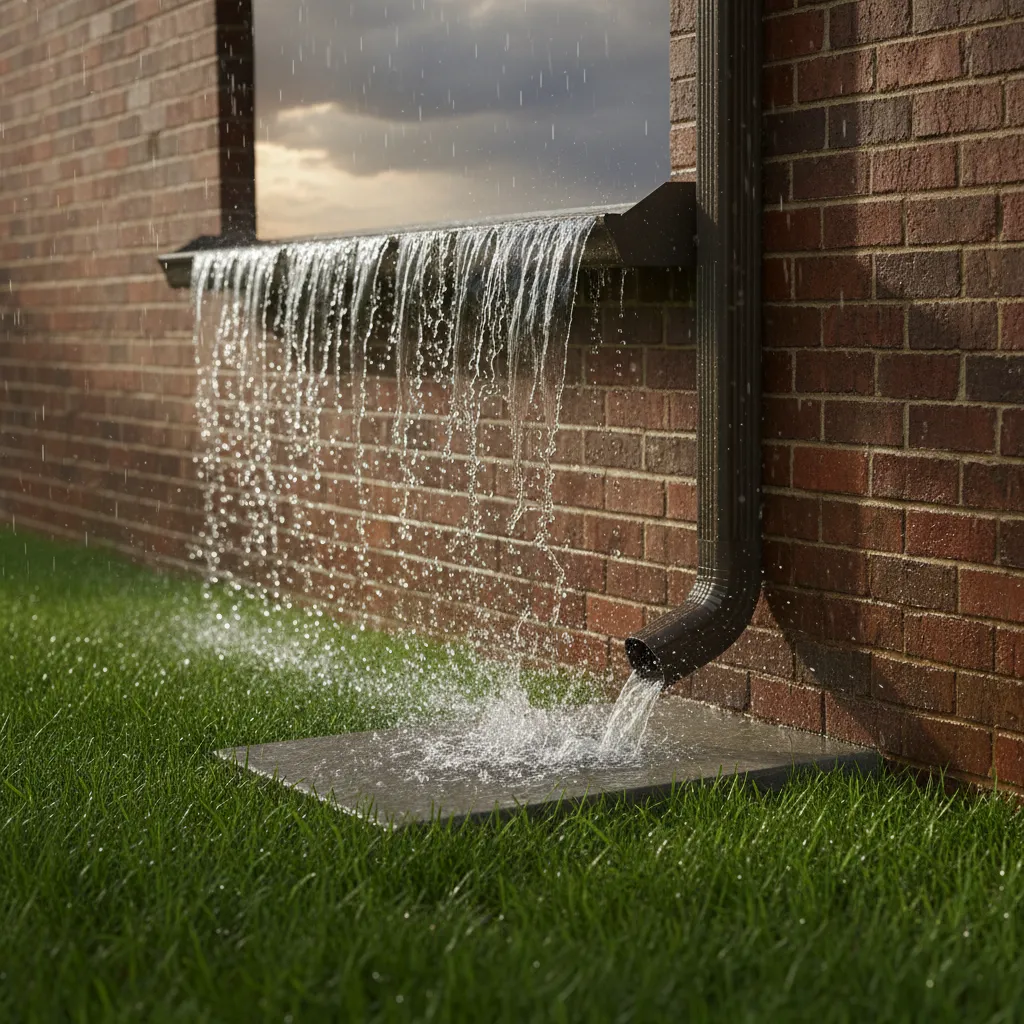
When water pours off an unguttered roof, it hits the ground directly below the eaves and saturates the “backfill zone” — the soil that was placed back around your foundation after construction. This saturated soil creates a cascade of problems, each one more expensive than the last.
Hydrostatic pressure. When soil becomes saturated, the water creates immense pressure against your foundation walls — literally the weight of standing water pushing inward. This hydrostatic pressure is relentless. It doesn't just push during storms; saturated soil holds water for days, maintaining constant pressure on your foundation even between rain events.
Foundation cracks. Concrete and block foundations are strong in compression but relatively weak under lateral pressure. Hydrostatic pressure pushes inward against the walls, creating cracks that start small — hairline fractures you might not even notice — but grow larger with each passing season. Horizontal cracks in a block foundation are especially serious, indicating that the wall is being pushed inward and may eventually bow or fail. Repair costs for foundation cracking typically run $2,000-$8,000 depending on severity.
Basement and crawlspace flooding. Water follows the path of least resistance, and foundation cracks are an open invitation. Even hairline cracks allow water to seep through, leading to damp basements, standing water in crawlspaces, and persistent moisture that never fully dries between storms. Waterproofing a basement after water intrusion has occurred costs $3,000-$10,000.
Soil erosion and settling. Uncontrolled runoff washes away the soil that supports your foundation, creating voids that cause settling. Settling manifests as uneven floors, doors and windows that stick or won't close properly, cracks in interior drywall, and gaps between walls and ceilings. Once settling begins, it's progressive — and the structural repairs to stabilize a settling foundation can exceed $15,000-$25,000.
Mold and mildew. The damp environment created by a wet basement or crawlspace is a perfect breeding ground for mold. In Georgia's humid climate, mold can establish itself within 24-48 hours in a moisture-rich environment. Professional mold remediation costs $1,500-$5,000+, and the health effects of living with mold — respiratory issues, allergies, and worse — affect your family's wellbeing long before you discover the problem.
How a Gutter System Protects Your Foundation
A properly installed gutter system is the elegant, cost-effective solution to all of these problems. It performs three critical functions in sequence.
1. Collecting water. Gutters mounted along your roof's eaves catch all the water flowing off your roof surface. A properly sized 5-inch K-style gutter (the standard for residential homes) can handle approximately 5,500 gallons per hour — more than enough for even the heaviest Georgia downpour on a standard home.
2. Channeling water. The gutter troughs are sloped slightly (typically 1/4 inch per 10 feet of run) to direct collected water toward the downspouts. This slope is critical — too little and water pools in the gutter; too much and water rushes past the downspout opening during heavy rain.
3. Redirecting water away from the foundation. Downspouts deposit the water at ground level, and extensions or splash blocks carry it at least 4-6 feet away from your foundation. Underground drain lines can carry water even further — 10-20 feet away — depositing it in a dry well, rain garden, or natural drainage area where it can be safely absorbed without threatening your home.
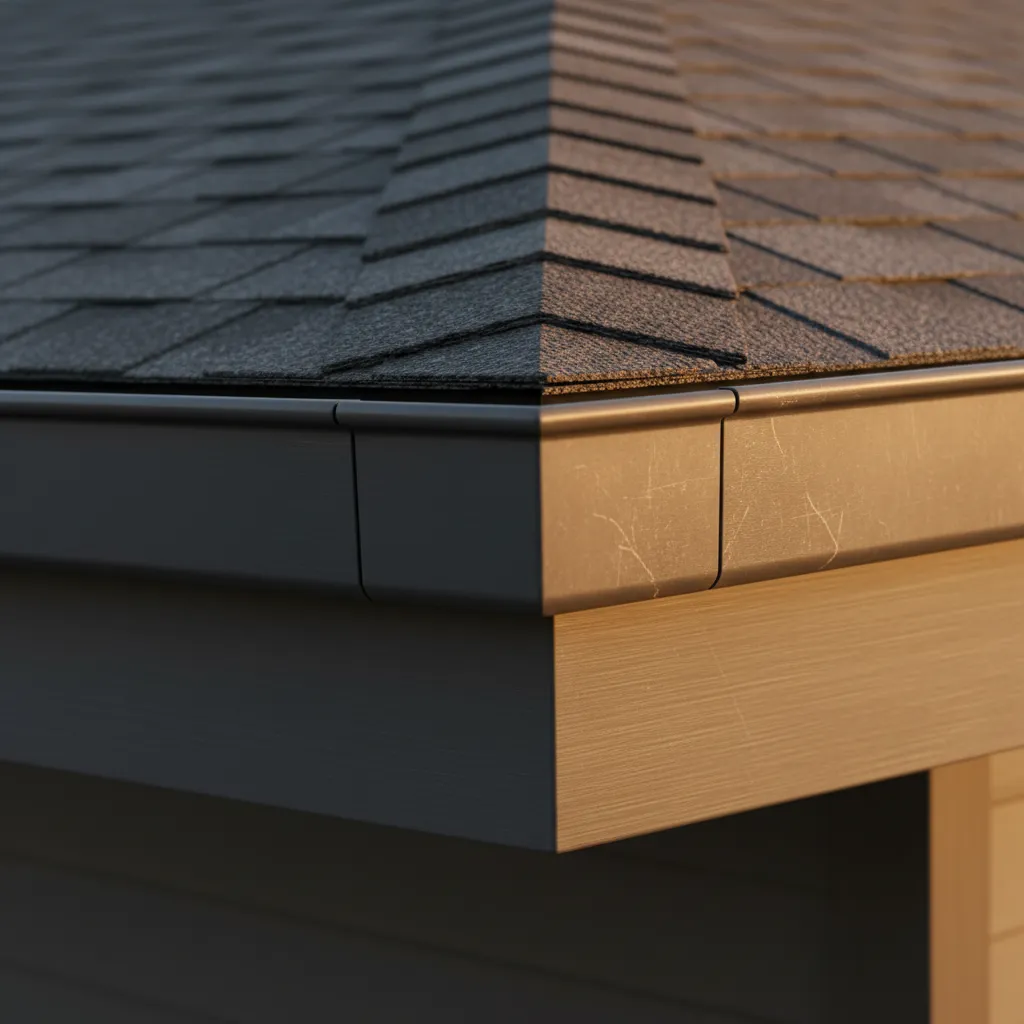
For maximum protection, we recommend seamless gutters. Because they're formed from a single continuous piece of aluminum custom-fit to each run of your roofline, they have no seams or joints — eliminating the most common failure points where leaks develop in sectional systems.
Signs Your Gutters Aren’t Doing Their Job
Even if you have gutters installed, they may not be adequately protecting your foundation. Watch for these warning signs.
Water pooling near the foundation. If you see puddles or standing water within 2 feet of your foundation walls after rain, your gutters are either overflowing, leaking at seams, or your downspouts aren't carrying water far enough away.
Erosion trenches below the roofline. Visible channels or washed-out areas in the soil directly below your roof edge indicate that water is overshooting or overflowing the gutters.
Sagging or pulling away from the fascia. Gutters heavy with debris and standing water can pull away from the fascia board, creating gaps where water runs behind the gutter and down the foundation wall — the worst possible scenario because it concentrates water right against the house.
Interior warning signs. Cracks in foundation walls, sticking doors, uneven floors, water stains in the basement, or musty odors in the crawlspace all suggest that water is reaching your foundation. Have both your gutters and your foundation inspected if you notice these symptoms.
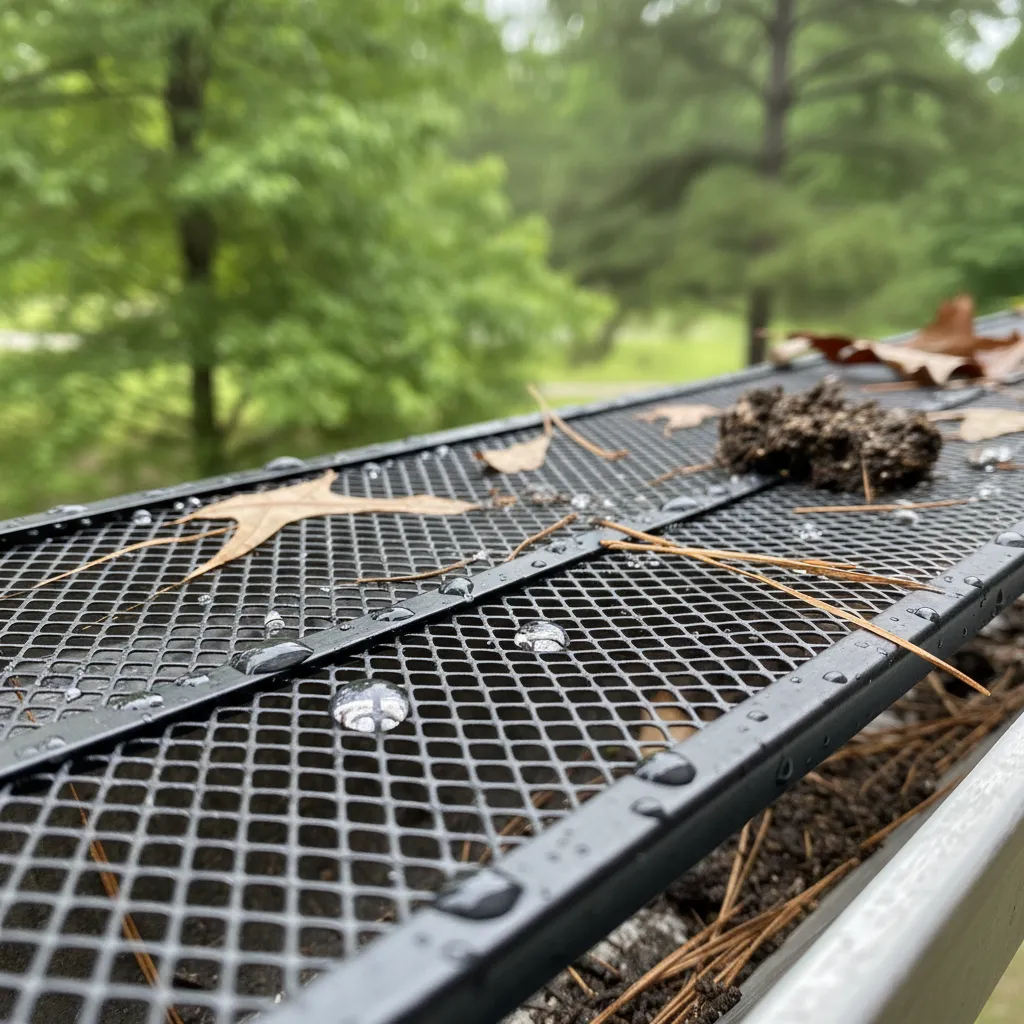
Adding gutter guards can dramatically reduce clogging from North Georgia's abundant leaf and pine needle debris, ensuring your gutters continue to function properly between cleanings.
Gutter Maintenance: Protecting Your Investment
Even the best gutter system needs periodic maintenance to perform its foundation-protection role effectively.
Clean gutters twice per year. Schedule cleanings in late fall (after leaves drop) and late spring (after pollen season). Homes surrounded by pine trees may need quarterly cleaning due to constant needle shed.
Inspect after major storms. High winds can dislodge gutter hangers, and heavy rain can wash debris into downspouts, causing blockages. A quick visual inspection after major weather events catches problems before they cause foundation damage.
Check downspout extensions. Make sure downspout extensions are directing water at least 4-6 feet from the foundation. Extensions can be knocked out of position by lawn mowers, foot traffic, or wind.
Watch for rust and corrosion. Aluminum seamless gutters resist rust, but galvanized steel sectional gutters can corrode over time. Rust spots indicate that the gutter will eventually leak at that point — replacement is the best long-term solution.
The Cost Comparison: Prevention vs. Repair
The economics of gutter installation versus foundation repair are stark.
Gutter installation: $1,000-$2,500 for a professional seamless gutter system on a typical Georgia home (150-200 linear feet). This includes gutters, downspouts, hangers, and installation labor.
Foundation repair: $5,000-$15,000+ for crack repair, waterproofing, or stabilization. Major structural repairs involving piers or wall anchors can exceed $25,000.
Gutters cost roughly 10-20% of what a single foundation repair would cost, and they prevent the problem from ever occurring. It's one of the highest-ROI investments you can make in your home.
When to Call a Professional
If your home doesn’t have gutters, has damaged or inadequate gutters, or you’re noticing any of the warning signs of foundation water damage, don’t wait. Water damage is progressive — the longer it goes unaddressed, the more expensive the repair becomes.
At True Hand Roofing, we install custom seamless gutter systems throughout Canton, Ellijay, Blue Ridge, and all of North Georgia. We'll assess your current system (or lack thereof), identify any foundation-risk areas, and recommend the right gutter configuration to keep your home protected for decades.
Is your home protected? Contact us for a free gutter assessment or get an instant estimate on a new seamless gutter installation.
Related reading: Are Gutter Guards Worth the Investment in Georgia? | Seamless vs. Sectional Gutters: Which Is Right for Your Georgia Home?