Adding a skylight is one of the most transformative upgrades you can make to your home. A single well-placed skylight can turn a dark, enclosed room into a bright, open space that feels twice its actual size. But the placement of your skylight matters just as much as the skylight itself — the right position maximizes natural light, improves energy efficiency, and adds real value to your home, while the wrong position can create glare, overheating, or underwhelming results.
Whether you live in Dawsonville, Cherokee County, or Blairsville, the principles of good skylight placement are the same. At True Hand Roofing, our team brings 40+ years of combined experience installing skylights across North Georgia, and we’ve seen firsthand which placements deliver the biggest impact.
Here are the best rooms for skylights, how roof orientation affects your light, and what to expect from the installation process and cost.
The Kitchen: Natural Light Where You Need It Most
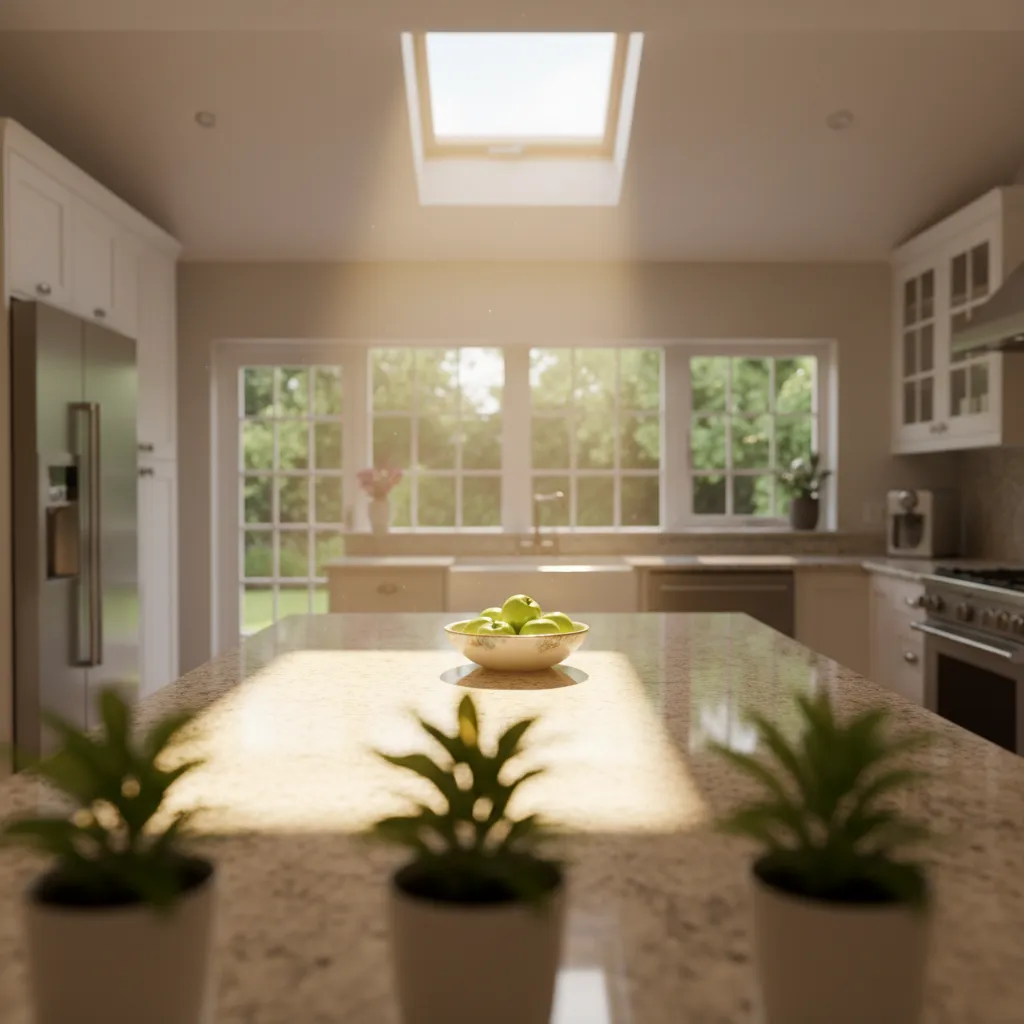
The kitchen is consistently the number one room where homeowners choose to install a skylight — and for good reason. It’s the heart of the home, a space where bright, clean natural light makes a real functional difference.
Why it works so well: A skylight provides broad, even illumination from above that eliminates the shadows cast by under-cabinet and overhead fixtures. Colors look more natural, food preparation is easier, and the entire space feels larger and more inviting. For smaller or galley-style kitchens that lack exterior windows, a skylight can be genuinely transformative.
Best placement: Over the kitchen island or main prep area. This positions the light where it's most useful for cooking and entertaining. If your kitchen has a vaulted or cathedral ceiling, the effect is even more dramatic — the skylight becomes an architectural feature, not just a light source.
Venting recommendation: A solar-powered venting skylight is ideal for the kitchen. Open it with a remote to clear cooking odors, heat, and steam — far more effective than a standard range hood at exchanging air. The built-in rain sensor closes it automatically if a summer thunderstorm rolls through while you're cooking.
Energy impact: A kitchen skylight can reduce electric lighting usage by 15-20% during daylight hours. Over a year, that's a noticeable reduction in your electricity bill — and the light quality is superior to any artificial fixture.
The Bathroom: Light and Privacy in Perfect Balance
Bathrooms — especially interior bathrooms without exterior walls — are natural candidates for skylights. They solve the fundamental problem of getting natural light into a space where privacy rules out traditional windows.
Why it works so well: Natural light from above completely changes the character of a bathroom. A dark, cramped bathroom becomes a bright, spa-like retreat. Skylights illuminate vanity areas with natural color-accurate light (far better than fluorescent fixtures for grooming), and they make shower enclosures feel open rather than confined.
Best placement: Centered over the shower or bathtub area for maximum dramatic effect, or over the vanity for the most practical daily benefit. In a master bathroom, a skylight positioned to provide morning light creates a genuinely luxurious start to the day.
Venting recommendation: A venting skylight is essential in a bathroom. It removes shower steam and humidity far more effectively than a standard exhaust fan — the warm, moist air naturally rises and exits through the open skylight, creating passive ventilation that requires zero electricity. This is particularly valuable in Georgia's humid climate, where moisture control helps prevent mold and mildew growth.
Hallways and Stairwells: Transforming Forgotten Spaces
Hallways and stairwells are among the most chronically dark spaces in any home. They’re often windowless, tunnel-like passages that rely entirely on artificial lighting — and they’re precisely the spaces where a skylight makes the biggest difference relative to its cost.
Why it works so well: A single skylight can flood an entire hallway with natural light, making the home feel more connected and open. In a two-story home, a skylight over the main stairwell creates a dramatic architectural feature that brings light to both levels simultaneously. Visitors immediately notice the difference.
Best placement: Center of a long hallway or directly over a stairwell. Stairwell skylights are particularly effective because the vertical space acts as a natural light shaft, channeling light from the roof down through both floors.
Alternative: Sun Tunnels. For long hallways or spaces without direct roof access above them, a VELUX Sun Tunnel is an excellent alternative. This highly reflective tube pipes natural light from the roof down to a ceiling-mounted diffuser that looks like a modern recessed light fixture. Sun tunnels cost $500-$1,000 installed — roughly half the cost of a traditional skylight — and work in spaces where a full skylight isn't structurally feasible.
The Living Room: Architectural Drama and Daily Comfort
Your main living area is where your family spends the most waking hours, and natural light creates a warm, inviting atmosphere that artificial lighting simply cannot replicate.
Why it works so well: In living rooms with vaulted or cathedral ceilings, skylights become architectural centerpieces. Even in rooms with standard 8-foot ceilings, a skylight provides balanced ambient light that reduces glare on screens and creates a more comfortable environment for reading, working, and relaxing.
Best placement: Position skylights to avoid direct glare on television screens or computer monitors. North-facing skylights provide the most consistent, glare-free light throughout the day. If your living room faces south, consider adding solar-powered blinds that can be adjusted remotely to soften intense afternoon sunlight.
Blinds recommendation: For living rooms, factory-installed blinds add versatility. A light-filtering blind softens midday sun, while a room-darkening blind turns the space into a home theater. Solar-powered blinds from VELUX qualify for the same 30% federal tax credit as the skylight itself.
Understanding Roof Orientation and Light Quality
The direction your roof faces has a significant impact on the quality, quantity, and consistency of light your skylight will deliver. Understanding this before installation ensures you get exactly the result you want.
North-facing skylights: Provide the most consistent, even light throughout the day. No direct sun exposure means no glare, no overheating, and no fading of furniture or flooring. North-facing is the most versatile orientation for any room type and is ideal for offices, living rooms, and spaces where consistent light matters more than maximum brightness.
South-facing skylights: Capture the most total light and solar heat gain. Excellent for dark rooms that need maximum natural illumination. In Georgia's climate, south-facing skylights can contribute noticeable solar heating in winter (reducing heating costs) but may cause overheating in summer without blinds or Low-E glass. Pair with solar-powered blinds for year-round comfort.
East-facing skylights: Bring in bright morning light and are cooler by afternoon. Ideal for kitchens (morning cooking light) and bedrooms (natural wake-up light). Less risk of afternoon overheating.
West-facing skylights: Capture strong afternoon sunlight. Can cause overheating in summer and intense glare during late-day hours. Best used with blinds or in rooms where afternoon brightness is desirable.
Installation Costs and What to Expect
Professional skylight installation typically takes one day per skylight and costs $1,500-$3,500 depending on the type of skylight, roof complexity, and whether a light shaft is needed.
Standard fixed skylight: $1,500-$2,000 installed on a straightforward roof. This includes the skylight unit, flashing kit, and all labor.
Solar-powered venting skylight: $2,000-$3,000 installed. The solar-powered models qualify for a 30% federal tax credit, which reduces your effective cost to $1,400-$2,100.
Light shaft addition: Add $500-$1,500 if a shaft needs to be built through attic space to connect the skylight to the room below. This involves framing, insulation, and drywall work.
Home value impact: Real estate data consistently shows that skylights add 5-10% to the perceived value of the rooms they serve. In a competitive housing market, a bright kitchen or spa-like bathroom with natural light from above is a genuine selling point that attracts buyers and commands higher offers.
Concerned about leaks? Modern skylight installation with proper VELUX flashing systems is highly reliable. Read our guide on the 3 common causes of skylight leaks to understand why proper installation is the key to a worry-free skylight.
When to Call a Professional
Skylight placement involves more than choosing a room — it requires evaluating roof structure, rafter spacing, electrical and plumbing locations, and orientation to determine the optimal position for light, ventilation, and weatherproofing.
At True Hand Roofing, we provide free skylight consultations where we assess your roof, discuss your goals, and recommend the best placement for maximum impact. We install skylights throughout Dawsonville, Cherokee County, Blairsville, and all of North Georgia.
Ready to bring natural light into your home? Contact us for a free skylight consultation or get an instant estimate to see what skylight installation would cost for your home.
Related reading: Solar-Powered Skylights & Federal Tax Credits | Leaking Skylight? 3 Common Causes and How to Fix Them