For any business owner in Georgia, the summer cooling season means one thing: high energy bills. Between May and September, commercial air conditioning systems across Canton, Blue Ridge, and Chatsworth run almost nonstop to keep buildings comfortable. Depending on the size of your facility, monthly electricity costs can spike by 40-60% during peak summer months — and a significant portion of that expense comes from heat radiating through your roof.
That’s where cool roof technology comes in. A white TPO (Thermoplastic Polyolefin) membrane is one of the most effective ways to fight back against Georgia’s relentless sun, and the science behind it is compelling. Our team brings over 40 years of combined experience installing energy-efficient commercial roofing systems, and TPO cool roofs are consistently one of the smartest investments we recommend.
The Problem: How Dark Roofs Drive Up Your Energy Bills
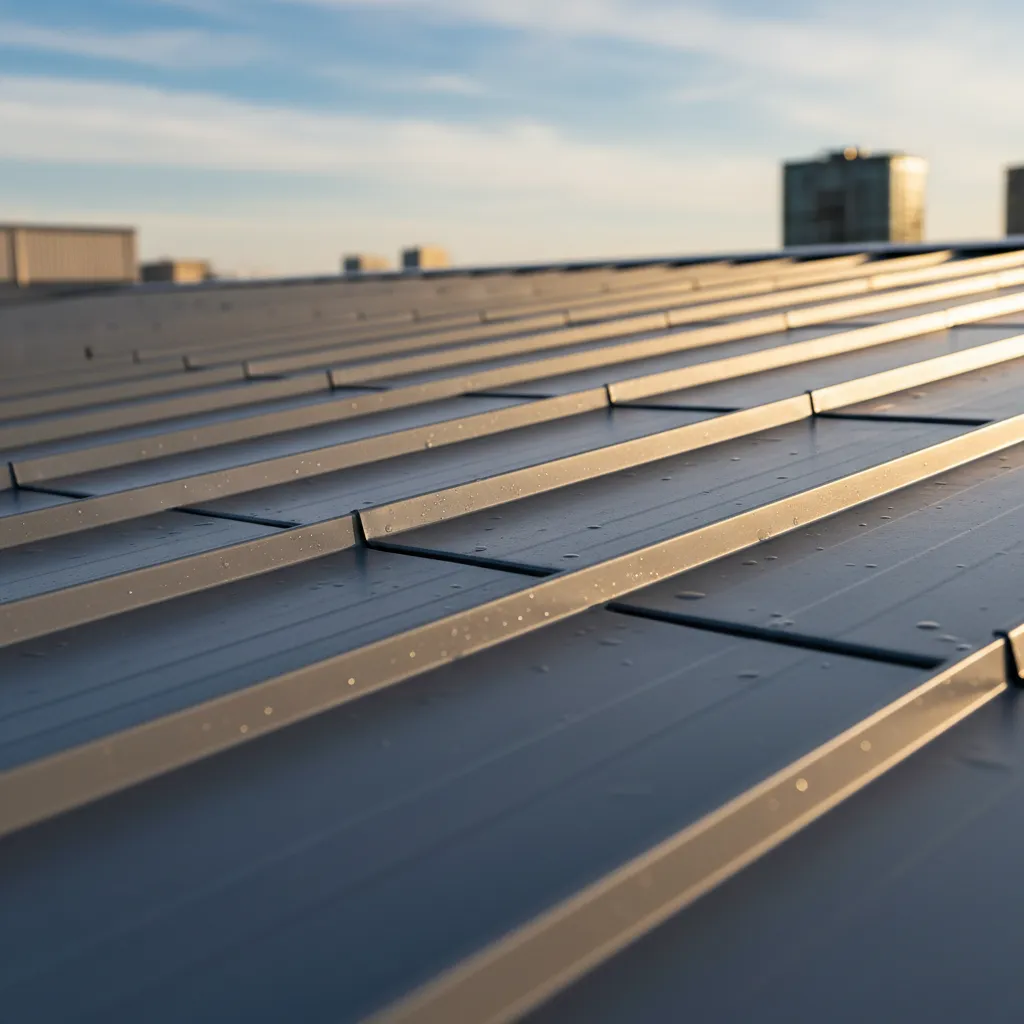
Traditional commercial roofs are often black or dark-colored. Think of materials like tar and gravel, modified bitumen, or black EPDM rubber. These dark surfaces absorb a massive amount of the sun’s thermal energy — up to 90% of incoming solar radiation on a typical summer day.
On a hot Georgia afternoon when the ambient temperature hits 95 degrees, a black roof can reach surface temperatures of 160-180 degrees Fahrenheit. That intense heat doesn’t stay on the roof. It radiates downward through the roof deck and into your building’s interior, forcing your HVAC system to work harder and longer to maintain comfortable temperatures.
This creates a vicious cycle: the hotter the roof, the harder the AC runs, the higher the electricity bill, and the faster the HVAC equipment wears out. For a commercial building with 10,000 square feet of dark roofing, the cumulative energy waste over a single Georgia summer can add up to thousands of dollars in unnecessary cooling costs.
The problem is compounded in areas with the “urban heat island” effect, where clusters of dark-roofed buildings collectively raise ambient temperatures. But even in North Georgia’s more rural commercial areas, the physics of solar absorption work the same way.
How TPO Cool Roofs Reflect Heat Instead of Absorbing It
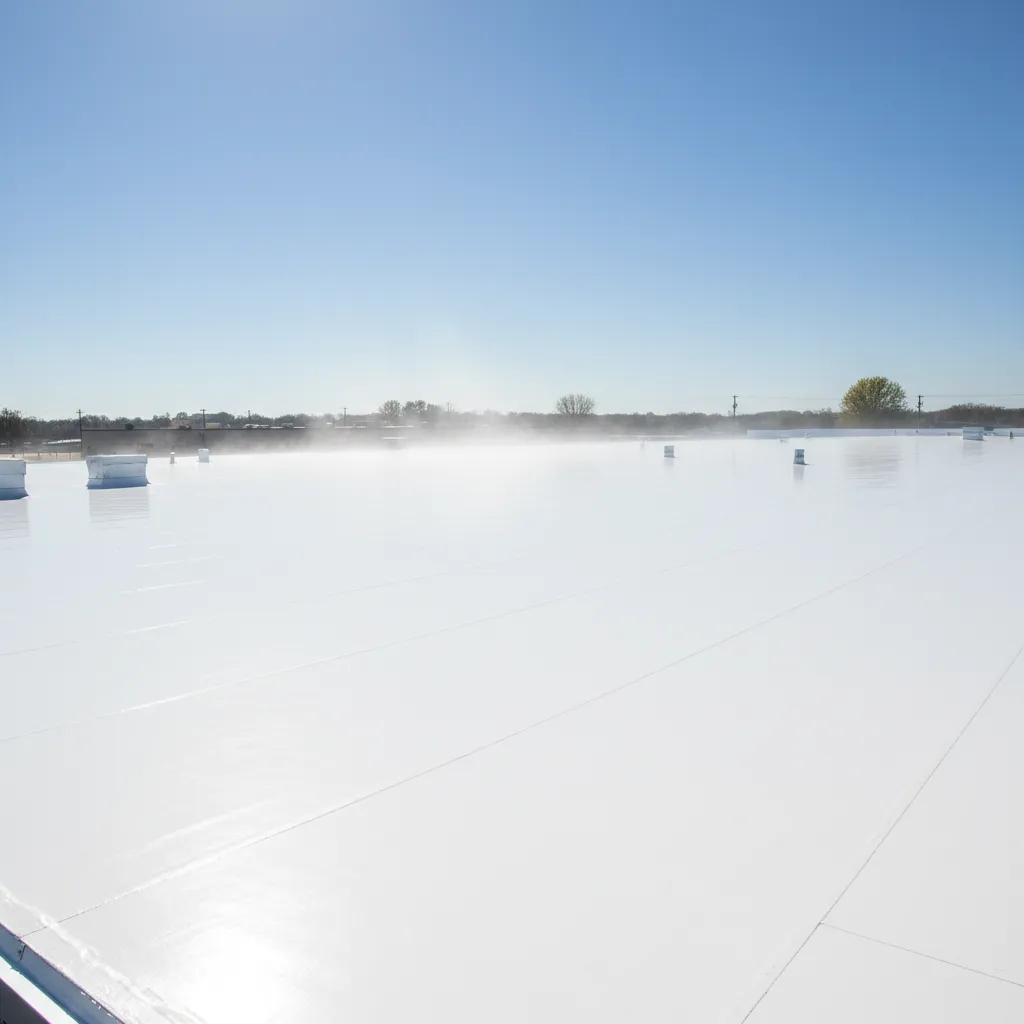
A white TPO membrane works on a simple but powerful principle: reflection. Instead of absorbing solar radiation like a dark roof, the brilliant white surface reflects 80-90% of the sun’s UV rays back into the atmosphere. The membrane’s formulation also has a high thermal emittance, meaning it efficiently releases whatever small amount of heat it does absorb.
The result is dramatic. While a conventional dark roof bakes at 170 degrees, a TPO cool roof under identical conditions typically measures just 100-120 degrees — a surface temperature reduction of 50-70 degrees Fahrenheit. That’s the difference between a roof that acts as a heating element and one that actively deflects thermal energy away from your building.
According to the EPA’s ENERGY STAR program, cool roofs meeting their certification standards can be more than 50 degrees cooler than conventional roofs. Most quality TPO products not only meet but exceed ENERGY STAR requirements for solar reflectance and thermal emittance.
Tangible Financial Benefits of a Cooler Roof
By reflecting the sun’s heat instead of absorbing it, a TPO cool roof creates a cascade of measurable financial benefits for your business:
Lower Monthly Energy Bills. This is the most immediate payoff. Studies consistently show that cool roofs reduce peak cooling energy demand by 10-30%, depending on building insulation, HVAC efficiency, and local climate conditions. For a commercial building in North Georgia spending $2,000 per month on summer electricity, that translates to $200-$600 in monthly savings during the cooling season. Over a 20-year roof lifespan, those savings compound to $12,000-$36,000 or more.
Extended HVAC Equipment Life. Because your air conditioning units don’t have to run as hard or as often, you significantly reduce wear and tear on these expensive systems. Commercial HVAC replacements can cost $15,000-$50,000 depending on the system. Extending your equipment’s lifespan by even 2-3 years through reduced workload represents substantial savings.
Improved Indoor Comfort. A cooler roof leads to a more stable and comfortable indoor environment for your employees and customers. This is especially noticeable in buildings with high ceilings like warehouses, retail spaces, and manufacturing facilities where the roof is a larger proportion of the building envelope.
Extended Roof Durability. Constant, extreme heat accelerates the aging process of roofing materials, causing them to become brittle, crack, and fail prematurely. A cooler TPO roof operates under far less thermal stress throughout its life, which contributes directly to its 20-30 year lifespan — significantly longer than many dark roof alternatives.
What TPO Installation Costs and What You Get
A professionally installed TPO cool roof in North Georgia typically costs $5-$8 per square foot, which includes the membrane, rigid insulation, attachment hardware, flashing, and all labor. For context, that’s competitive with or slightly above traditional dark roofing options, but the energy savings often make up the difference within the first 3-5 years.
Here’s what factors influence your specific cost:
| Factor | Impact on Price |
|---|---|
| Membrane thickness (45 mil vs 60 mil vs 80 mil) | $0.50-$2.00/sqft difference |
| Insulation R-value requirements | $0.50-$1.50/sqft for higher R-values |
| Attachment method (mechanical vs adhered) | Adhered adds $0.50-$1.00/sqft |
| Building complexity (penetrations, edges) | More details = more labor |
| Tear-off of existing roof | Adds $1.00-$2.00/sqft if needed |
The TPO installation process typically takes 3-5 days for a standard commercial building, and you can choose from multiple membrane thicknesses to match your budget and performance requirements.
Utility Rebates and Tax Incentives
Georgia commercial building owners may qualify for several financial incentives that offset the cost of a cool roof installation:
Utility Rebates. Georgia Power and several North Georgia Electric Membership Corporations (EMCs) offer commercial energy efficiency programs that may include rebates for qualifying cool roof installations. These programs change periodically, so check with your local provider for current offerings.
Federal Tax Deductions. The Energy Efficient Commercial Buildings Deduction (Section 179D) allows building owners to deduct costs associated with energy-efficient improvements, including qualifying roof systems. Depending on the efficiency improvement achieved, deductions can be significant. Consult your tax professional for specifics.
Reduced Insurance Premiums. Some commercial property insurers offer modest premium reductions for buildings with newer, code-compliant roofing systems. A TPO cool roof that meets current Georgia building energy codes may qualify for these savings.
TPO vs. Other Commercial Roofing Options
While TPO isn’t the only cool roof option, it offers a compelling balance of performance and value:
| Feature | TPO | EPDM (Black) | PVC | Built-Up |
|---|---|---|---|---|
| Solar reflectance | 80-90% | 5-10% | 80-85% | 5-15% |
| Cost per sqft | $5-$8 | $4-$7 | $6-$10 | $5-$9 |
| Lifespan | 20-30 years | 25-30 years | 25-35 years | 15-25 years |
| Energy savings | 10-30% | Minimal | 10-25% | Minimal |
| ENERGY STAR rated | Yes | No (black) | Yes | No |
TPO hits the sweet spot for most commercial buildings: strong energy performance at a competitive price point, with a proven track record in Georgia’s demanding climate.
When to Call a Professional
If you’re experiencing any of the following, a TPO cool roof consultation could save you significant money:
- Summer energy bills that seem unreasonably high for your building’s size
- An aging dark roof that’s past its 15-year mark
- HVAC systems that run constantly during summer without adequately cooling the building
- Visible cracking, blistering, or deterioration on your current commercial roof
- Plans to renovate or expand your commercial property
Our team brings over 40 years of combined roofing experience and can assess whether a TPO cool roof is the right solution for your specific building and budget. We’ll provide a transparent estimate with no hidden fees and help you identify any available rebates or incentives.
Contact True Hand Roofing for a free commercial roof assessment, or get an instant estimate to start exploring your options.
Related Articles
Read more about commercial flat roof systems: