Your commercial flat roof has been a constant headache. You are tired of the cycle of leaks, emergency patches, and anxious phone calls every time a heavy rainstorm moves through Blue Ridge or Canton. You know it is time for a permanent solution, but the thought of a full tear-off — with its $80,000–$150,000 price tag, weeks of disruption, and mountains of landfill waste — is enough to keep pushing the decision down the road.
What if there was a better way? There is: a metal roof retrofit.
A metal retrofit is an engineered system where a new, sloped standing-seam metal roof is installed directly over your existing flat roof — no tear-off, no exposed interior, and no business interruption. It is not a patch or a band-aid. It is a permanent, 40–60 year roofing solution that eliminates the fundamental design flaw of a flat roof: poor drainage.
Our team brings 40+ years of combined experience installing metal retrofits for commercial buildings across North Georgia. Here is why this approach is gaining traction with building owners who want a permanent fix without the pain of a traditional replacement.
How a Metal Retrofit Works
Understanding the mechanics of a retrofit helps explain why it is so effective. The process involves four key phases:
1. Assessment and engineering (1–2 weeks). A structural engineer evaluates your building’s load capacity and designs a custom sub-frame system that creates the optimal slope for your building’s footprint. The typical added load is just 1–2.5 lbs per square foot — well within most commercial structures’ capacity.
2. Sub-frame installation (3–7 days). Lightweight steel purlins (horizontal structural members) are anchored through the existing roof membrane directly into the building’s structural deck. These purlins are configured to create a minimum 1/4-inch per foot slope — enough to shed water efficiently while keeping the overall profile low.
3. Insulation (1–2 days). The cavity between the old flat roof and the new metal panels is filled with high-performance insulation, typically R-19 to R-30 depending on energy goals and local code requirements. This layer alone can reduce heating and cooling costs by 15–25%.
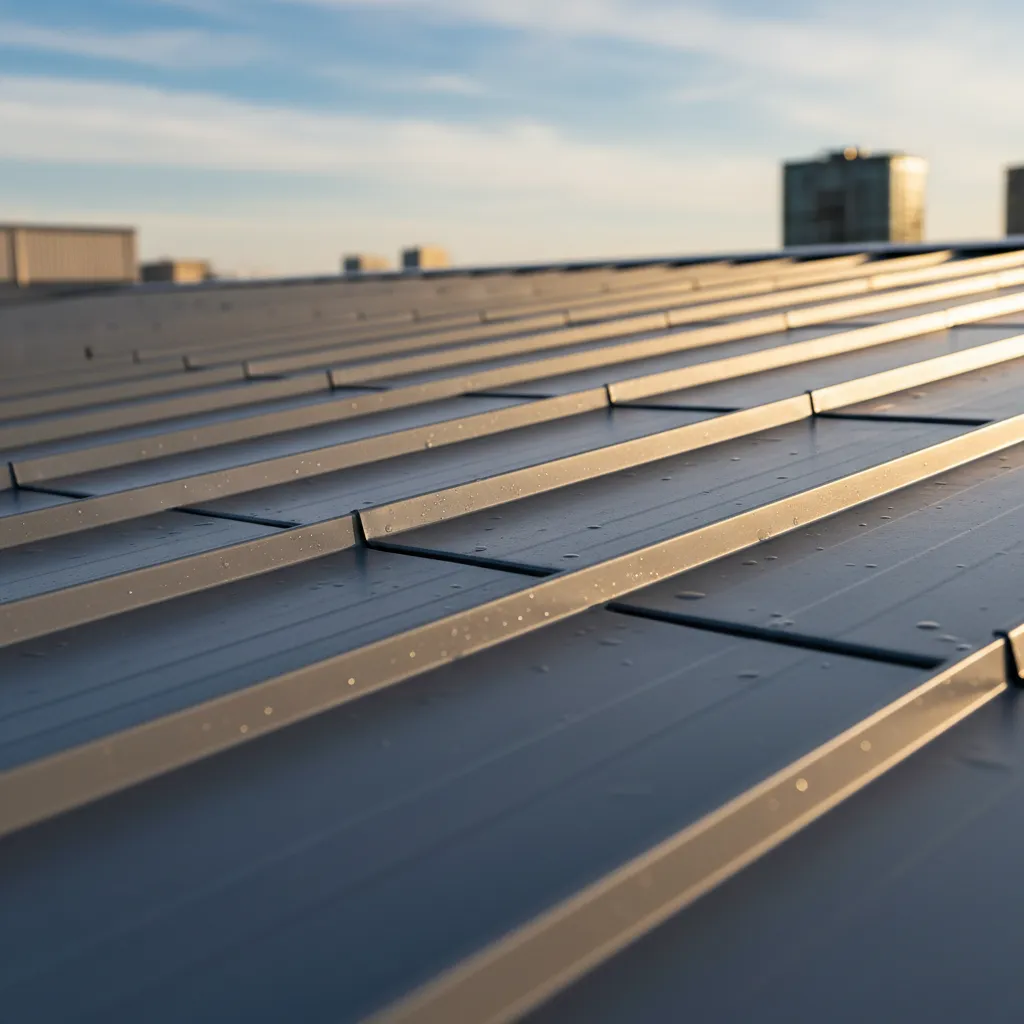
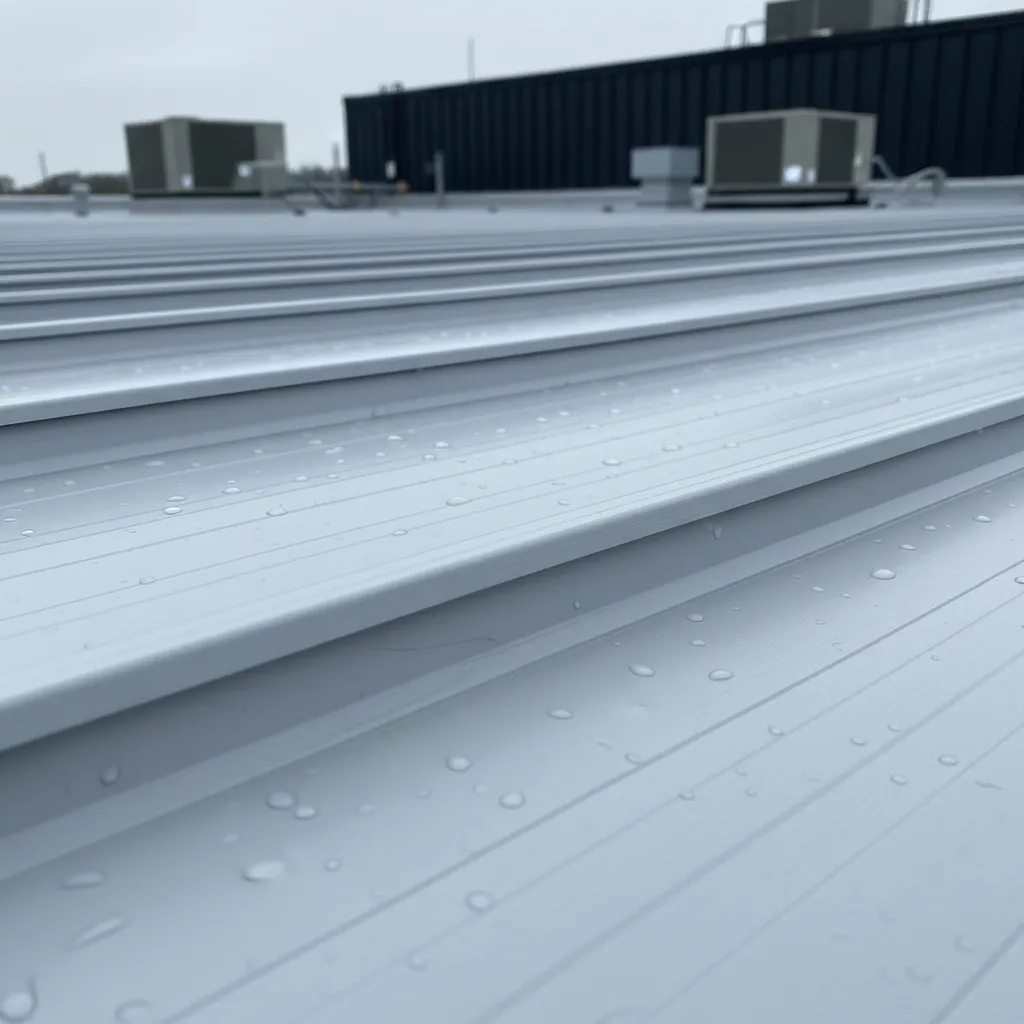
4. Standing-seam panel installation (3–7 days). Pre-formed standing-seam metal panels are secured to the sub-frame with concealed clips — no exposed fasteners that can back out, rust, or create leak points. The panels interlock at raised seams that stand 1.5–2 inches above the panel surface, keeping all connections well above the water line.
Total project timeline for a typical 10,000 sq ft building: 2–4 weeks, with zero interior exposure and zero business interruption.
The Financial Case for Retrofit Over Replacement
The numbers consistently favor retrofit for buildings where the existing structure is sound. Here is how the costs compare:
| Cost Factor | Full Tear-Off & Replace | Metal Retrofit |
|---|---|---|
| Tear-off labor | $1.50–$3.00/sqft | $0 (no tear-off) |
| Disposal/dumpsters | $500–$2,000 per load | $0 (zero landfill waste) |
| New roof system | $5–$10/sqft | $6–$12/sqft |
| Total installed cost | $8–$15/sqft | $6–$12/sqft |
| 10,000 sqft building | $80,000–$150,000 | $60,000–$120,000 |
| Business interruption | 2–6 weeks | None |
| Expected lifespan | 20–30 years (membrane) | 40–60 years (metal) |
For a mid-sized commercial building, the retrofit typically saves $20,000–$40,000 in upfront costs. But the real savings multiply over time. A membrane replacement will need another replacement in 20–30 years. A metal retrofit will still be performing in 40–60 years — potentially eliminating an entire replacement cycle from your building’s lifetime.
Benefit 1: Zero Business Interruption
This is often the deciding factor for building owners. A traditional tear-off exposes the interior of your building to the elements during the 3–10 day tear-off and re-roofing process. For businesses with inventory, equipment, sensitive data, or customer-facing operations, this exposure creates enormous risk.
A metal retrofit completely eliminates this risk. Because we build over the existing roof, the interior of your building is never exposed. Your old roof continues to provide weather protection throughout the entire installation. Employees work normally, inventory stays protected, and customers never know construction is happening above them.
For businesses in Chatsworth and the surrounding area, where a single day of closure can mean thousands in lost revenue, this alone justifies the retrofit approach.
Benefit 2: Permanently Solves the Drainage Problem
The fundamental flaw of a flat roof is right there in the name: it is flat. Water has nowhere to go except through the membrane — and over time, it always finds a way. Ponding water adds 5 lbs per square foot per inch of depth, stressing the structure and relentlessly exploiting every seam, fastener, and flashing detail.
A metal retrofit solves this problem at its core. The engineered sub-frame creates a positive slope that sheds water quickly and efficiently. Your roof is no longer a flat surface that must be a perfect barrier — it is a sloped system that actively directs water off the building. This single change eliminates the root cause of 80–90% of flat roof leaks: ponding water and the seam failures it causes.
Benefit 3: Dramatically Improved Energy Efficiency
The insulation cavity created between your old roof and the new metal panels is one of the most underappreciated benefits of a retrofit. Most aging flat roofs have insulation that has degraded, compressed, or become wet over time — delivering a fraction of its original R-value.
A retrofit adds a fresh layer of R-19 to R-30 insulation in the new cavity, typically doubling or tripling the roof’s effective insulation value. Combined with “cool roof” rated metal panels that reflect 65–75% of solar radiation (compared to 5–15% for a dark EPDM or BUR roof), the energy impact is significant.
Building owners in North Georgia consistently report 15–25% reductions in heating and cooling costs after a metal retrofit. For a building spending $2,000–$5,000 per month on HVAC, that translates to $3,600–$15,000 in annual energy savings — money that accumulates every year for the life of the roof.
Benefit 4: Zero Landfill Waste
A traditional tear-off on a 10,000 sq ft commercial roof generates 15–30 tons of waste material — old membrane, saturated insulation, adhesives, and fasteners — all destined for the landfill. With disposal costs of $500–$2,000 per dumpster load and tightening landfill regulations, this waste stream represents both an environmental and financial burden.
A metal retrofit produces essentially zero demolition waste. The existing roof stays in place, and the new steel components are 100% recyclable at end of life (in 40–60 years). For building owners who value sustainability — or who simply want to avoid the mess and cost of disposal — this is a meaningful advantage.
Benefit 5: Extended Manufacturer Warranties
Standing-seam metal roof systems carry some of the strongest warranties in the commercial roofing industry. Panel manufacturers routinely offer 30–40 year weathertight warranties on properly installed systems, with paint/finish warranties of 20–30 years against fading, chalking, and peeling.
Compare this to typical flat roof membrane warranties of 10–20 years (often with significant exclusions for ponding water damage), and the long-term risk profile shifts dramatically in favor of the metal retrofit.
Is a Metal Retrofit Right for Your Building?
A retrofit is an excellent solution for most — but not all — commercial buildings with failing flat roofs. The best candidates are:
- Buildings with sound structural capacity that can support an additional 1–2.5 lbs/sqft. Most commercial structures qualify, but older buildings or those with long clear spans should have a structural assessment first.
- Buildings where business continuity matters. If closing for a tear-off would cause significant revenue loss or operational disruption, retrofit is the clear choice.
- Buildings with chronic ponding water issues that coatings and patching cannot resolve. A retrofit eliminates ponding by design.
- Building owners who want a long-term solution. If you plan to own the building for 10+ years, the 40–60 year lifespan of a metal retrofit delivers dramatically better lifetime value than a 20–30 year membrane replacement.
A retrofit may not be the right fit if the building structure has severe deterioration (rusted steel deck, rotted wood joists), if the building is slated for demolition within 10 years, or if ceiling height restrictions prevent any increase in roof profile.
When to Call a Professional
A metal retrofit is an engineered system, not a commodity product. The sub-frame design must account for your building’s specific structural capacity, wind load requirements, drainage patterns, and rooftop equipment locations. This requires experienced assessment and custom engineering — not a one-size-fits-all approach.
Our team has designed and installed metal retrofits across Blue Ridge, Canton, Chatsworth, and the surrounding North Georgia communities. We will assess your building’s structure, evaluate whether a retrofit is the right solution, and provide a detailed proposal that includes engineering, timeline, and total cost.
Ready to stop the cycle of endless flat roof repairs? Contact us for a free consultation or get an instant estimate to see what a retrofit could save you.
Related reading: Can My Building Support a Metal Retrofit? | Standing Seam Metal: The Heart of a Durable Retrofit