When a powerful thunderstorm rolls through North Georgia, your roof absorbs the full force of the assault. The two most common culprits of storm-related roof damage are hail and high winds — and they affect your roof in fundamentally different ways.
Understanding how each type of damage looks, where it appears on your roof, and how it progresses is critical for two reasons. First, it helps you understand the urgency of repairs. Second — and just as important — it gives you the knowledge to navigate the insurance claims process with confidence. North Georgia averages 3–5 significant hail events per year during storm season (March through October), and severe thunderstorm winds regularly exceed 60 mph in our mountain corridors.
Safety First: Never climb onto your roof to inspect for storm damage. Use binoculars from the ground, or observe from a safe second-story window. A professional roof inspection is the only way to get a definitive assessment.
How Hail Damages Your Roof
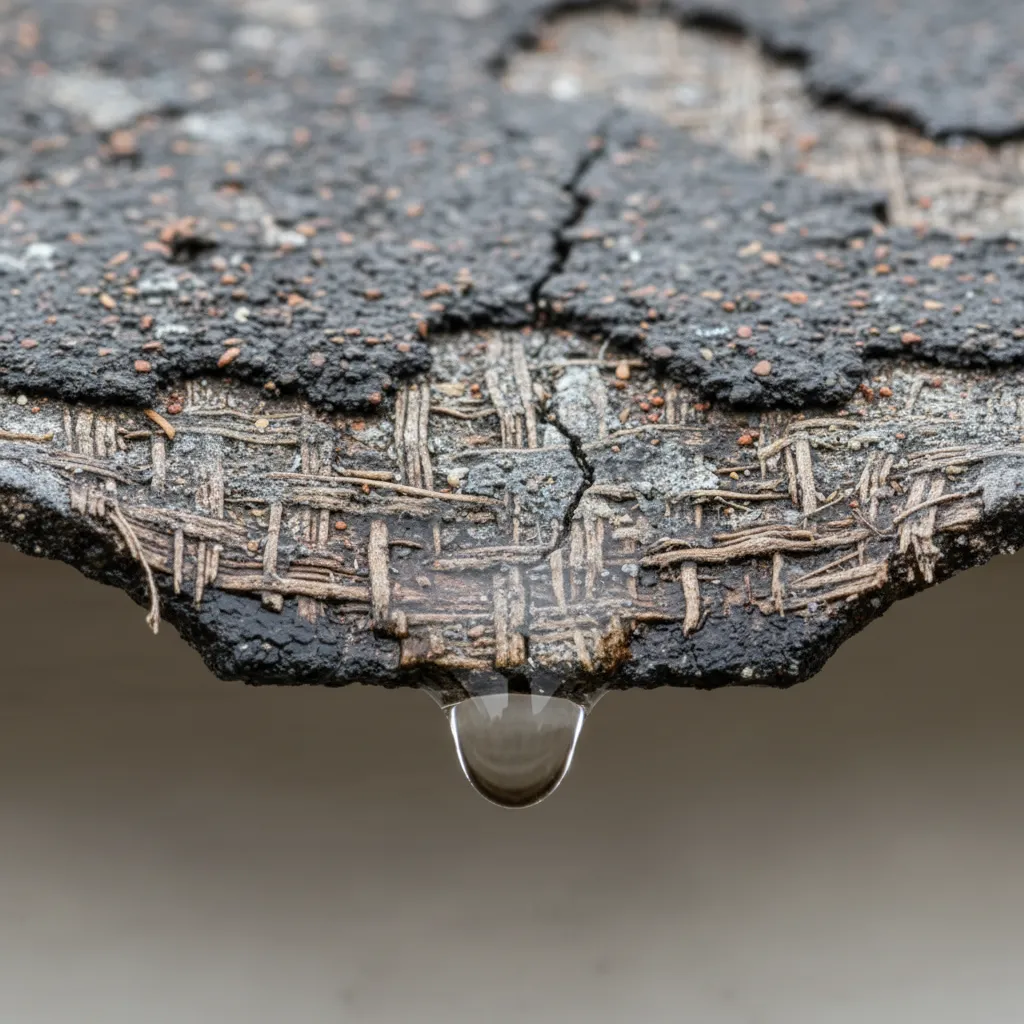
Hail damage is subtle. It is often invisible from the ground and can be missed even by insurance adjusters who spend too little time on the roof. The danger is not dramatic, obvious destruction — it is the quiet compromise of your shingles’ protective integrity.
When a hailstone strikes an asphalt shingle, it does three things:
- Fractures the asphalt mat beneath the surface, creating a weak point that will crack and leak over time
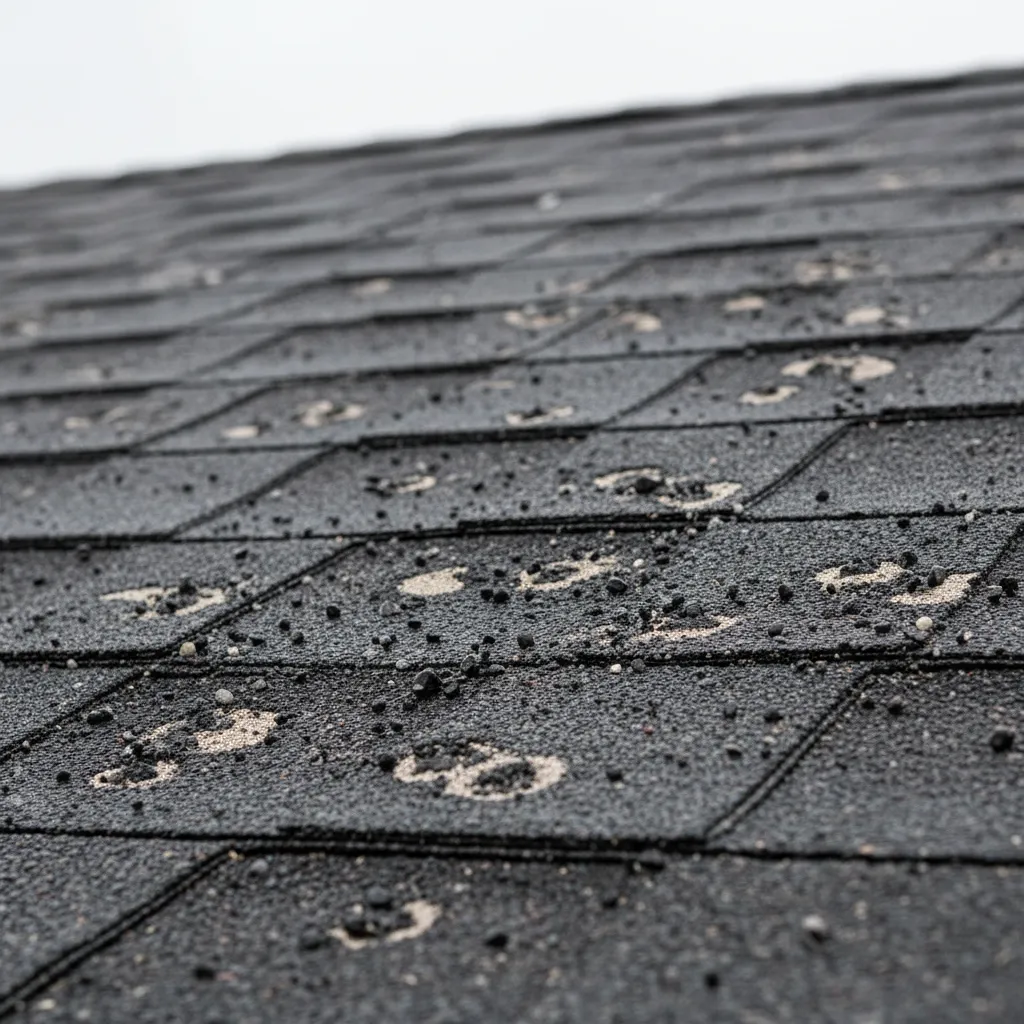
- Dislodges protective granules, exposing the asphalt to UV radiation that accelerates aging
- Compresses the shingle material, reducing its ability to shed water effectively
What hail damage looks like on your roof:
- Random pattern of dents or “bruises.” Because hail falls vertically (with some wind-driven angle), impacts are scattered randomly across the roof surface with no predictable pattern. You will see damage on all slopes, all areas.
- Dark spots on shingles. Each impact point appears as a dark, soft spot where granules have been knocked loose and the underlying mat is exposed or depressed.
- Impact marks on soft metals. This is the easiest ground-level confirmation of hail. Check your aluminum roof vents, gutter covers, flashing caps, and downspouts for dents and dings. If the metal is dented, your shingles almost certainly are too.
- Granule accumulation in gutters. After a hailstorm, check your gutters and the ground at the base of your downspouts for a buildup of black or colored granules.
Hail size and damage potential:
| Hail Diameter | Common Comparison | Roof Damage Potential |
|---|---|---|
| 3/4 inch | Penny | Minor granule loss; cosmetic damage only |
| 1 inch | Quarter | Begins causing functional shingle damage |
| 1.25 inches | Half-dollar | Significant bruising; likely insurance-qualifying |
| 1.75 inches | Golf ball | Severe damage; cracked shingles, dented flashing |
| 2.5 inches+ | Tennis ball | Catastrophic; potential through-shingle punctures |
In North Georgia, most damaging hail events produce stones in the 1–1.75 inch range — large enough to compromise your shingles but small enough to be completely invisible from the ground.
How Wind Damages Your Roof
Wind does not bruise your roof. It lifts, tears, and peels. Wind damage is generally more visible than hail damage because it creates obvious displacement — missing shingles, lifted edges, and exposed underlayment.
Wind interacts with your roof like an airfoil: it accelerates over the ridge and edges, creating negative pressure (suction) that pulls shingles upward. This is why wind damage concentrates in specific, predictable zones rather than appearing randomly like hail.
What wind damage looks like on your roof:
- Missing shingles. Entire shingles torn from the roof, exposing the underlayment or bare decking underneath. You may find shingles in your yard or on neighboring properties.
- Lifted or peeled-back shingles. Shingles that are still attached at one edge but have been lifted and curled backward, breaking the adhesive seal strip that holds them flat. Even if the shingle lays back down after the wind stops, the seal is permanently broken.
- Creased or folded shingles. A visible horizontal line across a shingle where it was bent backward by the wind. This crease indicates structural failure of the shingle — it will never lay flat again and is no longer watertight.
- Damage concentrated on edges, ridges, and windward slopes. Unlike hail’s random scatter, wind damage follows a pattern. Look for the worst damage along the roof edges, at the ridge line, on corner sections, and on the slope facing the prevailing storm direction.
Wind speed and shingle performance:
| Wind Speed | Category | Expected Shingle Behavior |
|---|---|---|
| 40–55 mph | Strong thunderstorm | Loose or aged shingles may lift |
| 60–75 mph | Severe thunderstorm | Three-tab shingles begin tearing; seal breaks on older architectural shingles |
| 75–90 mph | Damaging winds | Widespread shingle loss possible on roofs 15+ years old |
| 90+ mph | Extreme/tornado | Significant structural damage possible regardless of shingle type |
Hail vs. Wind Damage: Side-by-Side Comparison
Here is a quick-reference comparison to help you distinguish between the two types of damage when you are assessing your property after a storm:
| Characteristic | Hail Damage | Wind Damage |
|---|---|---|
| Pattern | Random — scattered across entire roof | Directional — concentrated on edges, ridges, windward slopes |
| Appearance | Dents, bruises, dark spots | Missing, lifted, creased, or torn shingles |
| Granule loss | Localized at impact points | Along lifted edges where seal broke |
| Metal components | Dented vents, flashing, gutters | Bent or displaced flashing, loose ridge caps |
| Visibility from ground | Often invisible | Usually visible (missing shingles, exposed areas) |
| Progression | Gradual — UV damage accelerates over months | Immediate — exposed areas leak at next rain |
| Common in North GA | March–June (spring storm season) | Year-round (thunderstorms, winter fronts) |
In many Georgia storms, you will find both types of damage on the same roof. A storm that produces hail almost always produces high winds as well. When filing your claim, it is important that both are documented separately — combined damage demonstrates the storm’s severity and supports a more comprehensive claim.
Documenting Storm Damage for Your Insurance Claim
Proper documentation is the difference between a fully covered claim and a partial settlement that leaves you paying thousands out of pocket. Georgia gives you up to one year from the date of the storm to file a claim, but most policies require you to report damage within 60 days of discovery.
Your documentation checklist:
- Date and time of the storm. Note when the storm hit your area. Cross-reference with local weather reports or the National Weather Service for official hail and wind speed records — this is powerful supporting evidence.
- Ground-level photos. Before anyone touches the roof, photograph all visible damage from the ground: missing shingles, debris in the yard, dented gutters, damaged vents, and any impact marks on siding, fences, or vehicles.
- Interior photos. Document any new water stains, drips, or damage inside your home that appeared after the storm.
- Neighbor communication. If neighbors had their roofs inspected and found damage, note this. Adjusters take claims more seriously when multiple properties in the same area report storm damage from the same event.
- Professional inspection report. This is the most critical piece. A detailed report from a licensed roofing contractor — with annotated photos, damage measurements, and a line-item repair estimate — carries far more weight with your insurer than homeowner photos alone.
Do not make temporary repairs before documenting. If you need to tarp the roof to prevent further damage, photograph the damaged area thoroughly before the tarp goes on.
What Happens If You Do Not Act Quickly
Storm damage — whether hail or wind — does not stay static. It worsens over time, and the longer you wait, the more expensive the eventual repair becomes:
- Hail bruises lose granules progressively. Within 6–12 months, the exposed asphalt mat cracks, and active leaks begin. What was a $0-deductible insurance claim becomes a $5,000–$10,000 out-of-pocket replacement if you miss the filing window.
- Lifted shingles with broken seals allow wind-driven rain underneath during every subsequent storm. One season of continued exposure can rot decking and lead to mold in the attic.
- Missing shingles expose the underlayment directly to UV and weather. Most synthetic underlayments are designed as a temporary backup, not a primary weather barrier. Within 30–60 days of exposure, the underlayment degrades and leaks begin.
When to Call a Professional
After any storm that produces hail (even small hail), sustained winds above 55 mph, or visible debris on your property, the smartest next step is a professional storm damage inspection. You need someone who can safely access the roof, identify both hail and wind damage, and produce the documentation your insurance company requires for a fair settlement.
Our team brings over 40 years of combined roofing experience serving homeowners across Blue Ridge, Canton, and Dahlonega. We provide free, no-obligation storm damage inspections, meet with insurance adjusters on-site, and handle the supplemental documentation process if your initial settlement falls short.
Think you have storm damage? Contact True Hand Roofing for a free storm damage inspection, or call us at (706) 455-9009 for same-day scheduling after major storms. You can also get an instant estimate to understand the scope of your roof’s needs.
Related reading: 5 Mistakes When Filing a Roof Insurance Claim | How to File a Roof Insurance Claim in Georgia | What to Do After a Tree Falls on Your Roof