A restorative roof coating is one of the smartest investments a commercial property owner can make. At $2–$4 per square foot, it costs a fraction of a full replacement ($6–$12 per square foot) and can extend your roof’s service life by 10–20 years. For a typical 10,000 sq ft commercial building, that is a potential savings of $40,000–$80,000.
But here is the honest truth that not every roofing contractor will tell you: not every roof is a good candidate for a coating. Applying a coating over a fundamentally failing roof is worse than doing nothing — it wastes your money, traps moisture, and accelerates the damage you were trying to prevent.
Our team has assessed hundreds of commercial roofs across Cherokee County, Canton, and Dawsonville, and we have learned that the difference between a coating that lasts 15 years and one that fails in 2 comes down to honest pre-application assessment. Here is the checklist we use to determine whether your roof qualifies for a coating restoration.
Checkpoint 1: The Roof Substrate Is Structurally Sound
A coating is a new skin, not a new skeleton. The underlying structure of your roof — the deck, the insulation, and the existing membrane — must be solid enough to support a coating system for the next 10–20 years.
How we test it:
- Physical walk test. We walk the entire roof surface, checking for soft, spongy, or bouncy areas. A solid roof should feel firm underfoot. Soft spots indicate that the underlying insulation or even the roof deck itself has absorbed water and may be rotting.
- Visual deck inspection. From inside the building (if accessible), we check the underside of the roof deck for water stains, sagging, rust on metal decking, or deterioration of wood decking.
- Load assessment. A coating adds 0.5–1.5 lbs per square foot of weight. While this is minimal, a structurally compromised deck may not handle even this additional load safely.
The verdict:
- Good candidate: The deck feels solid everywhere, with no bouncy areas and no visible deterioration from inside the building.
- Marginal candidate: One or two small soft spots (less than 5% of total area) that can be cut out and patched with new insulation and membrane before coating.
- Not a candidate: Widespread soft or spongy areas covering more than 10–15% of the roof. This indicates systemic insulation saturation or deck failure, and a full replacement is the only responsible solution.
Checkpoint 2: Insulation Moisture Content Is Acceptable
This is the single most important test, and it is the one that disqualifies the most roofs. Wet insulation beneath the membrane cannot be dried by a coating — in fact, a coating seals the moisture in, creating a perpetual cycle of freeze-thaw damage in winter and bacterial growth in summer.
How we test it:
- Infrared (IR) thermography ($300–$800). After sunset on a warm day, we scan the roof with an infrared camera. Wet insulation retains heat longer than dry insulation, creating a visible “heat map” of moisture infiltration. This is the fastest, most comprehensive method for large roofs.
- Core sampling ($200–$500). We cut small test plugs (about 2 inches square) at strategic locations across the roof, then physically examine and weigh the insulation to determine moisture content. Core samples provide definitive results and are essential to confirm IR findings.
- Electronic moisture meters. Handheld devices that detect moisture in the substrate without cutting. Useful for spot-checking but less comprehensive than IR scanning.
The verdict:
- Good candidate: Less than 10% of the insulation shows moisture, and the wet areas are isolated and repairable.
- Marginal candidate: 10–25% moisture infiltration. The wet sections can be cut out and replaced before coating, though this adds $2–$5 per square foot to the wet areas, increasing total project cost.
- Not a candidate: More than 25% of insulation is saturated. At this point, the cut-and-patch approach becomes more expensive than tearing off the entire system and starting fresh with new insulation and membrane.
Checkpoint 3: Seams Are in Repairable Condition
The primary purpose of a roof coating is to create a seamless, monolithic membrane. But the coating alone is only about 20 dry mils thick — it is not designed to bridge large gaps or structurally reconnect failed seams. The existing seams must be in repairable condition so they can be reinforced with fabric-embedded base coat before the final coating goes on.
How we test it:
- Probe testing. Using a blunt tool, we probe every accessible seam on the roof — heat-welded seams on TPO and PVC, adhesive seams on EPDM, and lap seams on modified bitumen. We are looking for areas where the bond has failed and the seam can be pulled apart.
- Percentage assessment. We estimate what percentage of total seam length shows failure or weakness.
The verdict:
- Good candidate: Seams are generally intact with isolated failures at less than 15% of total seam length. These can be cleaned, primed, reinforced with polyester fabric, and sealed before coating.
- Not a candidate: Seams are failing across more than 30–40% of the roof. This indicates systemic adhesion failure — the membrane has fundamentally lost its bond, and a coating cannot compensate for this level of deterioration.
Checkpoint 4: The Membrane Has Good Adhesion to the Substrate
Even if the seams are intact, the membrane itself must be well-adhered to the insulation or substrate below. A coating applied over a loose membrane creates a “balloon” effect — the coating seals the surface, but the membrane underneath shifts and moves, eventually cracking the coating from below.
How we test it:
- Blister check. We look for raised areas where the membrane has pulled away from the insulation, forming air or moisture-filled blisters.
- Adhesion pull test. We attempt to lift the membrane edge at several locations. It should resist firmly. If it pulls away easily, adhesion has failed.
- Test patch. We apply a small section of the proposed coating system (about 2x2 feet) to a prepared area of the roof and let it cure for 48–72 hours. We then test whether it has formed a strong, lasting bond with the existing surface.
The verdict:
- Good candidate: The membrane is firmly adhered across the roof, with no blisters or delamination. The test patch shows excellent adhesion.
- Marginal candidate: Scattered small blisters (less than 5% of area) that can be cut, dried, and repaired before coating.
- Not a candidate: Large sections of delaminated or floating membrane. The coating has nothing stable to bond to, and the project will fail.
Checkpoint 5: Drainage Is Adequate (or Correctable)
While silicone coatings can handle ponding water, no coating system performs its best under prolonged standing water. Ideally, your roof should drain most water within 24–48 hours after rainfall. By code, water standing longer than 48 hours is classified as “ponding” and indicates a drainage problem.
How we assess it:
- Post-rain inspection. We visit the roof 48 hours after a significant rainfall to identify any standing water areas.
- Drain and scupper check. Clogged or undersized drains are the most common — and most fixable — cause of ponding. Cleaning or upgrading drainage can often resolve the issue without structural changes.
- Low-spot mapping. We identify areas where the roof structure has settled or deflected, creating depressions that trap water.
The verdict:
- Good candidate: Water drains within 24 hours, with no significant ponding areas. If choosing acrylic coating, good drainage is non-negotiable.
- Marginal candidate: A few ponding areas that can be addressed by clearing drains, installing crickets (small diverters), or using tapered insulation fill. Silicone coating is specified for any remaining ponding zones.
- Not a candidate: Severe, widespread ponding caused by structural deflection across the roof. The structural issue must be addressed before any coating system can succeed.
Checkpoint 6: The Roof Has Had Some Level of Maintenance
A roof that has been completely neglected for its entire life presents challenges that go beyond the coating itself. Heavy accumulations of dirt, algae, moss, and debris require extensive (and expensive) cleaning before a coating can bond properly. More importantly, years of deferred maintenance usually mean multiple layers of patching material, incompatible sealants, and undocumented repairs that complicate surface preparation.
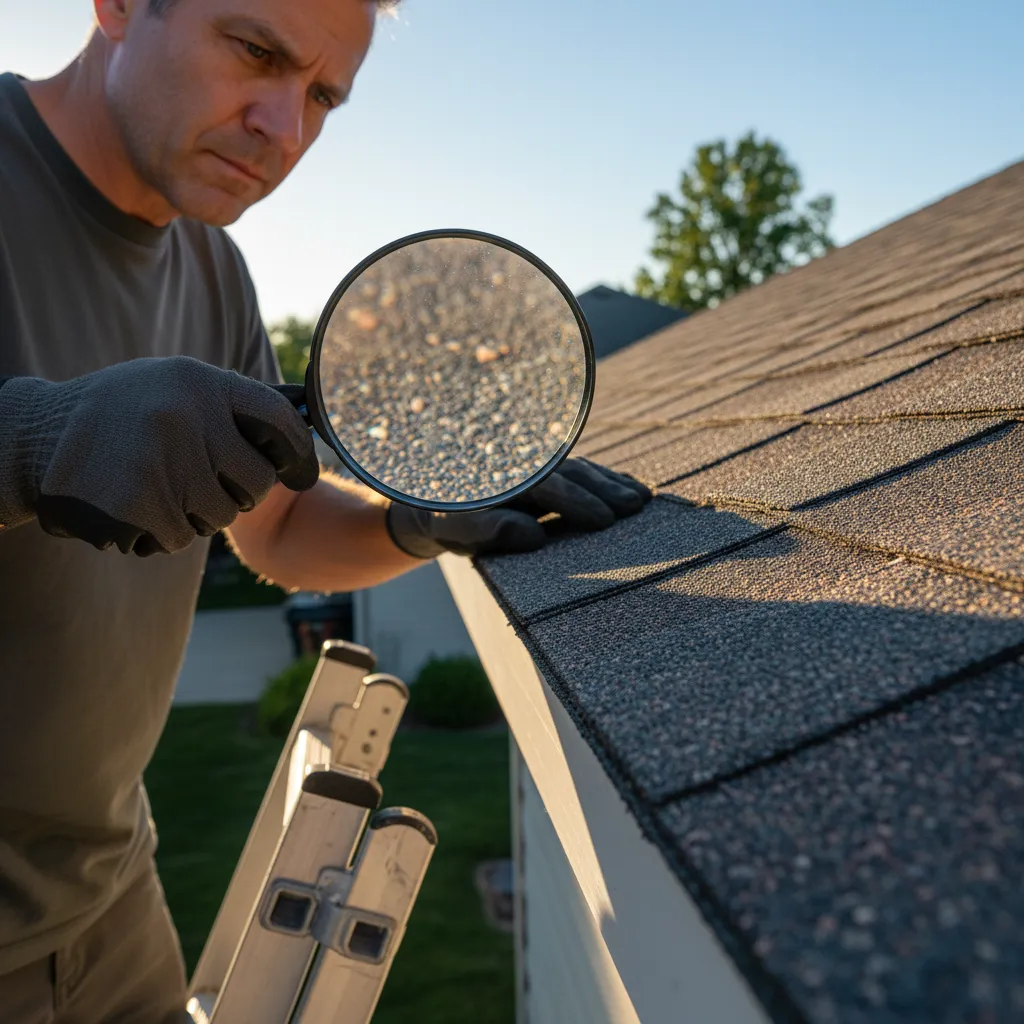
The ideal coating candidate is a commercial roof that is 8–20 years old, structurally sound, with dry insulation and intact seams — but showing its age through surface chalking, minor granule loss, hairline cracks, and the occasional small leak at a penetration or flashing detail. This is a roof that still has life in its structural components but needs a new waterproof surface to carry it another decade or two.
When to Call a Professional
A building owner can do a basic visual check — walk the roof and look for obvious soft spots, standing water, and failed seams. But the tests that truly determine coating candidacy (infrared moisture scanning, core sampling, adhesion testing) require professional equipment and experience to interpret correctly.
The cost of a professional coating assessment ranges from $300–$1,000 depending on roof size and the tests performed. That investment can save you from wasting $20,000–$45,000 on a coating that fails because the underlying conditions were not properly evaluated.
Our team performs thorough pre-application assessments for commercial buildings throughout Cherokee County, Canton, Dawsonville, and the surrounding North Georgia communities. We will give you an honest answer about whether your roof is a coating candidate — and if it is not, we will explain your other options.
Want to find out if your roof qualifies? Contact us for a free initial assessment or get an instant estimate to start the conversation.
Related reading: The Financial Benefits of a Roof Coating | Silicone vs. Acrylic: Choosing the Right Coating