When you open your monthly power bill during a Georgia summer, what do you blame for the high cost? The AC unit? The windows? For most homeowners in Ellijay, Dawsonville, and Canton, the real culprit is hiding right above their heads — the attic.
An improperly ventilated and under-insulated attic is one of the biggest sources of energy waste in a home. It can add $200 to $400 per year to your energy bills, make your upper floors uncomfortable year-round, and shorten the life of your roofing system by years. The good news is that investing in a proper attic ventilation and insulation system can pay for itself in as little as 3-5 years — and keep paying dividends for decades.
Why Your Attic Matters More Than You Think
Think of your attic as the buffer zone between your living space and the outside world. Insulation’s job is to slow the transfer of heat, and ventilation’s job is to move out any heat and moisture that gets past that barrier. When this system is out of balance, the consequences hit your wallet, your comfort, and your roof.
Most homeowners never set foot in their attic, which is exactly why problems go undetected for years. By the time you notice the symptoms — high energy bills, an uncomfortable second floor, or mold in the attic — the underlying issue has been costing you money for a long time.
The Summer Oven Effect
During a typical Georgia summer, the sun beats down on your roof for 10-14 hours a day. Without proper ventilation, that heat gets trapped in your attic. Temperatures inside an unventilated attic can soar to 150-160 degrees Fahrenheit — hot enough to bake your shingles from below and turn your upper floor into a sauna.
This superheated air radiates downward through your ceiling, overwhelming even adequate insulation. Your air conditioner runs constantly just to maintain a comfortable temperature, driving up your electric bill by 10-20% or more. You are essentially paying to cool your home while a giant oven runs right above it.
The damage is not limited to your energy bills. Sustained extreme heat accelerates shingle deterioration from the underside, where you cannot see it. Shingles designed to last 25-30 years may fail in 15-20 years because they are being baked from both sides — sun above and trapped heat below.
The Winter Moisture Trap
In winter, the problem reverses but the consequences are equally expensive. Warm, moist air from your living space — generated by cooking, showers, laundry, and even breathing — rises through ceiling penetrations, light fixtures, and gaps in insulation into the cold attic.
When this warm, humid air contacts the cold underside of your roof deck, it condenses — turning from invisible vapor into liquid water. In North Georgia, where winter humidity regularly ranges from 60-80%, this condensation can be substantial. Over time, this trapped moisture leads to:
- Wood rot — Rafters, decking, and structural components weaken, potentially requiring $3,000-$8,000 in structural repairs.
- Mold and mildew growth — A damp, dark attic is the perfect breeding ground. Professional mold remediation costs $1,500-$5,000.
- Insulation degradation — Wet insulation compresses and loses its R-value, becoming essentially useless. Waterlogged fiberglass insulation can take months to dry and may never fully recover its thermal performance.
The Two-Part Solution: Ventilation and Insulation Working Together
A healthy attic requires both components working in balance. You cannot have one without the other and expect good results.
Proper Ventilation: The Ridge-and-Soffit Gold Standard
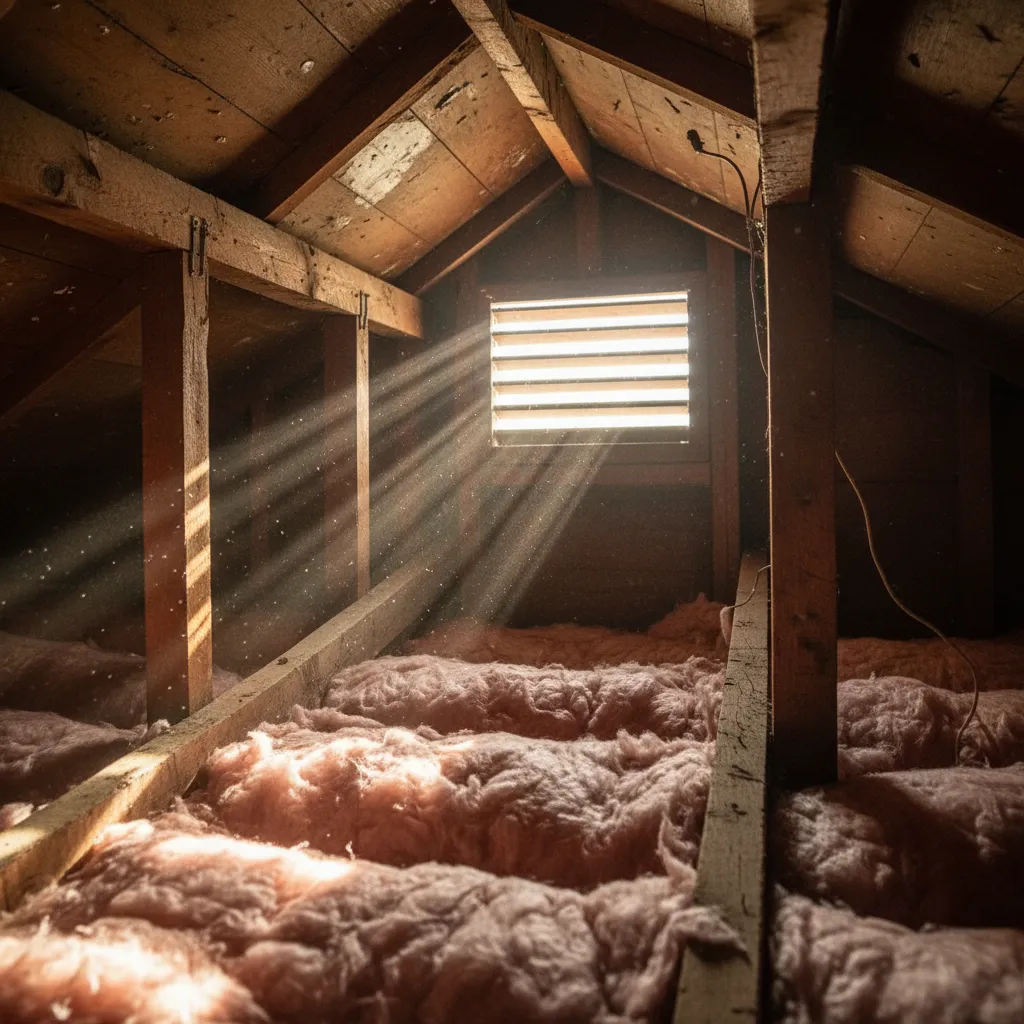
The most effective attic ventilation system uses continuous ridge vents along the peak of your roof combined with soffit vents at the eaves. This creates a natural, passive airflow pattern:
- Cool, dry air enters through soffit intake vents at the lowest point of the roof
- Air flows upward along the underside of the roof deck, absorbing heat and moisture
- Hot, moist air exits through ridge exhaust vents at the highest point
This system works 24/7 with no moving parts, no electricity, and virtually no maintenance. It is superior to box vents (which create uneven airflow and dead zones) and powered attic fans (which can actually create negative pressure that pulls conditioned air from your living space into the attic).
For a detailed comparison of your ventilation options, see our guide on ridge vents vs. box vents.
Adequate Insulation: Meeting the R-Value Target
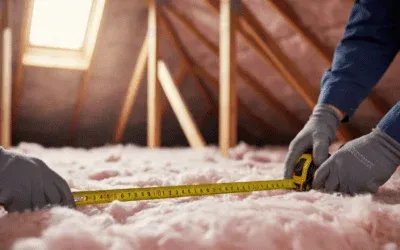
Insulation is measured by its R-value — its resistance to heat flow. The higher the R-value, the better the thermal barrier. For North Georgia (DOE Climate Zone 3, with mountain areas in Zone 4), the Department of Energy recommends R-38 to R-60 for attic insulation.
Here is the reality: many homes built before 2000 have attic insulation of R-19 or less — roughly half the minimum recommendation. Bringing these homes up to standard is one of the most cost-effective energy improvements you can make.
Blown-in insulation is the most popular choice for existing homes because it can be installed over existing insulation without removing it, fills gaps and irregular spaces effectively, and costs $1.50-$3.50 per square foot installed. For a typical 1,500 square foot attic, upgrading from R-19 to R-49 costs approximately $2,250-$5,250.
For a deeper explanation of insulation ratings and what they mean for your home, read our guide on what is R-value.
The Benefits of Getting Your Attic Right
When your ventilation and insulation are working properly together, the benefits compound across every season:
- Lower energy bills — Homeowners typically see 10-20% savings on heating and cooling costs, translating to $200-$400 per year in North Georgia. Over 10 years, that is $2,000-$4,000 back in your pocket.
- Extended roof lifespan — Eliminating the oven effect from below can add 5-10 years to your shingle life by preventing premature thermal degradation.
- Improved home comfort — Consistent temperatures throughout the home, especially on the upper floor. No more “the upstairs is always 5 degrees hotter” problem.
- Moisture and mold prevention — Proper airflow eliminates the conditions that allow mold, mildew, and wood rot to develop.
- Higher resale value — Energy efficiency upgrades are increasingly important to homebuyers. A well-insulated, properly ventilated attic is a tangible selling point.
Signs Your Attic Needs Attention
Watch for these warning signs that your attic system is underperforming:
- Electric bills that spike dramatically in summer or winter
- Upper floor rooms that are noticeably hotter or colder than the rest of the house
- Visible moisture, frost, or water stains on the underside of the roof deck
- Musty or moldy odors in the attic
- Insulation that is thin, uneven, compressed, or discolored
- Exterior paint peeling or bubbling near the roofline (a sign of moisture escaping through soffits)
- Icicles forming along the eaves in winter (a sign of heat escaping into the attic and melting snow on the roof)
When to Call a Professional
If you notice any of the signs above — or if your home was built more than 15 years ago and you have never had your attic system evaluated — a professional assessment is the smart next step. Our team’s experienced roofers can measure your current insulation R-value, evaluate your ventilation system, identify moisture issues, and recommend specific improvements with clear cost-to-savings projections.
Ready to make your home more comfortable and efficient? Contact True Hand Roofing for a free attic analysis and estimate, or start with a free instant estimate to see what your project could cost.
Related articles: What is R-Value? A Homeowner’s Guide to Attic Insulation in Georgia | Ridge Vents vs. Box Vents: What’s the Best Way to Ventilate Your Attic?