A skylight is one of the most beautiful features in a home — until it starts leaking. The moment you notice a water stain spreading across the ceiling, a steady drip during a rainstorm, or mysterious moisture around the frame, that gorgeous source of natural light becomes a source of real stress.
The good news is that most skylight leaks are fixable, and they’re almost always caused by one of three common problems. The key is getting the right diagnosis quickly, because water damage escalates fast. What starts as a minor drip can lead to ruined drywall, damaged insulation, stained ceilings, and even mold growth in your attic — all within weeks if left unaddressed.
Homeowners across Canton, Jasper, and Blue Ridge deal with skylight leaks regularly, especially after North Georgia's spring storms and heavy summer rain. At True Hand Roofing, our team brings 40+ years of combined experience diagnosing and repairing skylight issues. Here are the three most common causes and exactly what to do about each one.
Cause #1: Failed or Improperly Installed Flashing
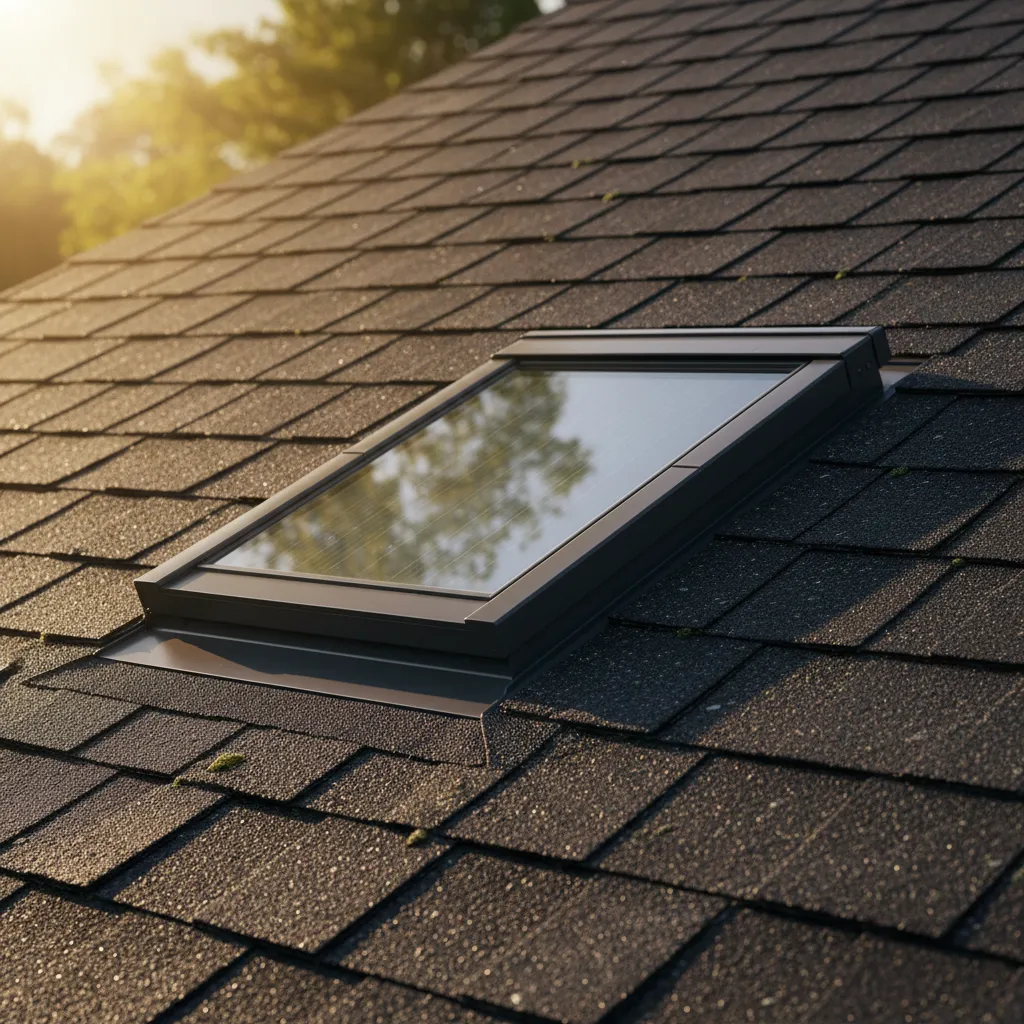
Flashing failure is the number one reason skylights leak — responsible for an estimated 60-70% of all skylight leak calls we receive. Flashing is the custom-fit metal system that creates a waterproof barrier between your skylight’s curb (the raised frame it sits on) and your surrounding roof shingles. When it fails, water finds a path underneath.
Why flashing fails:
- UV degradation. The sealant that bonds flashing to the skylight curb and to the surrounding roofing material breaks down over time from constant sun exposure. Georgia’s intense UV can accelerate this process, causing sealant to crack and shrink within 10-15 years.
- Thermal cycling. North Georgia’s temperature swings — from below freezing in winter to 90+ degrees in summer — cause metal flashing to expand and contract repeatedly. Over years, this thermal cycling can work fasteners loose and create gaps.
- Original installation errors. If the flashing wasn’t properly integrated with the roof shingles in the correct overlapping sequence (step flashing up the sides, counter flashing at the top), water can channel underneath even when the flashing appears intact.
- Storm damage. High winds can lift shingles around the skylight, exposing the flashing to direct water contact or displacing the flashing itself.
The repair: $300-$800. A professional roofer removes the shingles surrounding the skylight, strips the old flashing, and installs a new, high-quality flashing system — we recommend the VELUX 3-layer flashing kit, which integrates seamlessly with both the skylight and your existing roof. The new sealant is applied, shingles are properly woven back around the flashing, and the waterproof barrier is restored. This repair typically adds 10-15 years of reliable, leak-free performance.
Signs of flashing failure: Water appearing at the edges of the skylight frame (not the glass itself), staining on the drywall around the skylight perimeter, or water that only appears during heavy, wind-driven rain. If you see visible rust, gaps, or lifted metal around the skylight from ground level, flashing failure is the likely culprit.
Cause #2: Seal Deterioration and Skylight Age
While flashing connects the skylight to your roof, the seals connect the glass (or acrylic) pane to the skylight frame itself. When these seals fail, water gets between the panes or directly through the frame — and no amount of flashing repair will fix it.
Why seals fail:
- Age. Most skylight seals have a functional lifespan of 15-25 years. Beyond that, the rubber or silicone gaskets harden, shrink, and crack, losing their ability to keep water out.
- Older acrylic “bubble” skylights. If your skylight is an acrylic dome from the 1980s or 1990s, the acrylic itself becomes brittle with age. Hairline cracks develop, sometimes invisible from the ground, and allow water to seep through the glazing.
- Fogging between panes. On double-paned skylights, a failed seal allows moisture between the glass layers. You’ll notice persistent fogging or condensation trapped between the panes that never clears. This means the sealed unit has been compromised.
The repair: $200-$500 for sealant replacement. If the skylight glass and frame are still structurally sound, a professional can remove the old gasket material and apply new, UV-resistant sealant to restore the seal. This is a viable fix for skylights under 15-20 years old with minor seal degradation.
When replacement is necessary: $1,000-$2,500. If the skylight is over 20 years old, the acrylic is cracked, or the seal between double panes has failed (visible fogging), a full skylight replacement is the best long-term solution. A modern VELUX skylight provides dramatically better insulation, UV protection, and weather resistance than anything built 20+ years ago. If you're already planning a roof replacement, adding a new skylight during that project saves significantly on labor since the roof is already open.
If you're replacing your skylight, consider upgrading to a solar-powered model that qualifies for the 30% federal tax credit — it's a smart way to offset the replacement cost.
Cause #3: Condensation (Not Actually a Leak)
Here’s one that catches many homeowners off guard: sometimes the “leak” isn’t actually water coming from outside at all. It’s condensation forming on the interior surface of the skylight glass.
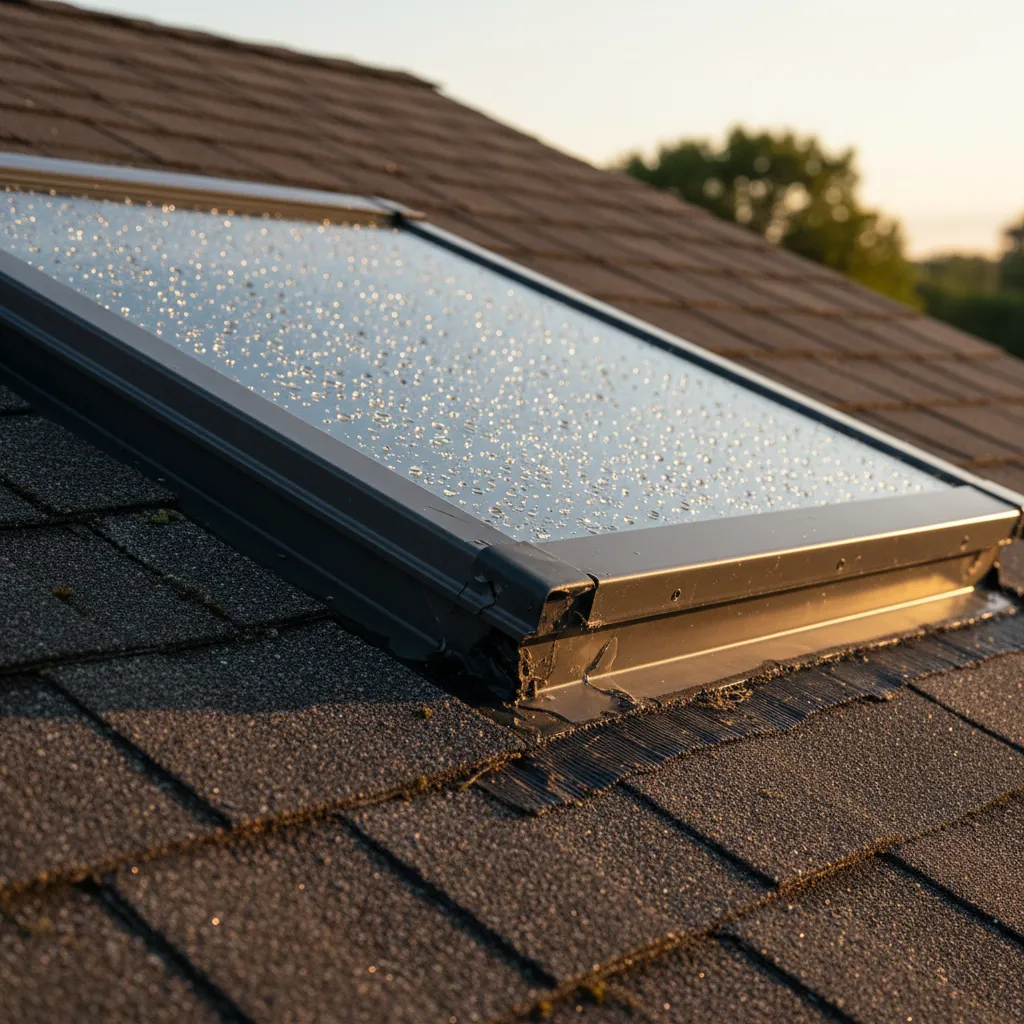
Why condensation happens: When warm, humid air inside your home contacts the cold surface of the skylight glass — especially during winter months or after cooking and showering — moisture condenses on the glass, forming water droplets that drip down and pool around the frame. It looks and feels exactly like a leak, but the water is coming from inside your home, not through the roof.
How to tell the difference:
- Condensation appears as uniform moisture on the glass surface, worsens in cold weather or after high-humidity activities, and typically clears during the middle of the day when temperatures equalize
- A real leak produces water from the frame edges (not the glass surface), gets worse during rain, and leaves brown water stains on surrounding drywall
The fix: $100-$300. Condensation is primarily a ventilation and humidity issue, not a roofing problem. Solutions include:
- Improve attic ventilation. Ensuring proper airflow in your attic helps regulate the temperature of the skylight glass, reducing the temperature differential that causes condensation. Proper ridge and soffit vents are essential.
- Use exhaust fans. Running bathroom and kitchen exhaust fans during and after high-humidity activities removes moisture before it reaches the skylight.
- Consider a dehumidifier. In persistently humid homes, a whole-house or room dehumidifier can keep indoor humidity at the 30-50% range where condensation is unlikely.
- Upgrade to a modern skylight. If condensation is chronic despite good ventilation, the skylight itself may be poorly insulated. Modern double-paned skylights with Low-E coatings maintain warmer interior glass temperatures, dramatically reducing condensation. The upgrade cost of $1,000-$2,500 eliminates the problem permanently.
Condensation is especially common on older, single-pane skylights and in rooms directly above kitchens or bathrooms where moisture levels are naturally high.
The Hidden Danger of Ignoring a Skylight Leak
Whatever the cause, a skylight leak should never be ignored or put off until “next season.” Water damage is progressive and accelerates quickly.
Within days: Water saturates insulation in the attic, reducing its R-value and your home's energy efficiency.
Within weeks: Drywall around the skylight absorbs moisture, softens, and develops stains. Paint begins to bubble or peel.
Within months: Mold and mildew establish in the damp attic space and behind drywall. Remediation costs for mold can run $1,500-$5,000+ depending on the extent of growth.
Long-term: Structural wood framing around the skylight opening can rot, compromising the roof structure and turning a $300-$800 repair into a $3,000-$5,000 structural repair.
A problem found during a professional roof inspection is almost always cheaper to fix than a problem discovered after months of unchecked water damage.
When to Call a Professional
If you notice any signs of moisture around your skylight — water stains, dripping during rain, fogging between panes, or persistent condensation — schedule a professional inspection promptly. A trained eye can correctly diagnose whether the issue is a flashing failure, a seal problem, condensation, or a combination, and recommend the most cost-effective solution.
At True Hand Roofing, we inspect and repair skylights throughout Canton, Jasper, Blue Ridge, and all of North Georgia. We'll give you an honest diagnosis — if a $300 flashing repair will solve the problem, we'll tell you. If replacement makes more sense, we'll explain why and walk you through your options, including solar-powered upgrades that qualify for federal tax credits.
Tired of that drip? Contact us for a free skylight inspection or get an instant estimate on skylight repair or replacement.
Related reading: Solar-Powered Skylights & Federal Tax Credits | 5 Most Overlooked Problems Found During a Roof Inspection