Flat and low-slope roofs are the standard for commercial buildings across North Georgia — from retail centers in Canton to warehouses in Blue Ridge and office buildings in Ellijay. They are practical, cost-effective, and provide easy access for rooftop HVAC equipment. But unlike a steeply sloped residential roof that sheds water in seconds, a flat roof must function as a nearly perfect, impenetrable barrier — and that makes it vulnerable to three persistent threats.
Understanding these three enemies of your flat roof is the first step toward preventing a minor, $150–$500 repair from becoming a $5,000–$20,000 interior damage disaster. Our team brings 40+ years of combined experience diagnosing and repairing commercial roof problems across North Georgia, and these three issues account for the vast majority of the emergency calls we receive.
Enemy 1: Punctures and Tears
A commercial roof is not an untouched surface. It is a working platform that sees regular foot traffic from HVAC technicians, electricians, plumbers, satellite installers, and maintenance crews — often multiple times per month. Every visit is an opportunity for damage.
How punctures happen:
- Dropped tools and equipment. A single dropped wrench, screwdriver, or sheet metal screw can pierce a membrane that is only 45–80 mils thick (about the thickness of a credit card to a nickel). HVAC work is the most common culprit — technicians working with sharp metal ductwork and fasteners on top of a membrane surface.
- Careless foot traffic. Work boots with embedded gravel, debris, or metal shavings can create dozens of micro-punctures in a single visit. These tiny holes are invisible to the naked eye but large enough for water to penetrate.
- Storm debris. North Georgia’s severe thunderstorms and occasional tornadoes launch tree branches, roofing materials from neighboring buildings, and other sharp debris onto roof surfaces. After any major storm, roof inspection should be a priority.
- Animal damage. Birds, squirrels, and raccoons can damage flashing, membrane edges, and vent boots over time.
What a puncture costs you:
A single puncture repair by a professional roofing contractor costs $150–$500, depending on the membrane type and extent of damage. But an undetected puncture can allow water to saturate surrounding insulation over weeks or months. By the time the leak appears inside the building, the water has often spread 10–20 feet from the original puncture point, saturating insulation that now must be replaced at $3–$6 per square foot.
Professional repair process:
For TPO, PVC, and EPDM membranes, repair involves cleaning the area with the appropriate solvent, applying primer, and heat-welding (TPO/PVC) or adhesive-bonding (EPDM) a patch that extends at least 6 inches beyond the damaged area in all directions. The patch must bond completely to the existing membrane with zero voids or air pockets. This creates a permanent, watertight seal that is actually stronger than the surrounding field membrane.
Prevention measures:
- Establish designated walk paths with protective walk pads for maintenance routes
- Require all rooftop contractors to use protective mats when setting down tools or equipment
- Schedule post-storm inspections within 48 hours of any severe weather event
- Install equipment screens around rooftop units to contain loose parts and debris
Enemy 2: Seam Failure
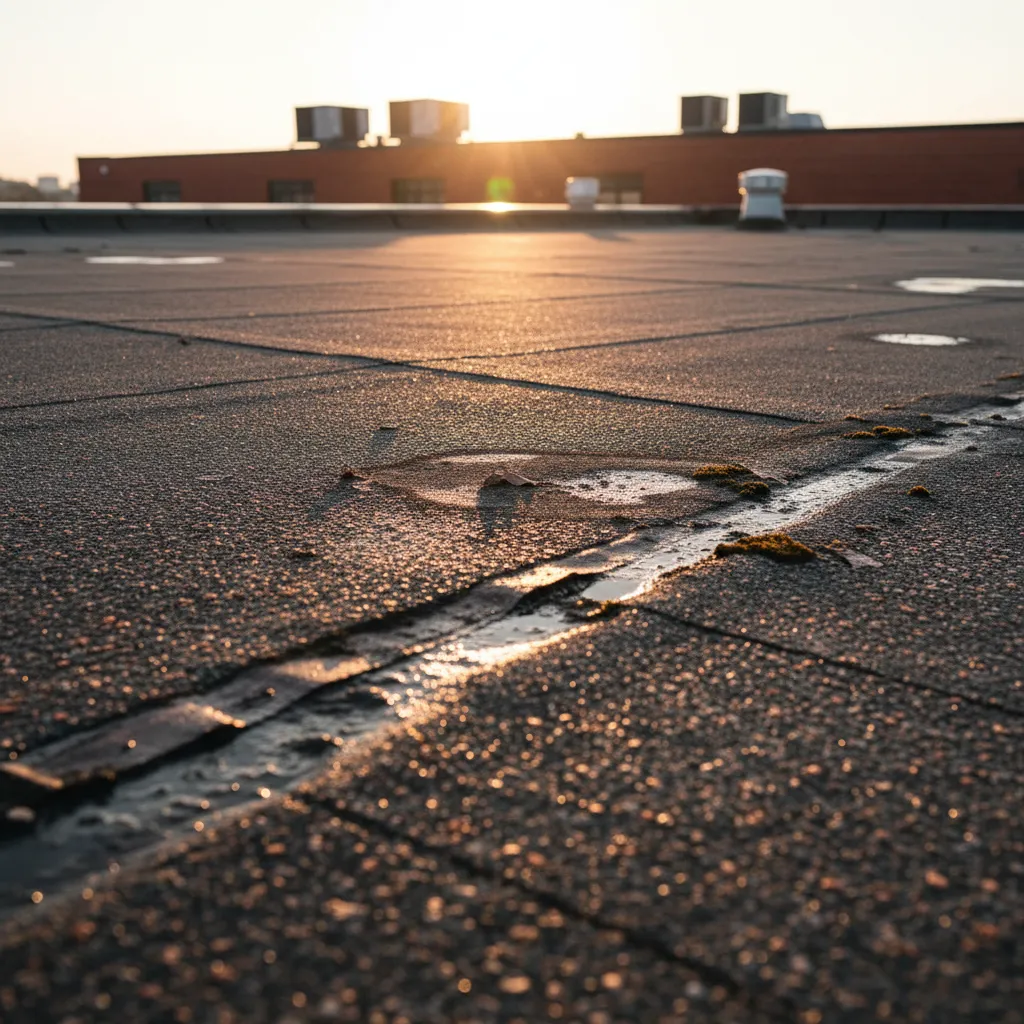
Every commercial flat roof is made of large sheets of membrane material — typically 5–10 feet wide — joined together at seams. These seams are the Achilles heel of any flat roof system, responsible for roughly 60% of all commercial roof leak calls. No matter how durable the field membrane is, the roof is only as strong as its weakest seam.
How seams fail:
- Adhesive degradation (EPDM roofs). Older EPDM (rubber) roofs use adhesive-bonded seams that degrade over 10–15 years of UV exposure and thermal cycling. The adhesive becomes brittle, loses flexibility, and eventually releases its grip, allowing the seam to separate. In North Georgia’s climate — with temperatures ranging from the 20s in winter to the mid-90s in summer — this thermal cycling is relentless.
- Inadequate heat welding (TPO/PVC roofs). Modern TPO and PVC roofs use heat-welded seams that, when done correctly, are as strong as the membrane itself. But the heat-weld process is sensitive to temperature, speed, and equipment calibration. An underweld (not enough heat) creates a seam that looks bonded but fails under stress. An overweld (too much heat) thins the membrane at the seam, creating a weakness that cracks over time.
- Thermal stress at penetrations. Where the membrane meets pipes, drains, HVAC curbs, and parapet walls, the seam between the flashing and the field membrane endures the most thermal movement. These “detail” seams fail at 3–5 times the rate of straight field seams.
What seam failure costs you:
A localized seam repair runs $300–$1,000 depending on the seam type and length of failure. But seam failures rarely stay localized. Once water gets beneath the membrane at a failed seam, it spreads laterally along the seam line, accelerating adhesion failure in both directions. What starts as a 2-foot seam opening can become a 20-foot failure within a single season if not addressed.
Professional repair process:
Our technicians use specialized seam probes to test every inch of suspect seams, identifying not just obvious failures but also areas where the bond is weakening. For EPDM, repair involves cleaning, priming, and applying seam tape or liquid adhesive. For TPO and PVC, we use calibrated hot-air welding equipment to re-fuse the seam at the precise temperature (400–450°F for TPO, 350–400°F for PVC) and speed required for a full-strength weld. All repairs are probe-tested after completion to verify bond integrity.
Enemy 3: Ponding Water
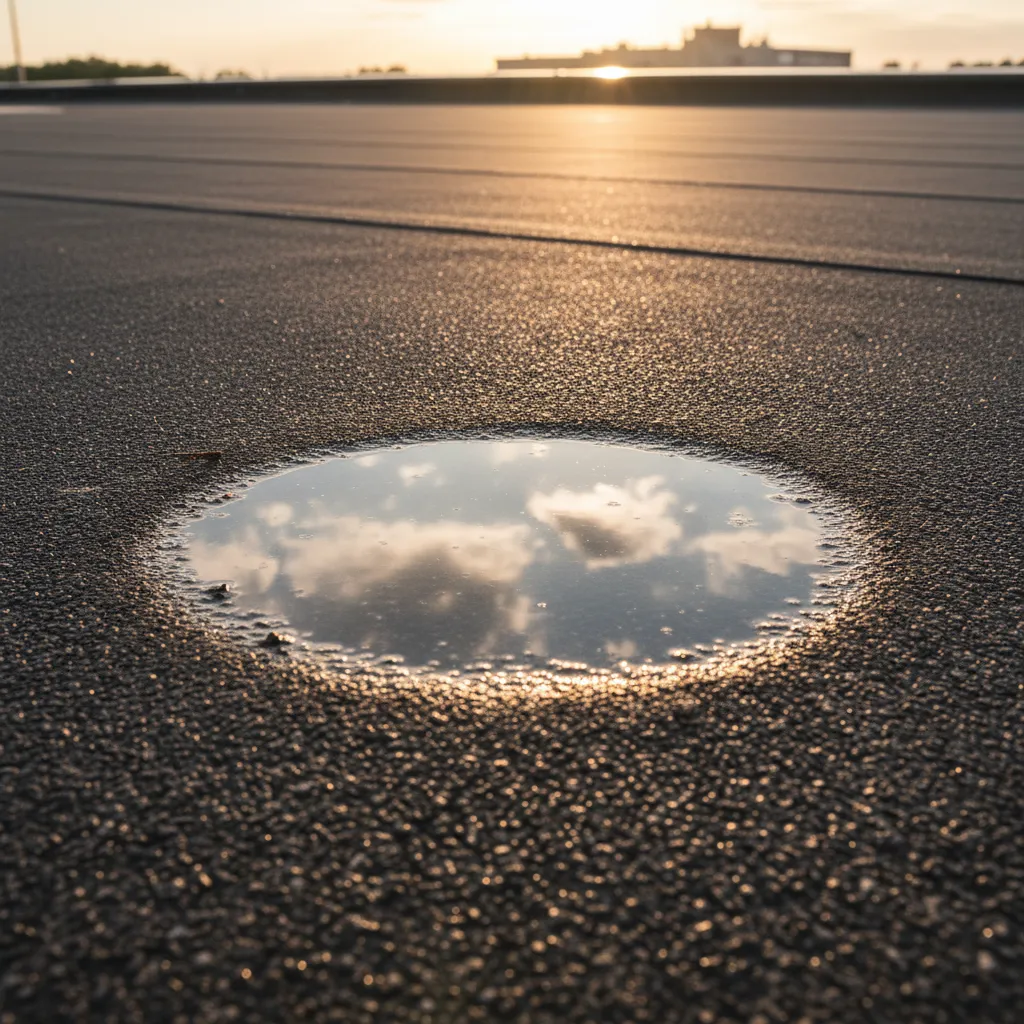
While they are called “flat roofs,” they should never be perfectly level. A properly designed low-slope commercial roof has a minimum pitch of 1/4 inch per foot — enough to direct water toward drains and scuppers within hours after rainfall. When water stands on a roof for more than 48 hours after rain stops, it is classified as “ponding” by industry standards (NRCA), and it becomes one of the most destructive forces your roof will face.
How ponding develops:
- Clogged or undersized drains. This is the most common and most fixable cause. Leaves, debris, bird nests, and sediment gradually block roof drains, causing water to back up and stand. In North Georgia’s heavily forested areas, drain clogging can happen within weeks of a cleaning.
- Structural deflection. Over years of carrying snow loads, equipment weight, and its own dead load, a roof deck can develop subtle sags and depressions. These low spots collect water that adds more weight, causing more deflection — a self-reinforcing cycle that worsens with every rain.
- Insulation compression. High-traffic areas (around HVAC units, access hatches) develop compressed insulation that creates low spots in the membrane surface.
- Original design deficiencies. Some older buildings were designed with inadequate roof slope or insufficient drain capacity for the rainfall levels they actually experience.
What ponding costs you:
Standing water adds approximately 5 lbs per square foot per inch of depth. A 10x10 foot ponding area that is 3 inches deep places 1,500 lbs of concentrated load on a small section of your roof structure. Beyond the structural stress, ponding water:
- Accelerates UV degradation by acting as a magnifying lens on the membrane surface, concentrating solar radiation
- Promotes biological growth (algae, mold, vegetation) that retains moisture and further degrades the membrane
- Exploits every weakness in seams and flashing details, relentlessly working water into any imperfection
- Voids most warranties — the majority of commercial roof membrane warranties explicitly exclude damage caused by ponding water
Professional solutions for ponding:
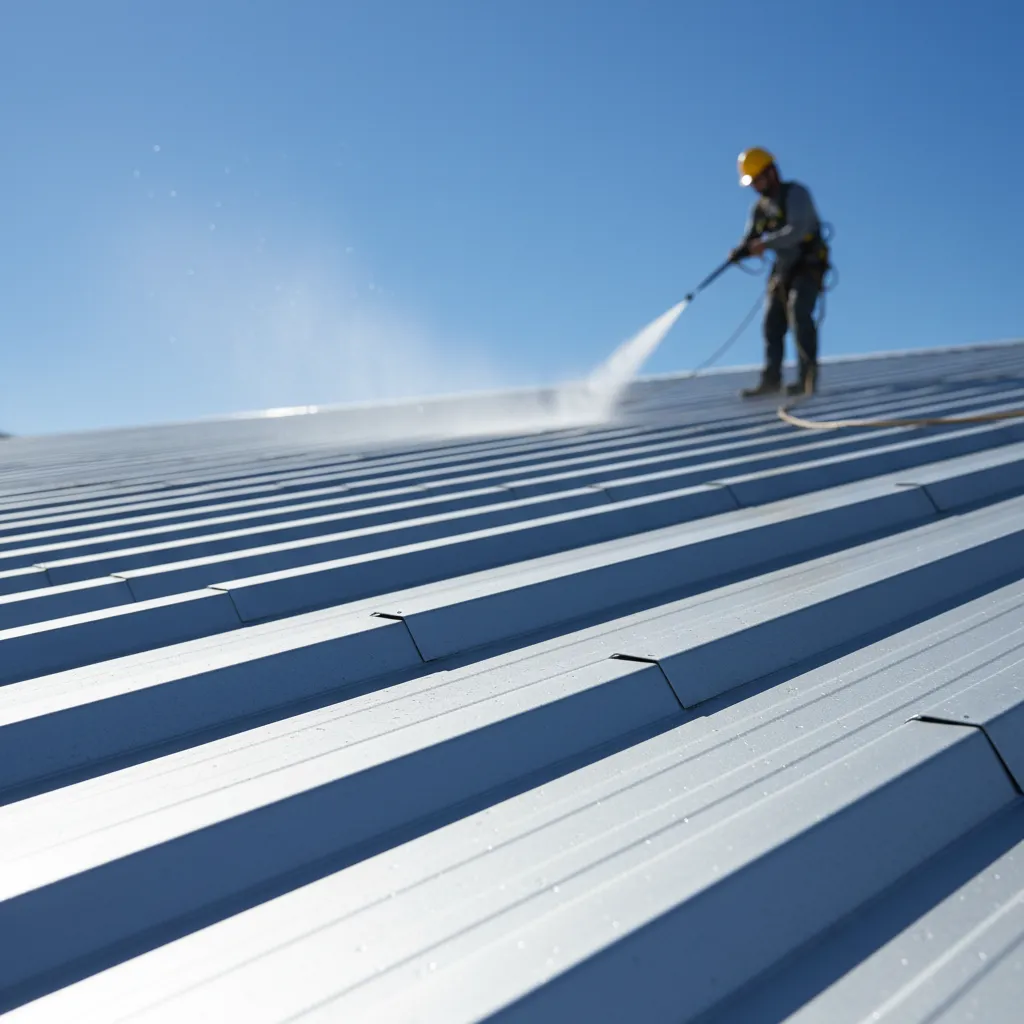
The right fix depends on the cause. Clearing clogged drains is straightforward and costs $200–$500. Installing additional drains or scuppers runs $500–$2,000 per unit. For structural low spots, tapered insulation systems ($3–$6 per square foot) can be installed to build up the depressed area and restore positive drainage. In severe cases where the entire roof lacks adequate slope, a metal retrofit system may be the most cost-effective permanent solution.
The Connection Between All Three Enemies
These three problems do not exist in isolation — they feed each other in a destructive cycle:
- Ponding water accelerates seam degradation by keeping seams perpetually wet and under hydrostatic pressure
- Failed seams allow water to infiltrate the insulation, which compresses and creates new low spots
- New low spots create more ponding areas, which put more stress on surrounding seams
- Maintenance traffic to inspect and patch these problems creates more puncture opportunities
This cycle is why reactive, patch-by-patch maintenance always costs more in the long run than proactive inspection and early intervention. A single maintenance plan with semi-annual inspections can prevent 80% of emergency repair calls and extend your roof’s service life by 5–10 years.
When to Call a Professional
If you notice any of the following, do not wait for the next scheduled inspection — call for a professional assessment immediately:
- Water stains or drips inside the building (the roof entry point may be 50+ feet away from the interior stain)
- Standing water on the roof more than 48 hours after rain
- Visible seam separation or membrane pulling away from flashing
- Soft or spongy areas when walking the roof (indicates saturated insulation)
- Unusual increase in energy bills (wet insulation loses its insulating value)
Early intervention is the difference between a $150–$1,000 targeted repair and a $5,000–$20,000 emergency that includes interior damage, insulation replacement, and business disruption. Our team responds to commercial roof emergencies across Canton, Blue Ridge, Ellijay, and the surrounding North Georgia area.
Concerned about your flat roof? Contact us for a free inspection or get an instant estimate to see what proactive maintenance could save you.
Related reading: Finding a Flat Roof Leak: Why It’s So Tricky | The Importance of a Commercial Roof Maintenance Plan