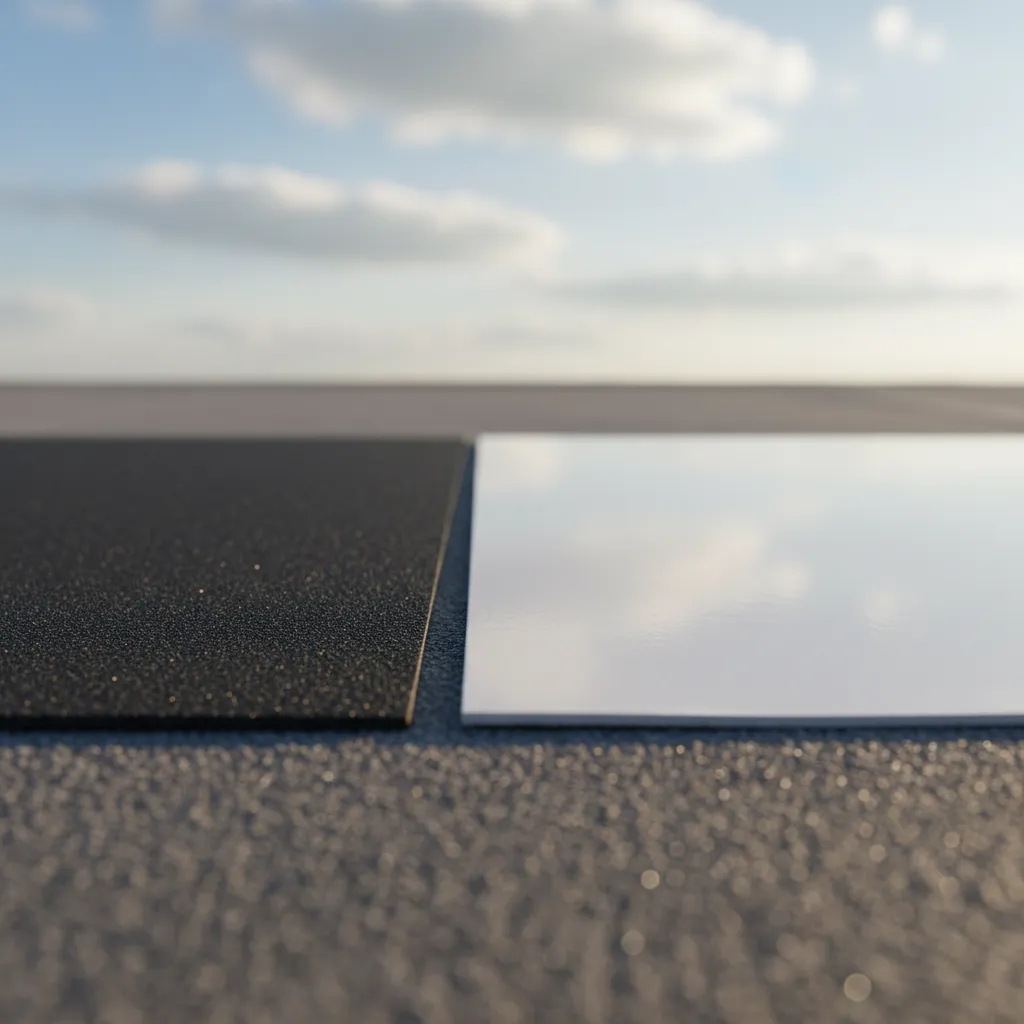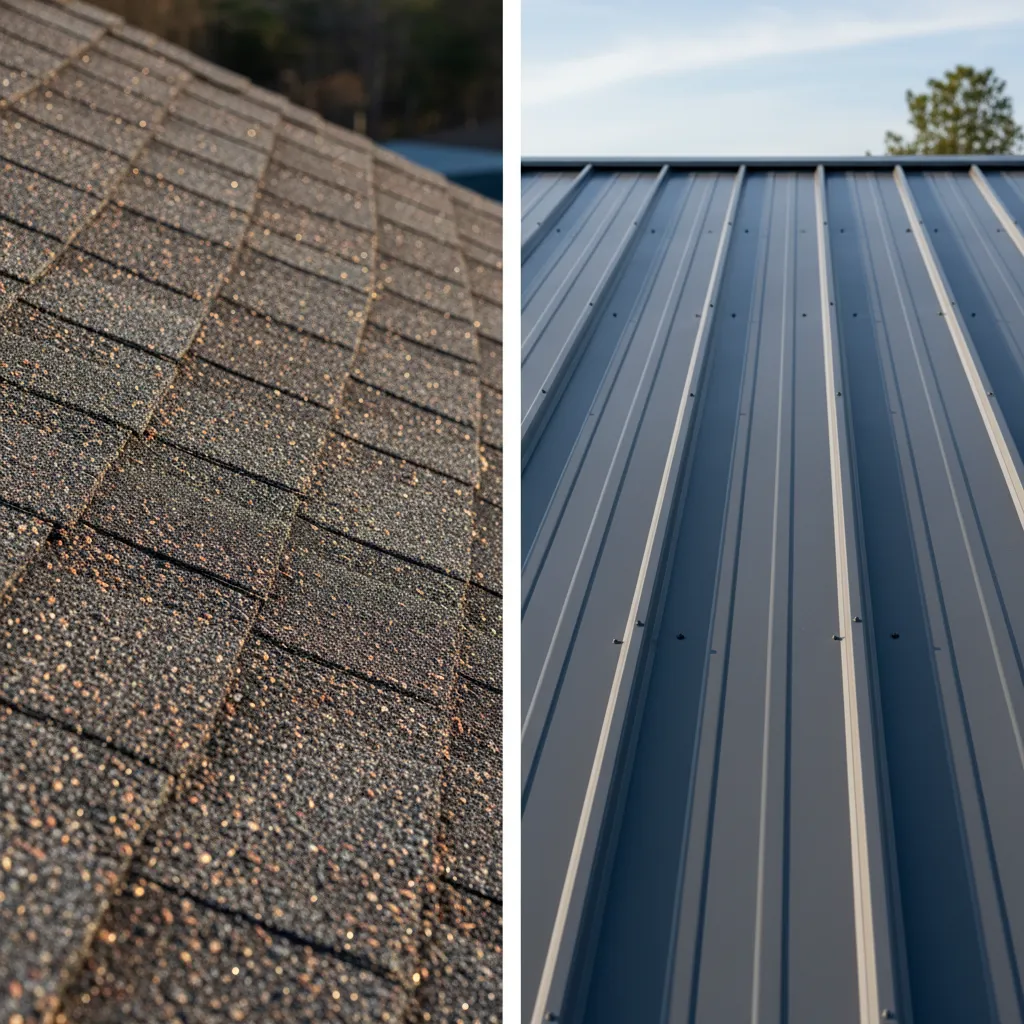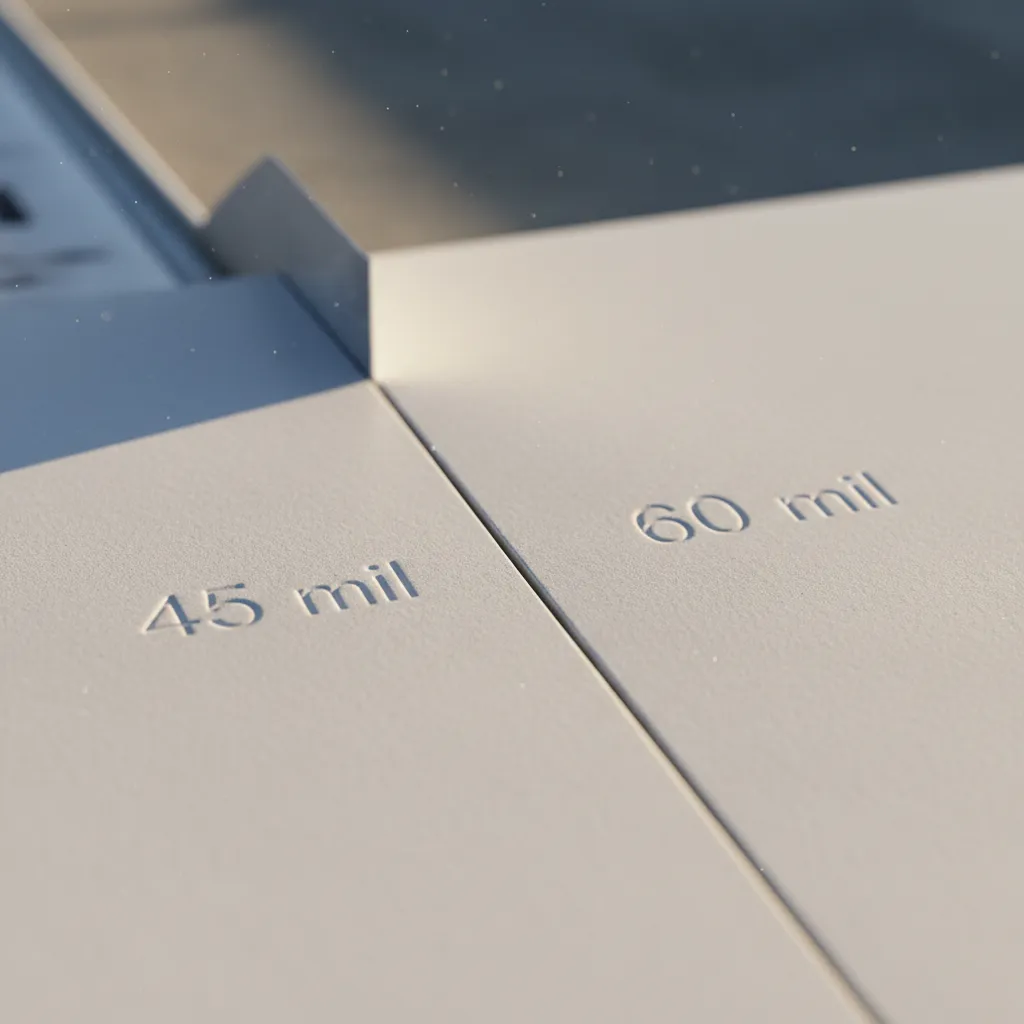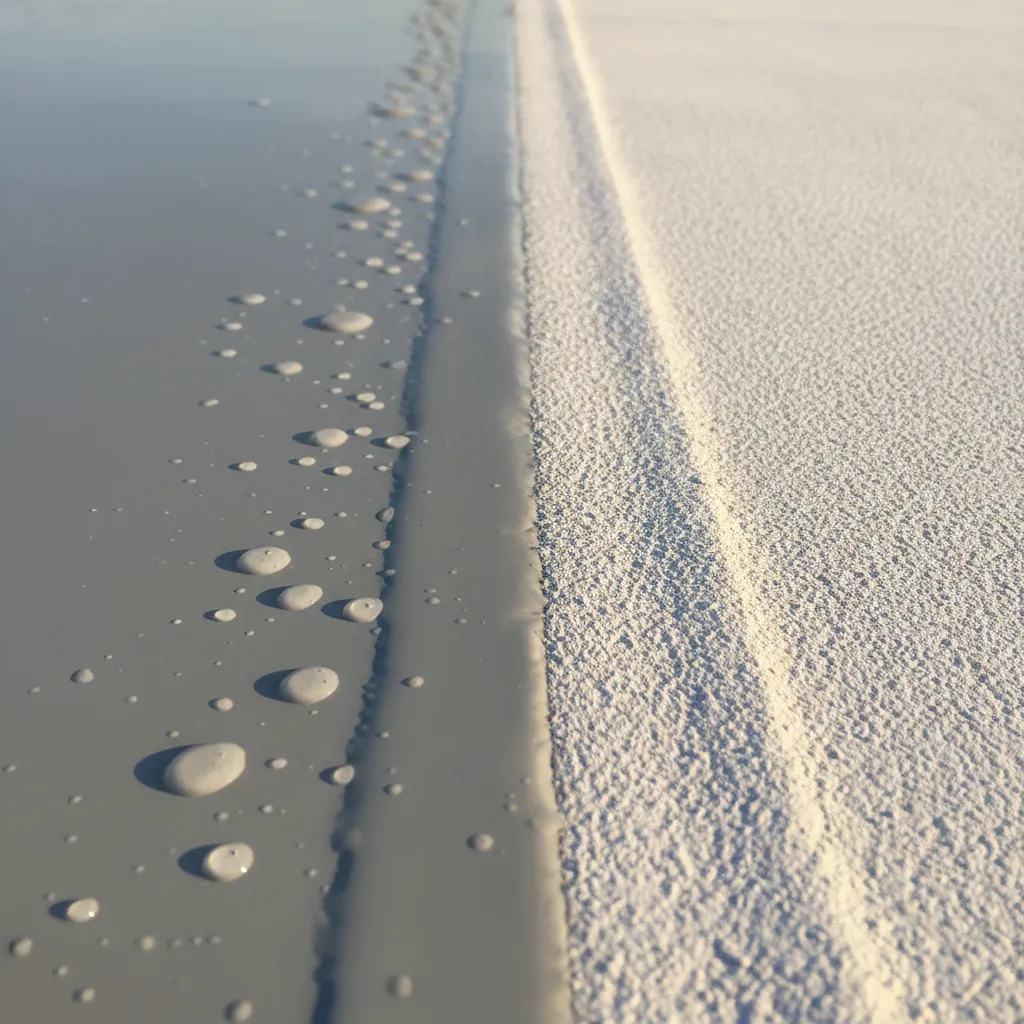
When you decide to restore your commercial roof with a fluid-applied membrane, you are making a smart, cost-effective decision that can extend your roof’s service life by 10–20 years at a fraction of the cost of a full replacement. But not all roof coatings are created equal. The two most popular and effective types — silicone and acrylic — have different chemical properties that make each one ideal for specific situations.
Choosing the wrong coating for your building’s conditions is one of the most expensive mistakes a commercial property owner can make. A building in Canton with a dead-flat roof and chronic ponding needs a very different solution than a sloped metal warehouse in Ellijay. Our team brings 40+ years of combined roofing experience across North Georgia, and we have seen firsthand what happens when the wrong coating goes on the wrong roof.
Here is everything you need to know to make the right choice.
Understanding Elastomeric Roof Coatings
Both silicone and acrylic coatings are classified as “elastomeric,” meaning they can stretch up to 300–500% of their original size and return to their original shape. This flexibility is critical in Georgia, where a commercial roof can see temperature swings of 60–70 degrees between a winter morning and a summer afternoon, causing constant expansion and contraction.
When properly applied at the correct mil thickness (typically 20–30 dry mils), both coating types create a seamless, monolithic membrane over your entire roof surface — eliminating the seams, laps, and penetrations that are responsible for the vast majority of commercial roof leaks.
The key difference lies in their chemistry. Silicone is solvent-based and moisture-cured, forming a permanent chemical bond with atmospheric moisture. Acrylic is water-based and air-cured, evaporating water to form a flexible film. This fundamental difference drives every performance characteristic discussed below.
Silicone Roof Coatings: The Premium Performer
Silicone coatings represent the premium tier of fluid-applied roof membranes. They cost $2.50–$4.50 per square foot installed but deliver exceptional performance in specific conditions.
Key advantages of silicone:
- Superior ponding water resistance. This is silicone’s defining advantage. Its inorganic chemical structure makes it essentially impervious to standing water. Where acrylic will swell, soften, and eventually peel when submerged, silicone maintains full integrity even under weeks of continuous ponding. For flat roofs in North Georgia — where we receive 50–60 inches of rainfall annually — this matters enormously.
- Excellent UV stability. Silicone resists UV degradation without becoming brittle or chalky over time. It retains flexibility and reflectivity for 15–20 years, maintaining its “cool roof” energy savings throughout its service life.
- High solids content. Silicone coatings typically contain 90–95% solids, meaning very little material is lost to evaporation during curing. You can achieve the required membrane thickness in a single coat, reducing labor time by 30–40% compared to multi-coat acrylic systems.
- Moisture-cured application. Silicone cures by reacting with atmospheric moisture, so it can be applied in higher-humidity conditions and at temperatures as low as 40°F — a significant advantage during Georgia’s unpredictable spring weather.
Limitations of silicone:
- Higher upfront cost. Silicone material costs run 40–60% more than acrylic, though the single-coat application can offset some of the labor savings.
- Slippery surface. Cured silicone is dangerously slippery when wet, requiring embedded granules or designated walkway pads in any areas where maintenance personnel need regular access.
- Dirt pickup. Silicone’s surface tends to attract and hold airborne dirt and pollen — a noticeable cosmetic issue in North Georgia, though it has minimal impact on actual roof performance.
- Recoating challenges. Silicone does not bond well to itself without a primer, making future recoating slightly more complex and expensive than acrylic.
Best for: Flat or low-slope roofs (less than 2:12 pitch), buildings with known ponding water areas, EPDM and TPO restorations, and any roof where standing water cannot be fully eliminated through drainage improvements.
Acrylic Roof Coatings: The Value-Driven Workhorse
Acrylic coatings are the most widely used roof coating in the United States, and for good reason. At $1.50–$3.00 per square foot installed, they deliver excellent performance for roofs that drain properly.
Key advantages of acrylic:
- Cost-effective. Acrylic materials cost 40–60% less than silicone, making them the most budget-friendly restoration option for commercial property owners. On a 10,000 sq ft roof, the material savings alone can reach $10,000–$15,000.
- Excellent reflectivity and dirt resistance. Acrylic’s less tacky cured surface resists dirt accumulation better than silicone, staying whiter and more reflective longer. This translates to sustained energy savings of 10–30% on cooling costs throughout the coating’s life.
- Easy recoating. Acrylic bonds beautifully to existing acrylic coatings, making future maintenance straightforward and affordable. A recoat at the 10–12 year mark can extend total system life to 20+ years.
- Color options. Acrylic coatings are available in a wide range of colors and can be tinted to match specific aesthetic requirements — useful for buildings where appearance matters.
Limitations of acrylic:
- Cannot tolerate ponding water. This is the critical limitation. As a water-based material, acrylic will swell, lose adhesion, and eventually fail if exposed to standing water for more than 48 hours at a time. Roofs with even minor ponding areas are poor candidates for acrylic.
- Temperature-sensitive application. Acrylic requires application temperatures above 50°F with at least 24 hours of dry weather for proper curing. In North Georgia, this limits the reliable application window to roughly March through November.
- Multi-coat system. Acrylic’s lower solids content (55–65%) means achieving the required mil thickness typically requires two coats with a 24-hour cure time between them, adding an extra day of labor.
Best for: Sloped metal roofs, modified bitumen roofs with positive drainage, any roof system where water drains completely within 24 hours after rainfall.
Head-to-Head Comparison
Here is how the two coatings stack up across the factors that matter most to building owners in Blue Ridge, Canton, and across North Georgia:
| Factor | Silicone | Acrylic |
|---|---|---|
| Installed cost (per sq ft) | $2.50–$4.50 | $1.50–$3.00 |
| Ponding water resistance | Excellent — indefinite exposure | Poor — fails after 48 hours |
| UV resistance | Excellent (15–20 years) | Very good (10–15 years) |
| Reflectivity retention | Good (attracts dirt) | Excellent (stays cleaner) |
| Application coats | 1 coat typical | 2 coats typical |
| Min. application temp | 40°F | 50°F |
| Recoatability | Requires primer | Self-adhering |
| Service life | 15–20 years | 10–15 years |
| Best for | Flat/low-slope roofs | Sloped metal roofs |
Which Coating Is Right for Your North Georgia Building?
The decision between silicone and acrylic comes down to two primary factors: roof slope and drainage performance.
Choose silicone if:
- Your roof is flat or has a slope of less than 1:12
- You have any areas where water stands for more than 24 hours after rain
- Your building is in a high-rainfall area (North Georgia’s mountains receive 55–65 inches annually)
- You want a single-coat system to minimize installation time
- Your roof has EPDM, TPO, or built-up roofing as the existing substrate
Choose acrylic if:
- Your roof has a clear positive slope of 2:12 or greater
- Water drains completely within 12–24 hours after rain
- Your building has a metal roof substrate
- Budget is a primary concern and long-term recoating costs are acceptable
- Appearance and color matching matter for your building
Consider a hybrid approach: Some buildings benefit from silicone in flat, ponding-prone areas (around drains, HVAC curbs, and low spots) with acrylic on the sloped field of the roof. This targeted approach captures the best of both materials while optimizing cost.
Surface Preparation: The Real Key to Success
Regardless of which coating you choose, surface preparation accounts for 60–70% of a successful roof coating project. Both silicone and acrylic will fail prematurely if applied over a dirty, wet, or improperly prepared substrate.
Professional preparation includes:
- Power washing to remove dirt, algae, and loose material
- Seam reinforcement with fabric-embedded base coat over all seams and penetrations
- Rust treatment on metal substrates (wire brushing, rust converter, primer)
- Moisture testing to confirm the existing insulation is dry (wet insulation must be replaced before coating)
- Adhesion testing with a small test patch to confirm the coating bonds properly to the existing roof surface
Cutting corners on preparation to save money is the single most common reason roof coatings fail prematurely. A coating applied over a properly prepared roof will outlast the same product applied carelessly by 5–8 years. Before any coating project, a thorough pre-application assessment is essential.
When to Call a Professional
Choosing between silicone and acrylic is not a decision you should make based on price alone. The wrong coating on the wrong roof will fail in 2–3 years instead of 15 — costing you far more in the long run than the upfront savings. A professional roof assessment evaluates slope, drainage patterns, existing substrate condition, and moisture levels to recommend the right product for your specific building.
Our team has restored commercial roofs across Canton, Ellijay, Blue Ridge, and the surrounding North Georgia communities. We will inspect your roof, provide an honest assessment of whether a coating is appropriate (not every roof is a good candidate), and recommend the right product for your building’s conditions.
Ready to find the right coating for your building? Contact us for a free roof assessment or get an instant estimate to see what a roof coating restoration could save you.
Related reading: The Financial Benefits of a Roof Coating | Is My Roof a Good Candidate for a Coating?