For most commercial building owners, the roof is the most expensive single component of their property — and the one they think about the least. It’s easy to adopt an “out of sight, out of mind” approach when the roof is 30 feet above your head and not causing visible problems. But by the time a problem becomes visible — water staining on ceiling tiles, dripping onto merchandise, or worse — the underlying damage has been developing for months or years.
The difference between building owners who spend $300-$800 per year on proactive maintenance and those who spend $2,000-$10,000+ on emergency repairs comes down to one thing: a professional commercial roof maintenance plan. Our team brings 40+ years of combined experience maintaining commercial roofs across North Georgia, and we've seen firsthand how a small, predictable annual investment prevents catastrophic, budget-destroying surprises.
What a Maintenance Plan Actually Includes
A commercial roof maintenance plan isn’t a vague promise to “keep an eye on things.” It’s a structured, documented program with specific inspection schedules, defined maintenance tasks, and written reporting. Here’s what a thorough maintenance visit looks like:
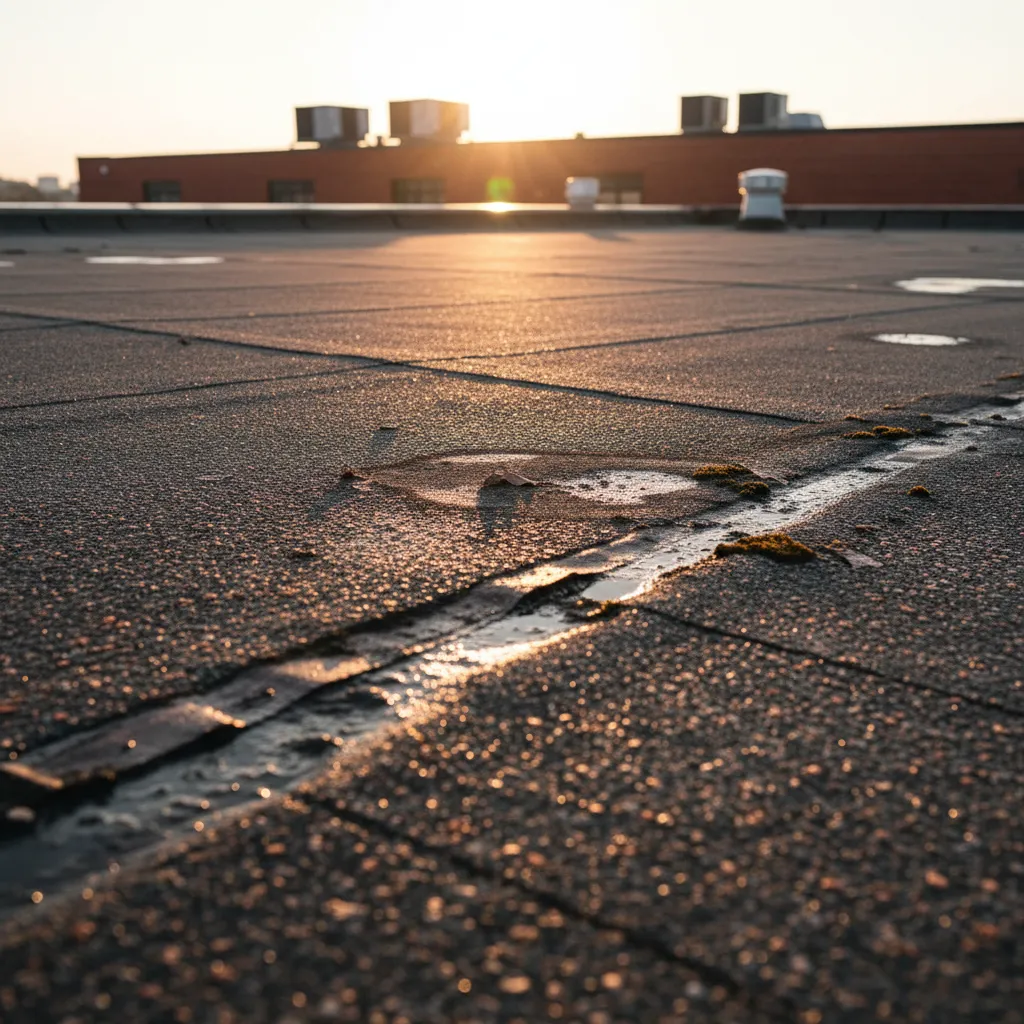
Full membrane inspection: A trained technician walks the entire roof surface, examining the membrane for punctures, tears, blistering, cracking, UV degradation, or any sign of wear. Every square foot is visually assessed — not just the areas near HVAC units or the roof's edge.
Seam and flashing inspection: Seam integrity is the most critical factor in a commercial roof's performance. The technician inspects every accessible seam for separation, lifting, or failure — and checks all flashings around penetrations (HVAC curbs, plumbing vents, exhaust fans, skylights) for cracking, pulling, or sealant deterioration.
Drain and drainage clearing: Clogged drains are the number one cause of ponding water on flat roofs — and ponding water is the number one cause of premature membrane failure. Every drain, scupper, and gutter is cleared of leaves, debris, dirt, and sediment to ensure free water flow.
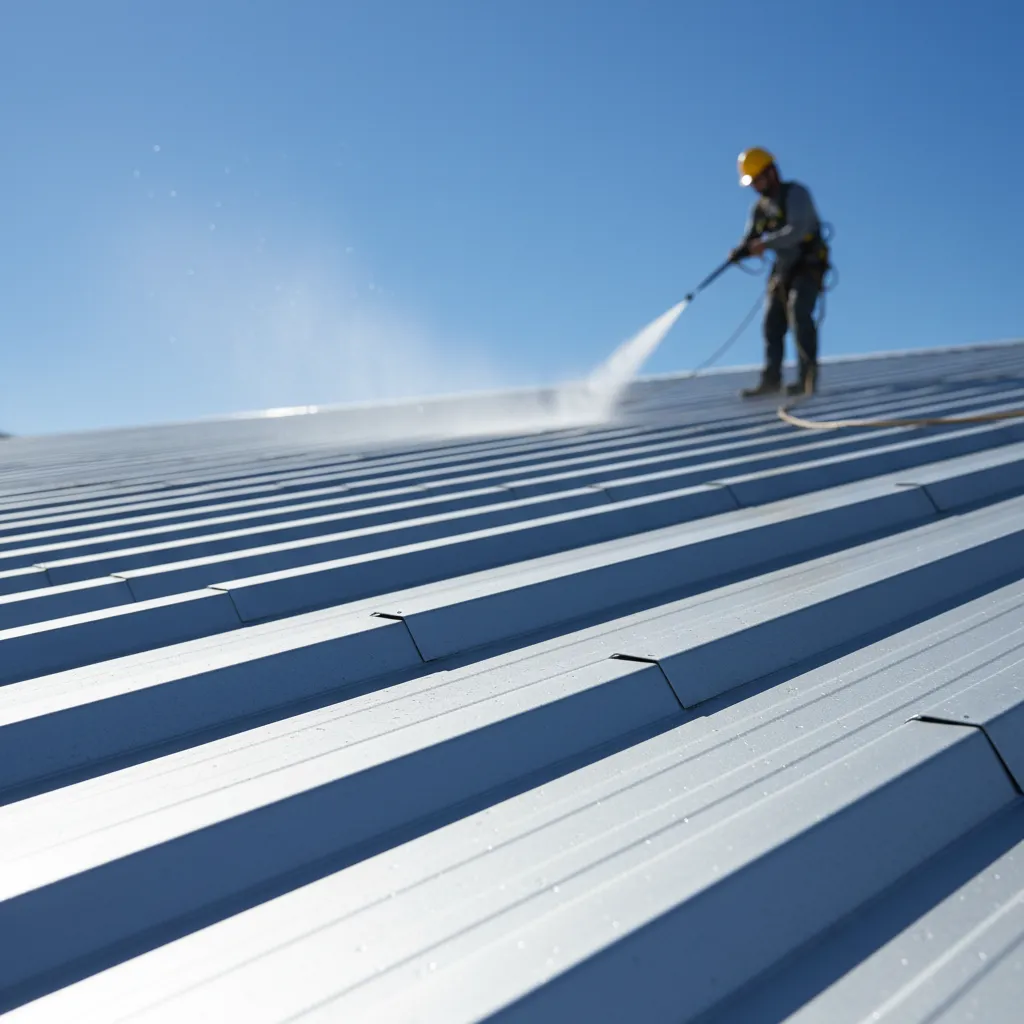
Debris removal: Leaves, branches, trash, and biological growth (moss, algae) are removed from the entire roof surface. Debris holds moisture against the membrane, accelerates UV degradation in shaded areas, and can clog drains downstream.
Penetration seal check: Every roof penetration — pipes, vents, HVAC units, conduit runs, electrical service entries — is inspected for sealant condition and waterproofing integrity. Failed sealant around penetrations is one of the most common sources of slow, hard-to-locate leaks.
Minor repairs on the spot: Small issues discovered during the inspection — a lifted seam edge, cracked sealant, a loose fastener, a small puncture — are repaired during the visit at no additional charge (within the scope of the maintenance plan). This prevents $50 problems from becoming $5,000 emergencies.
Written report with photos: After each visit, you receive a detailed report documenting the roof's condition, any issues found, repairs performed, and recommendations for future attention. These reports build a documented maintenance history — which is critical for warranty protection.
The Cost of Neglect: Reactive vs. Proactive
The financial case for maintenance is overwhelming. Here’s what the numbers look like:
Proactive maintenance: $300-$800 per year
- Two comprehensive inspections (spring and fall)
- All debris removal and drain clearing included
- Minor repairs performed during visits
- Written documentation for warranty compliance
- Total 10-year cost: $3,000-$8,000
Reactive (no maintenance): $2,000-$10,000+ per emergency
- No inspections until a leak appears
- Emergency leak diagnosis: $500-$1,500
- Emergency repair (single location): $1,500-$5,000
- Interior damage repair (ceiling, walls, inventory): $2,000-$15,000+
- Business disruption during repair: variable (but never zero)
- Accelerated roof replacement (5-10 years early): $50,000-$150,000+
Industry data shows that proactive maintenance prevents approximately 80% of emergency roof repairs. The vast majority of "emergency" leaks start as small, easily fixable issues — a minor seam separation, a cracked sealant joint, a partially clogged drain — that go undetected for months or years until they become catastrophic. A semi-annual inspection catches these problems when they're $50 fixes, not $5,000 disasters.
How Maintenance Extends Your Roof’s Lifespan
Every commercial roof has a rated lifespan — the expected service life under normal conditions. But “normal conditions” assumes regular maintenance. Without it, most roofs fail 25-50% sooner than their rated lifespan.
Here's how maintenance extends the life of the most common commercial roofing systems:
| Roof Type | Rated Lifespan | With Maintenance | Without Maintenance |
|---|---|---|---|
| TPO | 15-20 years | 20-25 years | 10-15 years |
| PVC | 25-30 years | 30-35+ years | 18-22 years |
| EPDM | 15-25 years | 22-30 years | 10-18 years |
| Modified Bitumen | 10-20 years | 15-25 years | 8-14 years |
| Metal (Standing Seam) | 40-60 years | 50-60+ years | 30-40 years |
For a building owner in Canton or Cherokee County with a 10,000-square-foot TPO roof, the difference between a 15-year lifespan and a 22-year lifespan is roughly 7 additional years before a $50,000-$80,000 replacement. That's $300-$800/year in maintenance generating $50,000+ in deferred capital expenditure. The ROI is extraordinary.
When to Schedule Inspections
The timing of your inspections matters almost as much as having them at all. The optimal inspection schedule for North Georgia commercial roofs is:
Spring inspection (March-April): After winter has done its worst — ice, snow, freeze-thaw cycles, wind events — a spring inspection identifies any damage from the cold season before summer heat compounds the problem. In North Georgia, where Blue Ridge and the mountain communities experience more severe winter weather than the piedmont, spring inspections are especially critical.
Fall inspection (September-October): Before winter arrives, a fall inspection ensures your roof is sealed, drains are clear, and there are no developing issues that could worsen under winter conditions. Fall is also the ideal time to clear accumulated summer debris (leaves, pollen, organic matter) from drains and roof surfaces.
Post-storm inspections (as needed): After any significant weather event — hail, winds exceeding 60 mph, heavy snowfall, or tornado activity — an immediate inspection should be scheduled. Storm damage is often invisible from the ground but can compromise membrane integrity. Early detection also preserves your right to file an insurance claim within required time windows.
Quarterly inspections (for older or high-value roofs): Roofs over 15 years old, roofs on buildings with high-value contents (medical equipment, IT infrastructure, inventory), and roofs in environments prone to leaks benefit from quarterly inspections that provide tighter monitoring of developing issues.
Protecting Your Warranty
Here’s a fact that surprises many building owners: nearly every commercial roofing manufacturer warranty includes a maintenance clause. The warranty language typically requires the building owner to perform regular, documented maintenance — and failure to do so can void the warranty entirely.
If you file a warranty claim for a roof failure and the manufacturer's inspector finds no evidence of maintenance — no inspection reports, no repair records, no documentation of drain clearing — your claim may be denied. On a 20-year NDL warranty worth $70,000-$150,000 in potential coverage, that's a devastating financial loss.
A professional maintenance plan produces exactly the documentation manufacturers require: dated inspection reports, photo evidence, detailed descriptions of conditions found and repairs performed, and certified technician signatures. This paper trail is your warranty insurance — proof that you held up your end of the deal.
What to Look for in a Maintenance Provider
Not all maintenance programs are equal. When evaluating providers, look for:
Manufacturer certification: Your maintenance provider should be certified by your roof's manufacturer. This ensures they know the specific requirements of your membrane system and that their work doesn't inadvertently void your warranty.
Written documentation: Every visit should produce a detailed report with photos, findings, repairs performed, and recommendations. If a provider can't show you sample reports, keep looking.
Transparent pricing: Know exactly what's included in your annual plan — inspections, labor, materials for minor repairs, emergency response — and what triggers additional charges.
Local knowledge: A provider familiar with North Georgia's specific weather patterns, common failure modes, and building stock brings insight that national chains often lack.
When to Call a Professional
If you don’t currently have a maintenance plan — or if your current plan consists of “we’ll call someone when it leaks” — your roof is aging faster and costing more than it needs to. Every month without documented maintenance is a month closer to an avoidable emergency.
Contact True Hand Roofing for a free roof condition assessment and maintenance plan proposal, or get started with our free instant estimate tool. We'll inspect your current roof, document its condition, and build a customized maintenance program that protects your investment and keeps your warranty intact.
We serve commercial building owners across North Georgia, including Canton, Blue Ridge, Cherokee County, and the surrounding communities. Our team brings 40+ years of combined experience with every major commercial roofing system — TPO, PVC, EPDM, modified bitumen, and standing seam metal.
Related reading: Punctures, Seams, and Ponding Water: The 3 Enemies of Your Flat Roof | Finding a Flat Roof Leak: Why It’s So Tricky and How Professionals Do It