When you start researching attic insulation, one term appears over and over again: R-value. It sounds technical, but understanding R-value is actually straightforward — and it is the single most important number for determining whether your attic is properly insulated.
For homeowners across Blue Ridge, Blairsville, Canton, and throughout North Georgia, getting R-value right can mean the difference between a comfortable, energy-efficient home and one that costs hundreds of extra dollars per year to heat and cool. At True Hand Roofing, our team brings 40+ years of combined experience helping homeowners optimize their attic systems. Here is everything you need to know.
What is R-Value?
R-value is a measurement of thermal resistance — how well a material resists the flow of heat through it. The “R” stands for resistance. The higher the R-value, the better the insulation performs.
Think of it like SPF in sunscreen. SPF 50 blocks more UV radiation than SPF 15. Similarly, R-49 insulation blocks more heat transfer than R-19 insulation. The relationship is linear — R-38 provides roughly twice the thermal resistance of R-19.
R-value is determined by two factors: the type of insulation material and the depth (thickness) it is installed to. Different materials have different R-values per inch, which means you need different depths to reach the same target.
R-Value Per Inch: Insulation Material Comparison
Not all insulation materials are created equal. Here is how the most common types compare in R-value per inch and cost:
| Insulation Type | R-Value/Inch | Depth for R-38 | Cost/Sq Ft |
|---|---|---|---|
| Fiberglass batts | R-3.1 - R-3.4 | 11-12 inches | $1.50 - $2.50 |
| Blown-in fiberglass | R-2.2 - R-2.7 | 14-17 inches | $1.50 - $2.50 |
| Blown-in cellulose | R-3.2 - R-3.8 | 10-12 inches | $1.50 - $3.00 |
| Open-cell spray foam | R-3.6 - R-3.8 | 10-11 inches | $2.50 - $4.00 |
| Closed-cell spray foam | R-6.0 - R-7.0 | 5.5-6.5 inches | $4.00 - $7.00 |
Key takeaway: Closed-cell spray foam delivers the highest R-value per inch, making it ideal for tight spaces where depth is limited. For open attic floors with plenty of room, blown-in cellulose or fiberglass offer excellent performance at a lower cost per square foot.
What R-Value Does a Georgia Attic Need?
The U.S. Department of Energy divides the country into climate zones and provides R-value recommendations for each. North Georgia is primarily in Climate Zone 3 (with some higher-elevation areas like Blue Ridge and Blairsville falling into Zone 4).
For attics in our region, the recommended R-value is R-38 to R-60. Current Georgia energy code requires a minimum of R-38 for new construction and major renovations.
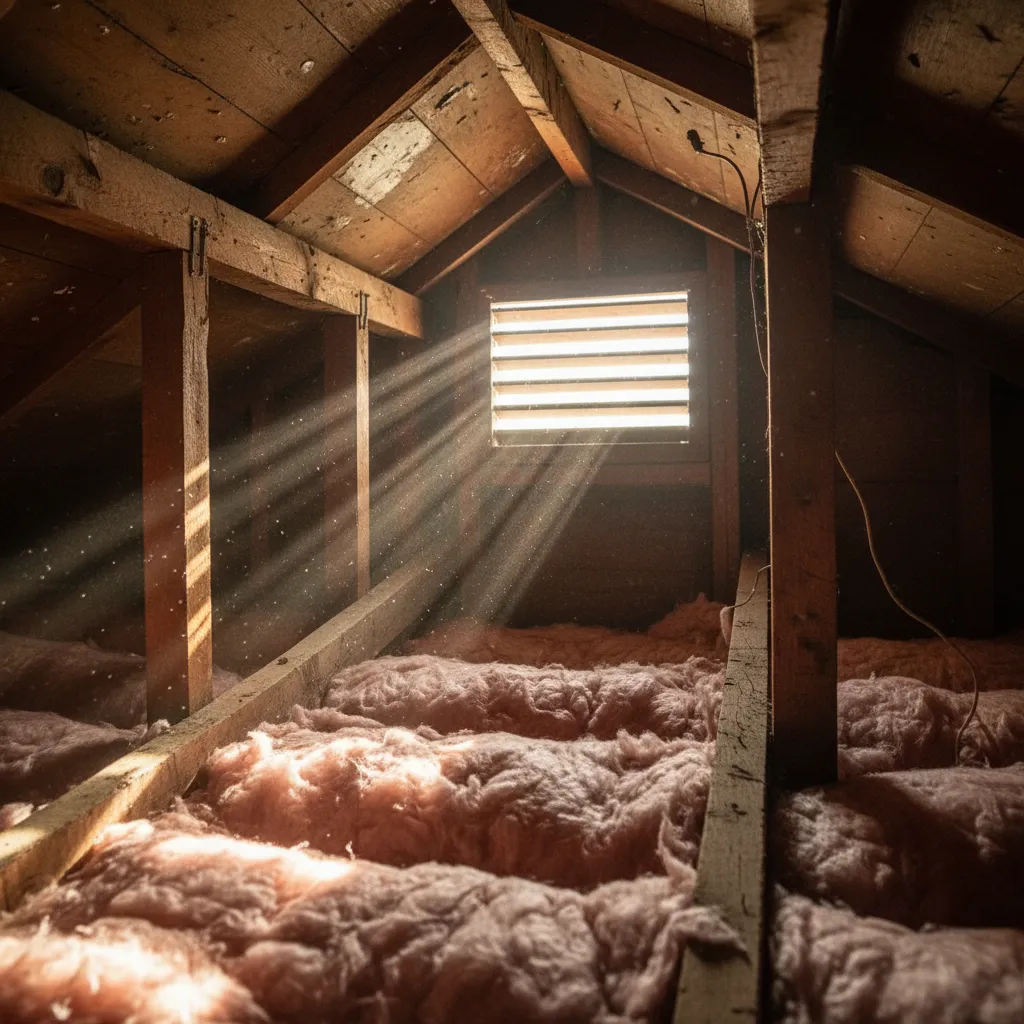
The reality in older homes: Unfortunately, many North Georgia homes built before 2000 are severely under-insulated. We routinely find attics with only R-13 to R-19 — roughly half (or less) of the current recommendation. If you go into your attic and can see the tops of your ceiling joists, your insulation is almost certainly below R-19 and well below the recommended minimum.
Why R-Value Matters for Your Energy Bills
Heat naturally flows from warmer areas to cooler areas. In your home, this creates two expensive problems:
- In summer: North Georgia attics can reach 140-160 degrees Fahrenheit. That extreme heat radiates downward through under-insulated ceilings into your air-conditioned living space, forcing your HVAC system to work overtime.
- In winter: The heated air from your living space rises and escapes through the ceiling into the cold attic, driving up heating costs and creating uncomfortable cold spots in upstairs rooms.
Proper attic insulation acts as a thermal blanket, dramatically slowing this heat transfer in both directions. Homeowners who upgrade from R-13 or R-19 to R-38 or higher typically see 10-20% reductions in annual energy costs — savings of approximately $200-$400 per year depending on the home size, HVAC efficiency, and local energy rates.
Over a 20-year period, those savings add up to $4,000-$8,000 — often 2-3 times the initial cost of the insulation upgrade.
R-Value Is Not the Whole Story: Air Sealing Matters Too
Achieving the right R-value is critical, but it is only half the equation. Even R-60 insulation loses effectiveness if air leaks bypass it entirely. The attic floor in a typical home has dozens of air leakage points:
- Gaps around plumbing and electrical penetrations
- Open chases around HVAC ductwork
- Spaces around recessed light cans
- The gap between the chimney and surrounding framing
- Cracks at the top plate where walls meet the ceiling
- Attic hatch or pull-down stairs that are not sealed and insulated
Professional air sealing closes these gaps before insulation is installed, creating a continuous thermal barrier. The combination of air sealing plus insulation can improve energy efficiency by 25-35% compared to insulation alone. This is why we always recommend a comprehensive approach that addresses both.
For a deeper understanding of how ventilation and insulation work together as a system, read our article on why attic ventilation and insulation matter.
Ventilation: The Third Piece of the Attic Puzzle
Insulation and air sealing keep conditioned air inside your living space. But the attic itself also needs to breathe. Proper attic ventilation — a balanced system of intake vents (soffits) and exhaust vents (ridge vents or box vents) — prevents several serious problems:
- Moisture damage: Without ventilation, moisture from your living space condenses on the underside of the roof deck in cold weather, leading to mold growth and wood rot.
- Premature shingle aging: In summer, trapped heat in an unventilated attic can bake shingles from the underside, reducing their lifespan by 25-40%.
- Ice damming: While less common in North Georgia than in northern states, homes at higher elevations can experience ice dams when trapped attic heat melts snow on the roof unevenly.
The three components — insulation, air sealing, and ventilation — work as an integrated system. Upgrading one without addressing the others delivers only partial results.
The Federal Tax Credit: Up to $1,200 Through 2032
The Inflation Reduction Act (IRA) provides a generous federal tax credit for homeowners who upgrade their attic insulation. Through 2032, you can claim 30% of the total cost of qualifying insulation improvements, up to $1,200 per year.
Eligible improvements include blown-in insulation, spray foam insulation, fiberglass batts, and professional air sealing. For a $3,000 insulation project, the tax credit puts $900 back in your pocket. Combined with energy savings of $200-$400 per year, many homeowners recover the full cost of their insulation upgrade within 3-5 years.
To claim the credit, you will need a manufacturer's certification statement for the insulation product and your contractor's itemized invoice showing materials and labor.
Signs Your Attic Needs More Insulation
Not sure whether your current insulation is adequate? Look for these warning signs:
- Visible ceiling joists: If you can see the tops of the joists in your attic, your insulation is below R-19 and needs upgrading.
- Uneven temperatures: Rooms that are consistently hotter or colder than the rest of the house often indicate insulation gaps directly above them.
- High energy bills: If your heating and cooling costs seem disproportionately high for your home size, inadequate attic insulation is one of the most common culprits.
- HVAC runs constantly: An HVAC system that rarely cycles off is fighting against excessive heat gain (summer) or heat loss (winter) through a poorly insulated ceiling.
- Age of home: Homes built before 2000 in North Georgia were typically insulated to R-13 or R-19 — well below current standards. Homes built before 1980 may have even less.
- Ice on roof edges (winter): At higher elevations around Blue Ridge and Blairsville, ice buildup along the eaves can signal inadequate insulation and ventilation.
When to Call a Professional
A professional attic assessment takes less than an hour and gives you a clear picture of your current R-value, ventilation status, and air leakage points. Our team will measure your existing insulation depth, calculate the current R-value, check for moisture issues and mold, evaluate ventilation adequacy, and provide a detailed recommendation with pricing for any upgrades needed.
Curious about your attic's R-value? Contact True Hand Roofing for a free attic analysis and insulation estimate, or get started with our free instant estimate tool. We serve homeowners across Blue Ridge, Blairsville, Canton, and all of North Georgia.
Frequently Asked Questions
What R-value do I need for my attic in Georgia?
How much does attic insulation cost in Georgia?
Can I add new insulation on top of old insulation?
Is there a tax credit for attic insulation?
How do I know if my attic needs more insulation?
Related reading: Is Your Attic Costing You Money? The Importance of Ventilation and Insulation | Ridge Vents vs. Box Vents: The Best Way to Ventilate Your Attic