A roof replacement is one of the biggest home improvement investments you will ever make, typically costing between $8,000 and $15,000 for asphalt shingles or $15,000 to $30,000 for metal roofing in North Georgia. Knowing exactly what happens during the process — from the first phone call to the final nail — can make the experience significantly less stressful for you and your family.
At True Hand Roofing, our team brings 40+ years of combined experience to every roof replacement project. Whether you are in Cherokee County, Dawsonville, or Ellijay, the process follows the same proven steps. Here is a complete walkthrough of what to expect.
Phase 1: The Initial Consultation and Estimate
Every roof replacement starts with a thorough, hands-on inspection of your current roof. Our experienced team members will climb up and walk the entire roof surface — checking shingles, flashing, pipe boots, ventilation, and the general condition of the decking from above. We take precise measurements and detailed photos to document everything.
After the inspection, you will receive a transparent, itemized proposal that outlines the full scope of work, material options with pricing for each, and the total cost. There are no hidden fees or surprise charges. Most homeowners in North Georgia receive estimates in the range of $8,000-$15,000 for a standard asphalt shingle replacement, though costs vary depending on roof size, pitch, material choice, and any structural repairs needed. You can also get a quick ballpark with our free instant estimate tool.
This is also the time to discuss material choices. If you are debating between asphalt and metal, our guide on asphalt shingles vs. metal roofing can help you weigh the pros and cons of each.
Phase 2: Scheduling and Permits
Once you approve the proposal, we schedule your project and pull any necessary building permits. Most Georgia counties require a permit for a full roof replacement, which typically costs $100-$300 depending on your county. We handle the entire permitting process so you do not have to make trips to the building department.
You will know your projected start date and estimated timeline well in advance. Most residential roof replacements take 1-3 days for a crew of 4-6 experienced roofers. Larger homes, complex rooflines, steep pitches, or metal roofing installations may take 3-4 days. We will also confirm the dumpster delivery date and coordinate material drop-off.
Phase 3: How to Prepare Your Home
A few simple preparations the day before installation will protect your belongings and help our crew work safely and efficiently:
- Clear the perimeter: Move patio furniture, grills, potted plants, vehicles, and any fragile outdoor items at least 15 feet away from the house. Our crew needs a clear working zone around the entire roofline for safety and debris containment.
- Protect your attic: Cover any valuable or sentimental items stored in your attic with tarps or old sheets. Even with the most careful work, dust and small debris can filter through during tear-off.
- Secure wall hangings: The vibrations from tear-off and nailing can shake pictures, mirrors, and decorations on interior walls. Temporarily remove anything fragile from walls on the upper floor.
- Plan for pets and children: Roof replacement is loud — especially during the tear-off phase. Plan for kids and pets to be away from the home during the main working hours (typically 7:00 AM to 5:00 PM).
- Alert your neighbors: A quick heads-up to your immediate neighbors about the noise and increased truck traffic is a courteous step that most homeowners appreciate.
Phase 4: Installation Day — The Tear-Off
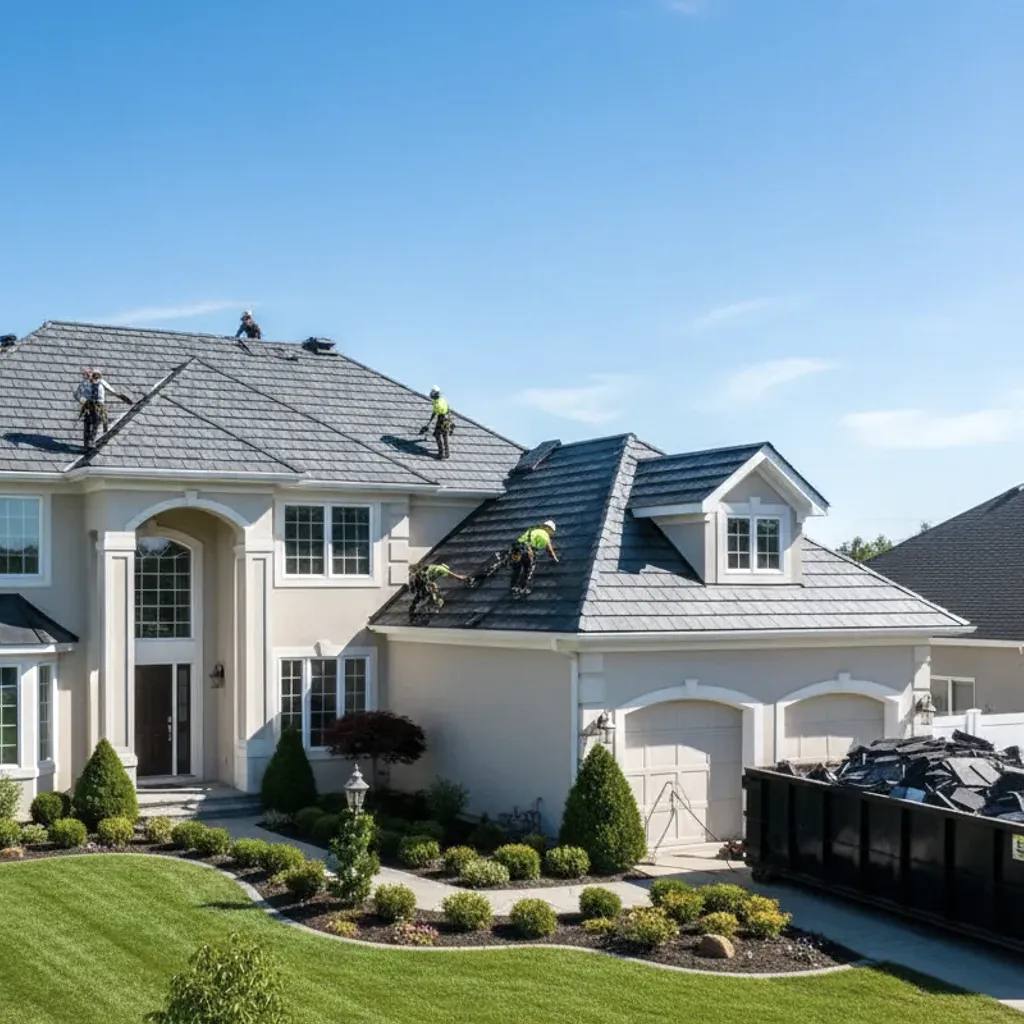
On the morning your project begins, several things happen simultaneously. Material pallets (shingles, underlayment, flashing, ridge caps) are delivered and staged on your property. A roll-off dumpster is positioned in your driveway for the old roofing debris.
The first thing the crew does is protect your property. Extensive tarps are laid around the home's perimeter to shield landscaping, siding, windows, and hardscaping from falling debris.
Then the tear-off begins. This is the loudest, messiest part of the entire project. The crew systematically strips all existing shingles and underlayment down to the bare wood decking. On a standard 2,000-square-foot home, an experienced crew of 4-6 can complete a single-layer tear-off in 3-5 hours.
Phase 5: Decking Inspection and Repairs
With the old roofing material removed, the bare decking is exposed — and this is one of the most critical moments of any roof replacement. Your crew will carefully inspect every square foot of plywood or OSB decking for soft spots, rot, water damage, and structural weakness.
Any compromised decking must be replaced before the new roof system can be installed. A solid, sound deck is the foundation of a long-lasting roof. Decking replacement typically costs $3-$5 per square foot for the affected sections. Most homes need at least a few sheets replaced, especially around penetrations, valleys, and areas where old leaks went undetected. Your crew will show you any damaged sections and explain the repair before proceeding.
Phase 6: Building Your New Roof System
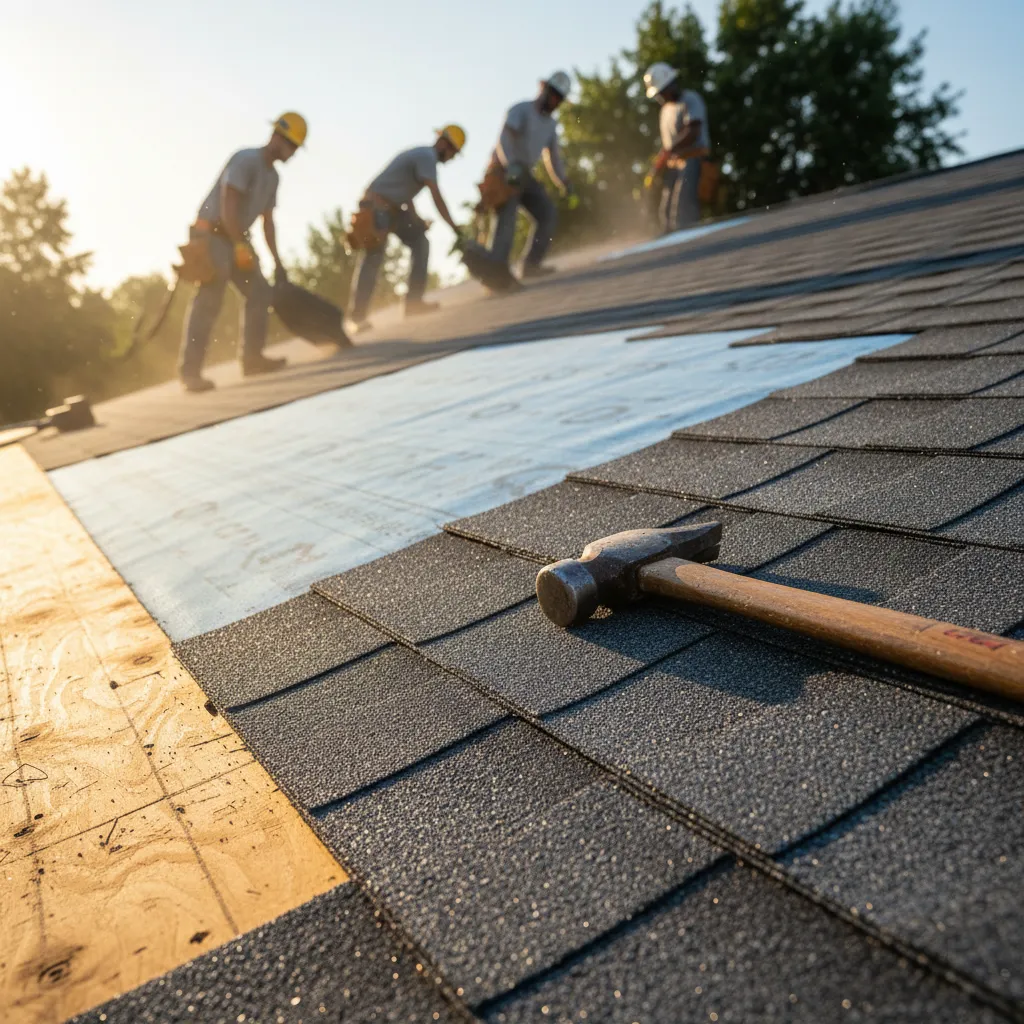
This is where the transformation happens. A properly installed roof is not just shingles — it is a layered system, and each component plays a critical role:
- Drip edge: Metal edging installed along the eaves and rakes to direct water away from the fascia and into the gutters. Georgia building code requires drip edge on all new roof installations.
- Ice and water shield: A self-adhering waterproof membrane installed in the most vulnerable areas — valleys, around penetrations (pipes, vents, chimneys), and along the eaves. Georgia building code requires ice and water shield in all roof valleys. This layer provides a critical backup barrier against water intrusion.
- Synthetic underlayment: A full layer of high-quality synthetic felt covers the entire deck, providing a secondary water barrier beneath the shingles.
- Starter strip shingles: A specialized row of adhesive-backed shingles along the eaves and rakes that seals the first course and prevents wind uplift.
- Field shingles: Your chosen shingles — whether architectural asphalt ($8,000-$15,000 total) or standing seam metal ($15,000-$30,000 total) — are installed with a precise nailing pattern following the manufacturer's specifications.
- Flashing: Custom-fit metal flashing is installed around every penetration, wall junction, chimney, and skylight. Properly installed flashing is the number one defense against leaks at transition points.
- Ridge caps and ventilation: Ridge cap shingles and ventilation components (ridge vents, box vents, or power vents) are installed last, completing the roof system and ensuring proper attic airflow.
Manufacturer warranties on architectural shingles range from 25-50 years depending on the product line. Metal roofing carries warranties of 40 years or more. Our workmanship warranty covers the installation itself.
Phase 7: Cleanup and Magnetic Sweep
At the end of every work day — and especially at the completion of the project — the crew conducts a meticulous cleanup. All debris is removed from gutters, the roof surface, and the ground around your home. Tarps are gathered and disposed of with all waste material.
Most importantly, the crew runs large magnetic rollers across your entire yard, driveway, and landscaping beds to collect any stray roofing nails. Nails can bounce and scatter during tear-off, and a thorough magnetic sweep protects your family, pets, and vehicle tires. We typically make at least two full passes around the property.
Phase 8: The Final Walkthrough
Once the project is complete, a project manager walks the property with you to inspect the finished work from the ground. We will point out key features of the installation, show you the completed flashing details, and answer any questions you have.
You will receive all warranty documentation — both the manufacturer's material warranty and our workmanship guarantee. We also provide before-and-after photos of the project for your records, which can be valuable for insurance documentation or future home sale.
When to Call a Professional
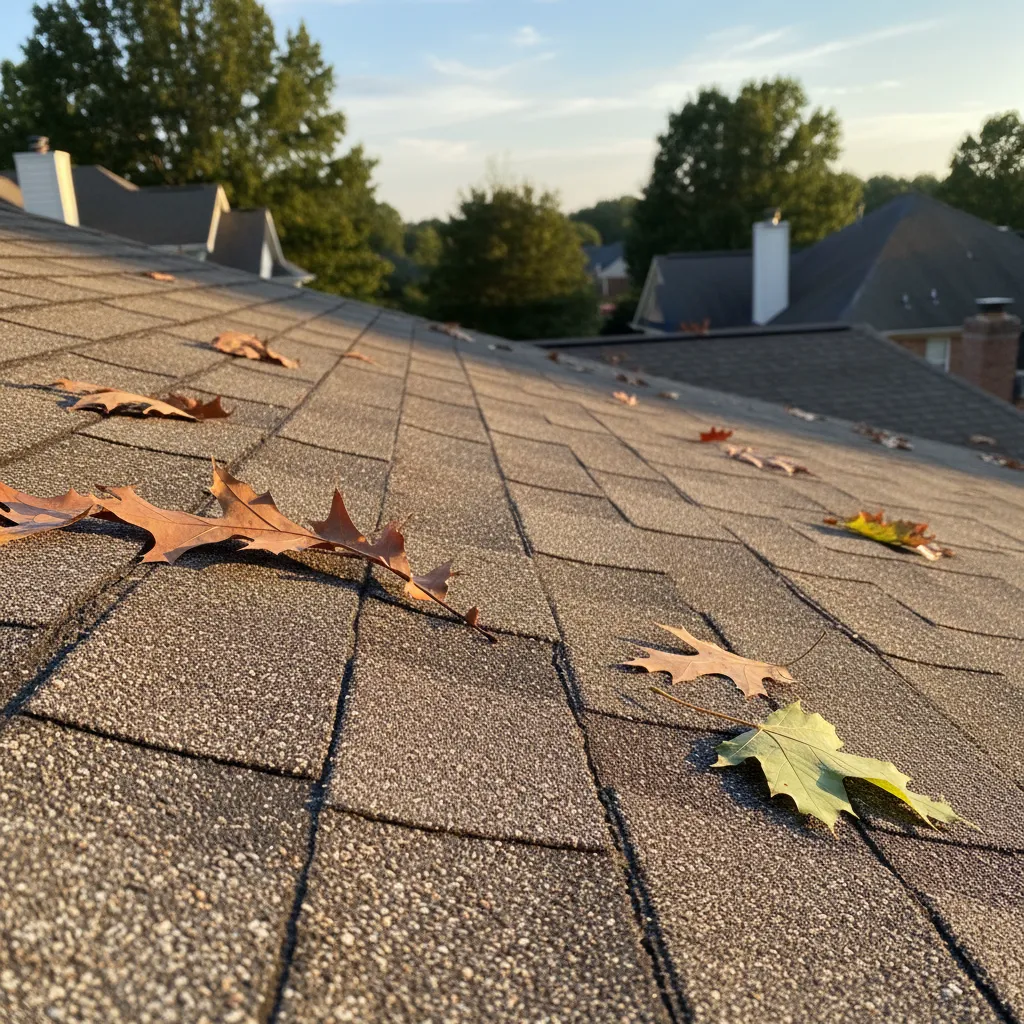
If your current roof is showing telltale signs of failure — missing shingles, widespread granule loss, daylight visible through the attic, or recurring leaks — it is time to get a professional assessment. The sooner you address a failing roof, the less likely you are to face costly secondary damage to your home’s interior, insulation, and structure.
Ready to start the process? Contact True Hand Roofing for a free, no-obligation roof inspection and estimate, or get a quick ballpark with our free instant estimate tool. We proudly serve homeowners across Cherokee County, Dawsonville, Ellijay, and all of North Georgia.
Frequently Asked Questions
How long does a roof replacement take?
How much does a roof replacement cost in Georgia?
Do I need to be home during a roof replacement?
Will a roof replacement damage my landscaping?
What happens if it rains during my roof replacement?
Related reading: 7 Telltale Signs You Need a Roof Replacement in Georgia | How Much Does Roof Replacement Cost in Georgia? | Asphalt Shingles vs. Metal Roofing: A Georgia Homeowner's Guide