

As a homeowner, you have a long list of annual chores: cleaning the gutters, pressure washing the siding, servicing the HVAC. But one of the most important maintenance tasks is often forgotten until it’s too late: checking on your roof.
Your roof takes a constant beating from the Georgia sun, heavy rains, and high winds. A proactive approach to roof maintenance can save you thousands of dollars in the long run by catching small problems before they become major disasters. While we always recommend a professional roof inspection for a detailed analysis, here is a simple, safe, ground-level checklist you can perform twice a year—once in the spring and once in the fall.
Your Safe, Ground-Level Roof Maintenance Checklist
All you need for this check-up is a pair of binoculars and a keen eye.
1. The View from the Street:
- Look for Obvious Damage: Stand back at the curb and use your binoculars to scan the entire surface of your roof. Are there any shingles that are obviously missing, cracked, or have curled edges?
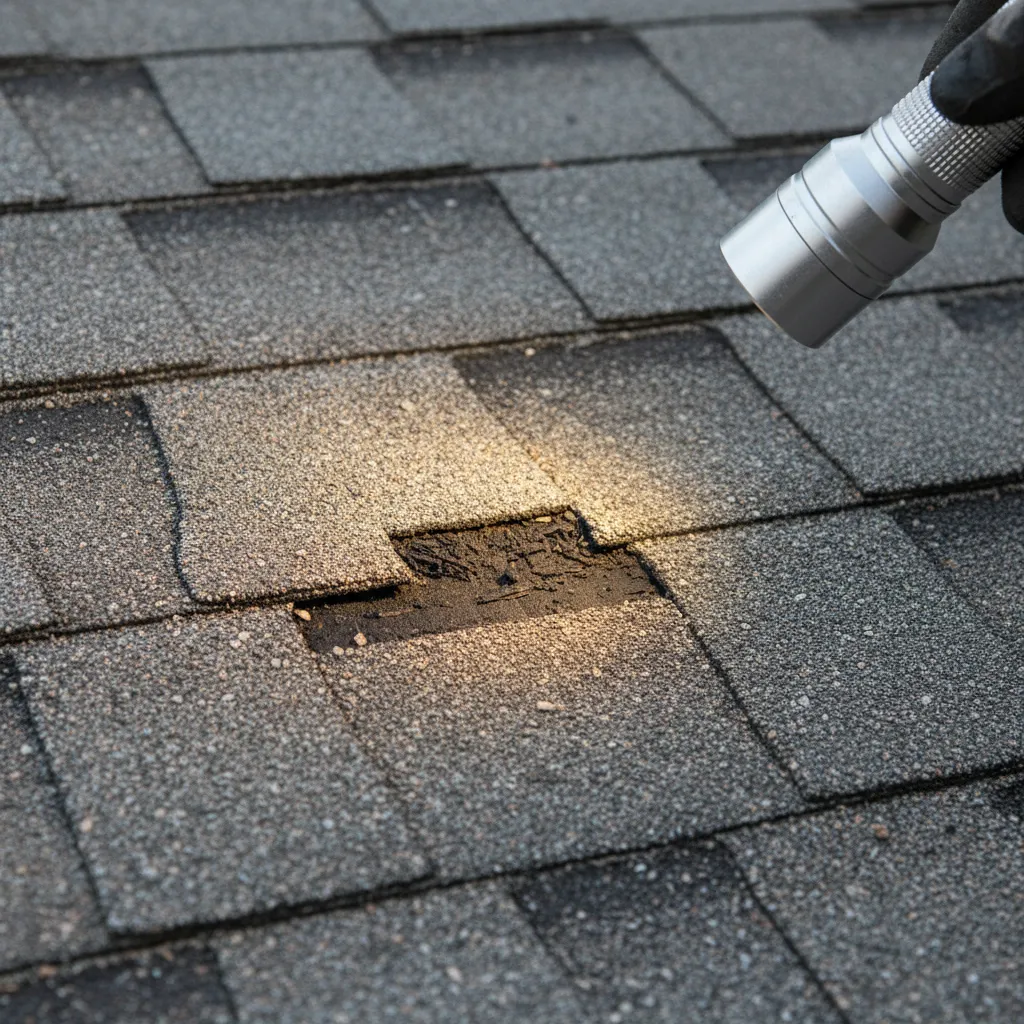
- Check for “Bald Spots”: Look for areas where the protective granules have worn off, exposing the dark asphalt layer underneath.
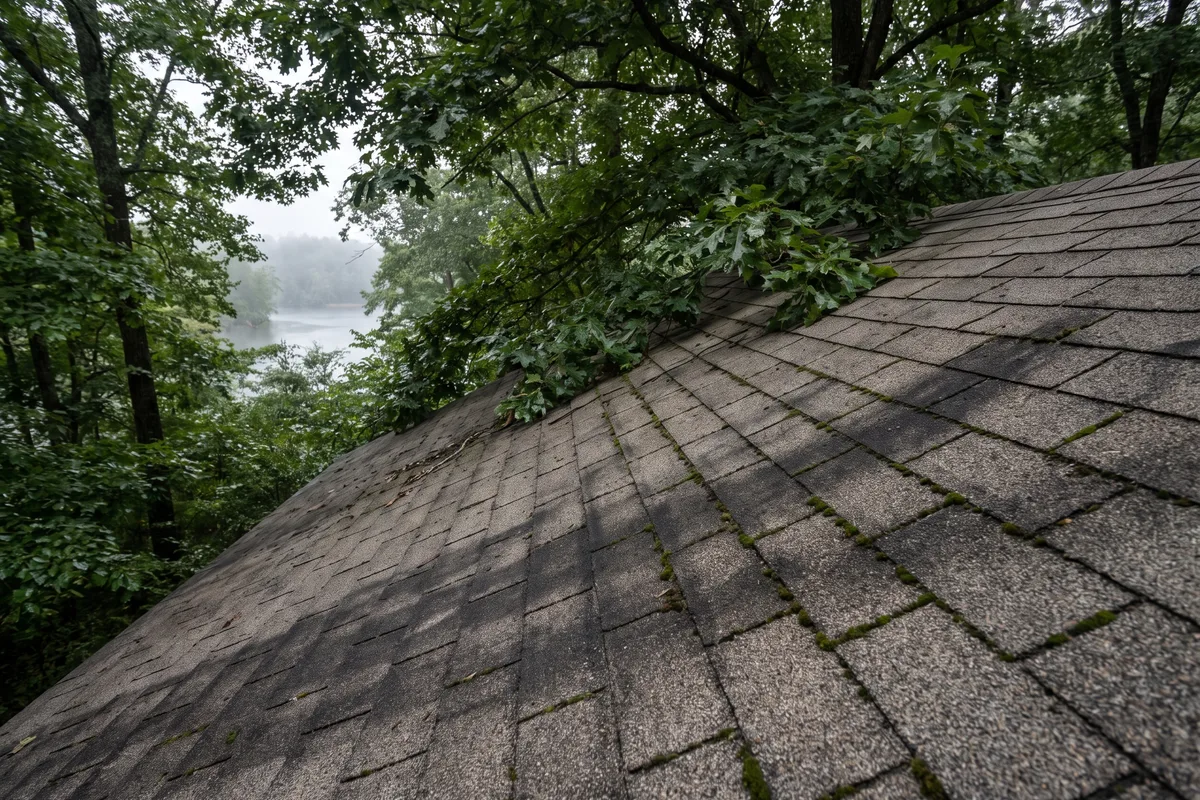
- Note Any Stains or Streaks: Look for dark streaks, which could be algae (common in our humid climate), or signs of rust on your flashing.
2. Inspect Your Gutters:
- Look for Granule Buildup: Check the ground around your downspouts. A large accumulation of shingle granules is a sign that your shingles are aging and deteriorating.
- Check for Clogs: While you’re cleaning your gutters, look for any blockages. Clogged gutters can cause water to back up under your shingles, leading to rot in the roof decking and fascia boards.
3. Check Your Vents and Penetrations:
- Examine the Seals: Use your binoculars to look at the vents and pipes coming out of your roof. Check the rubber “boots” or collars around them. Do they look cracked, brittle, or pulled away from the pipe? These are common failure points.
- Look at the Flashing: Check the metal flashing around your chimney. Does it look rusted, bent, or pulled away from the brick?
4. The Interior Check (In Your Attic):
- Look for Daylight: On a sunny day, go into your attic (without turning on the lights). Look up at the underside of the roof deck. Do you see any pinpricks of light coming through? If you do, you have a hole.
- Check for Stains or Moisture: With a flashlight, scan the rafters and the underside of the decking. Look for any dark water stains, active moisture, or signs of mold and mildew.
- Inspect the Insulation: Is your insulation damp or compacted in any areas? This is a sure sign of a leak.
A Season-by-Season Maintenance Schedule for North Georgia
Our North Georgia climate throws a lot at your roof throughout the year, making a seasonal approach to maintenance a smart move.
Spring (March - May): After the chill of winter and before the severe thunderstorm season really kicks in, spring is a great time for your first thorough check. Pay attention to any potential freeze damage from winter, especially around flashing where ice dams might have formed. This is also when pollen is heavy, and while it won’t damage your roof directly, it can coat surfaces, making it harder to spot issues. Check for displaced shingles from winter winds and clear any early spring leaf debris from your gutters.
Summer (June - August): North Georgia summers are hot and humid, and this is our prime severe thunderstorm season. Before the really intense storms hit, take a look for any signs of heat-related wear on your shingles, like curling or blistering. After any significant storm, especially those with high winds or hail, it’s wise to perform a quick ground-level scan for immediate damage. Keep an eye on your gutters for debris from summer storms.
Fall (September - November): As the leaves start to turn and fall, your gutters will become a prime collection point for debris. Clogged gutters are a leading cause of roof issues, so fall is crucial for keeping them clear. This is also a good time to look for any damage that might have accumulated over the long, hot summer and prepare your roof for the colder months ahead. Check for any loose or missing shingles before winter winds can exacerbate the problem.
Winter (December - February): While you might not be doing much active roof maintenance in the dead of winter, especially if there’s snow or ice, it’s still good to be aware. After any significant snowfall or ice event, once it’s safe and melted, look for any signs of ice damming or dislodged gutters. If you see icicles forming along the eaves, it could indicate poor attic ventilation and heat loss, which can lead to ice dams and water backing up under your shingles.
The True Cost of Skipping Annual Roof Maintenance
It’s easy to put off roof maintenance when everything seems fine. But postponing these crucial checks can turn small, manageable problems into expensive nightmares. Think of it this way: catching a minor leak at year three of its development might mean a simple shingle repair and perhaps replacing a small section of damp plywood. The cost is usually in the hundreds of dollars.
Now, imagine that same leak goes unnoticed until year seven. By then, that small drip could have saturated insulation, rotted multiple sheets of roof decking, compromised rafters, and even led to interior water damage like stained ceilings or damaged drywall. What was once a few hundred dollars can quickly escalate into thousands, encompassing not just roof repairs but also extensive interior restoration. Regular, proactive maintenance and professional roof inspections are truly an investment, protecting your home’s structural integrity and your wallet from unexpected, hefty repair bills.
Common Issues We See in North Georgia Roofs
Living in North Georgia, our roofs face a unique set of challenges. Here are some of the common problems we encounter:
- Heat-Related Shingle Aging: Our humid summers with intense UV exposure can accelerate the aging process of asphalt shingles, leading to premature curling, cracking, and brittleness.
- Algae Streaks from Humidity: Those dark streaks you often see on roofs are usually a type of algae called Gloeocapsa magma. While not immediately damaging, it can retain moisture and make your roof look unsightly, especially in our moist mountain microclimates.
- Hail Damage You Can’t See from the Ground: Hail, even small hail, can bruise or crack shingles without obvious signs from below. These impacts compromise the shingle’s protective layer and can lead to leaks down the road.
- Granule Loss from Intense UV: The sun’s strong rays gradually wear away the protective granules on asphalt shingles. This granule loss exposes the asphalt to further degradation, shortening the lifespan of your roof.
- Ridge-Cap Displacement from Wind: North Georgia can experience significant wind gusts during severe thunderstorms. These winds can lift or dislodge ridge cap shingles, leaving the vulnerable peak of your roof exposed to the elements.
- Gutter Sag from Oak Debris: Our abundant oak trees, along with other deciduous species, shed a lot of leaves and acorns. If gutters aren’t cleaned regularly, the sheer weight of this debris, especially when wet, can cause them to sag, pull away from the fascia, and eventually fail.
- Flashing Failures Around Chimneys: Chimneys are common weak points. The constant expansion and contraction of materials, coupled with our wet weather, can cause flashing to rust, crack, or pull away from the brickwork, creating pathways for water intrusion.
What a Professional Inspection Catches That a Ground-Level Check Can't
While your ground-level checklist is a fantastic start, there’s a limit to what you can truly assess without getting up close and personal with your roof. A professional inspection goes far beyond what binoculars can see. Our experienced team, with 40+ years of combined experience, will actually walk your roof, feeling for soft spots underfoot that indicate rotten decking or structural issues. We’re trained to spot subtle hail-strike patterns that are invisible from the ground, or to identify the early signs of granule loss that signal shingle deterioration.
Inside your attic, we use specialized moisture meters to detect hidden dampness in the decking that might not yet be visible as a stain. We meticulously examine flashing details around chimneys, skylights, and vents, ensuring every seal is tight and secure. These hands-on, detailed assessments are critical for identifying potential problems before they escalate into costly repairs, giving you a complete and accurate picture of your roof’s health.
When to Call a Professional
This DIY checklist is a great way to keep a general eye on your roof’s health. However, if you notice any of the issues listed above, or if your roof is over 15 years old, it’s crucial to schedule a professional roof inspection.
A certified inspector can safely get on your roof to perform a detailed, hands-on assessment, catching subtle issues you can’t see from the ground and giving you a complete picture of your roof’s condition. Think of it as an affordable insurance policy against future emergencies.
Has it been a while since your roof was professionally inspected? Contact True Hand Roofing to schedule your free, no-obligation inspection today. We serve homeowners across North Georgia, including Holly Springs, Cleveland, and the surrounding communities.