
If you’re a homeowner in North Georgia and your roof is showing its age, one of the first questions on your mind is probably, “How much is this going to cost me?” It’s a fair question — and unfortunately, the answer is never as simple as a single number. Roof replacement costs depend on everything from the materials you choose to the steepness of your roof to where you live in the state.
This guide breaks down real-world 2026 pricing for roof replacements across North Georgia. Whether you’re in Canton, Blue Ridge, or anywhere in between, you’ll get a clear picture of what to expect — and how to make the smartest investment for your home.
At True Hand Roofing, we believe in transparent pricing with no hidden fees. Our team brings 40+ years of combined roofing experience, and we provide free, detailed estimates for every project. Let's walk through the numbers.
Average Roof Replacement Costs in North Georgia (2026)
The cost of a new roof varies significantly based on the material you choose. Here’s what homeowners across North Georgia are paying in 2026 for a typical 2,000-square-foot home:
| Roofing Material | Cost per Sq Ft (Installed) | Total (2,000 sq ft home) | Lifespan |
|---|---|---|---|
| Three-Tab Asphalt Shingles | $3.50 – $5.50 | $8,000 – $12,000 | 15 – 20 years |
| Architectural (Dimensional) Shingles | $4.50 – $7.00 | $10,000 – $15,000 | 25 – 30 years |
| Designer / Premium Shingles | $6.00 – $9.00 | $14,000 – $20,000 | 30 – 50 years |
| Standing Seam Metal | $8.00 – $14.00 | $15,000 – $25,000 | 40 – 70 years |
Ranges reflect 2026 installed pricing across North Georgia for a typical 2,000 sq ft home. Your total depends on roof size, pitch, tear-off, and structural condition — detailed below.
Three-Tab Asphalt Shingles: $8,000 - $12,000 ($3.50 - $5.50 per sq ft)
Three-tab shingles are the most budget-friendly option on the market. They offer a clean, flat appearance and reliable protection for 15-20 years. While they lack the dimensional look and wind resistance of higher-end products, three-tab shingles remain a solid choice for homeowners on a tight budget or those planning to sell in the near future. They carry standard warranties and perform adequately in Georgia’s climate when properly installed.
Architectural (Dimensional) Shingles: $10,000 - $15,000 ($4.50 - $7.00 per sq ft)
Architectural shingles are by far the most popular choice in North Georgia — and for good reason. These thicker, multi-layered shingles create a more textured, dimensional appearance that mimics the look of wood shake or slate. Beyond aesthetics, architectural shingles deliver superior wind resistance (rated up to 130 mph), better impact resistance against hail, and a longer lifespan of 25-30 years. Brands like GAF Timberline and Owens Corning Duration are excellent options. For most homeowners, architectural shingles hit the sweet spot of value, durability, and curb appeal.
Designer/Premium Shingles: $14,000 - $20,000 ($6.00 - $9.00 per sq ft)
Premium shingles take aesthetics and performance to the next level. Products like GAF Grand Canyon or Owens Corning Berkshire feature ultra-thick profiles, vivid color blends, and enhanced warranties — often 50 years or more on materials. These shingles are designed for homeowners who want their roof to be a standout feature of the home. They offer the best impact and algae resistance available in the asphalt category. If you’re planning to stay in your home long-term and want the best asphalt has to offer, premium shingles are worth the investment.
Standing Seam Metal Roofing: $15,000 - $25,000 ($8.00 - $14.00 per sq ft)
Metal roofing has become increasingly popular in North Georgia, and for good reason. Standing seam metal roofs last 40-70 years, require very little maintenance, and are exceptionally durable against wind, hail, and fire. They also reflect solar heat, which can reduce cooling costs in Georgia’s hot summers. The higher upfront cost pays for itself over time through longevity and lower maintenance. Metal is an especially smart choice for mountain homes in areas like Blue Ridge and Blairsville, where steep pitches and heavy snowfall make durability critical.
Roof Replacement Cost by Home Size
Material choice sets your price per square foot; the size of your roof sets how many square feet you’re paying for. Roofers measure the actual roof surface — not your home’s living space — so a 2,000-square-foot home with a steep, cut-up roofline can carry more roofing area than a larger home with a simple gable. The table below estimates total cost using architectural shingles (the most popular choice in North Georgia); three-tab runs lower and metal runs higher in proportion to the per-square-foot figures above.
| Home Size (Living Area) | Approx. Roof Area | Architectural Shingle Total |
|---|---|---|
| 1,000 sq ft | 1,200 – 1,500 sq ft | $6,500 – $10,000 |
| 1,500 sq ft | 1,700 – 2,100 sq ft | $9,000 – $14,500 |
| 2,000 sq ft | 2,200 – 2,800 sq ft | $11,000 – $17,500 |
| 2,500 sq ft | 2,800 – 3,400 sq ft | $14,000 – $22,000 |
| 3,000 sq ft | 3,400 – 4,000 sq ft | $16,500 – $26,000 |
Roof area assumes a moderate pitch and standard overhangs. Steep mountain pitches (8/12 and up) add 15–25% because of the extra labor and safety equipment required.
A quick way to sanity-check any estimate: divide the total by your roof’s square footage and confirm the result lands inside the per-square-foot band for your chosen material. If a bid comes in far below the range, ask what’s being left out — underlayment grade, tear-off, flashing replacement, and warranty coverage are the line items most often trimmed to hit a low headline number.
What's Included in Your Roof Replacement Price
A roof replacement isn’t just shingles. A complete, code-compliant system has several components, and understanding where your money goes makes it much easier to compare two estimates fairly. Here’s roughly how a typical asphalt-shingle replacement in North Georgia breaks down:
| Cost Component | Share of Total | What It Covers |
|---|---|---|
| Materials | ~40% | Shingles, underlayment, ice-and-water shield, drip edge, flashing, ridge vent, and fasteners |
| Labor | ~35% | The crew that removes the old roof and installs the new system to manufacturer spec |
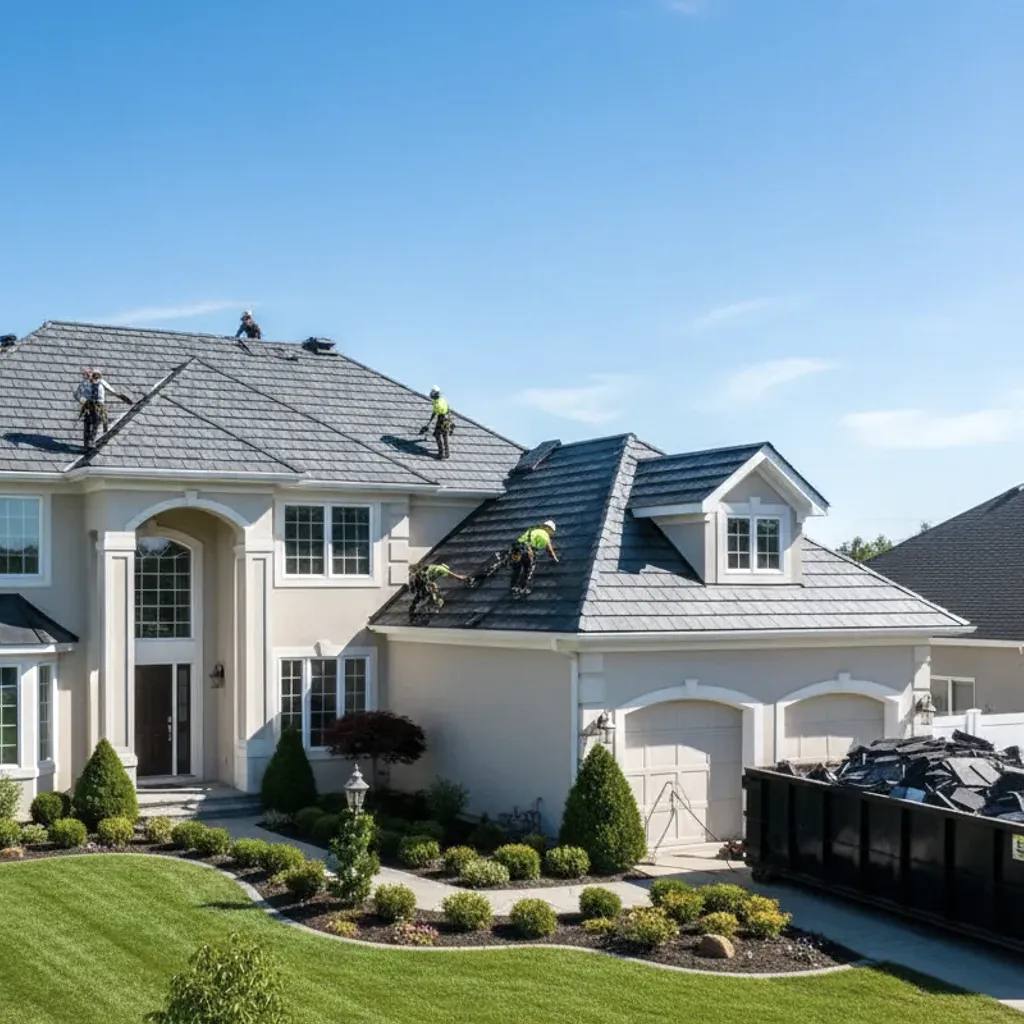
| Tear-Off & Disposal | ~10% | Stripping the old roof and hauling debris to the landfill (dumpster and dump fees) |
| Permits, Overhead & Warranty | ~15% | County permit, insurance, workmanship warranty, and job supervision |
The two components homeowners overlook are the ones under the shingles: underlayment and flashing. Underlayment is the water-resistant barrier between your shingles and the roof deck, and ice-and-water shield in the valleys and along the eaves is what stops wind-driven rain from getting in. Flashing — the metal that seals around chimneys, skylights, valleys, and wall intersections — is where the majority of roof leaks actually start. A bid that reuses old flashing or skips the upgraded underlayment will always look cheaper on paper, but it’s trimming exactly the parts of the system that determine whether your roof leaks in five years.
This is why the lowest bid often turns out to be the most expensive choice over time. A roof installed with builder-grade materials and reused flashing might save you $1,500 up front and cost you a premature repair — or a full re-do — long before a properly installed roof would have needed attention. When you compare estimates, read past the total and look at the line items: same shingle grade, full tear-off, new flashing, upgraded underlayment, and a written workmanship warranty are what make two numbers actually comparable.
Factors That Affect Your Roof Replacement Cost
The material you choose is just one piece of the pricing puzzle. Several other factors directly impact your final cost:
Roof Size (Square Footage)
Roofing is priced per “square” — a 10x10-foot section (100 square feet). A 2,000-square-foot home typically has a roof area of 2,200-2,800 square feet once you account for pitch and overhangs. Larger homes with more complex footprints naturally cost more. Your roofer will measure the actual roof surface area, not your home’s living space, to calculate cost.
Roof Pitch and Steepness
Steeper roofs are more expensive to replace. Why? They require more safety equipment, take longer to work on, and increase labor costs. A walkable 4/12 pitch is standard pricing. Once you get to 8/12 or steeper — common on many North Georgia mountain homes — expect a 15-25% premium due to the additional labor and safety measures required.
Number of Layers to Remove
If your existing roof has one layer of shingles, tear-off is straightforward. But if a previous owner installed a second layer over the first, the tear-off becomes significantly more labor-intensive and adds to disposal costs. Georgia building code allows a maximum of two layers, but we always recommend a complete tear-off down to the deck so we can inspect for any hidden water damage or rotted decking.
Structural Repairs
Once the old shingles are removed, your crew may discover rotted decking, damaged rafters, or inadequate ventilation. These repairs are essential — you cannot install a new roof on a compromised structure. Minor decking replacement (a few sheets of plywood) adds $500-$1,500. More extensive structural work can add several thousand dollars, but it’s a critical investment in the longevity of your new roof.
Accessibility
If your home is on a steep lot, surrounded by dense trees, or difficult for delivery trucks to reach, expect a slight premium. Material delivery and debris removal are harder in tight spaces. This is especially common in mountainous areas of Fannin and Gilmer counties.
Permits and Code Requirements
Most Georgia counties require a building permit for a full roof replacement. Permit costs vary by county — typically $150-$400. Your contractor should handle the permitting process, but the cost is factored into your estimate.
North Georgia-Specific Cost Factors
Roofing costs in North Georgia aren’t identical to costs in Atlanta or coastal Georgia. The mountain terrain of our service area introduces unique considerations:
Mountain Terrain and Steeper Pitches
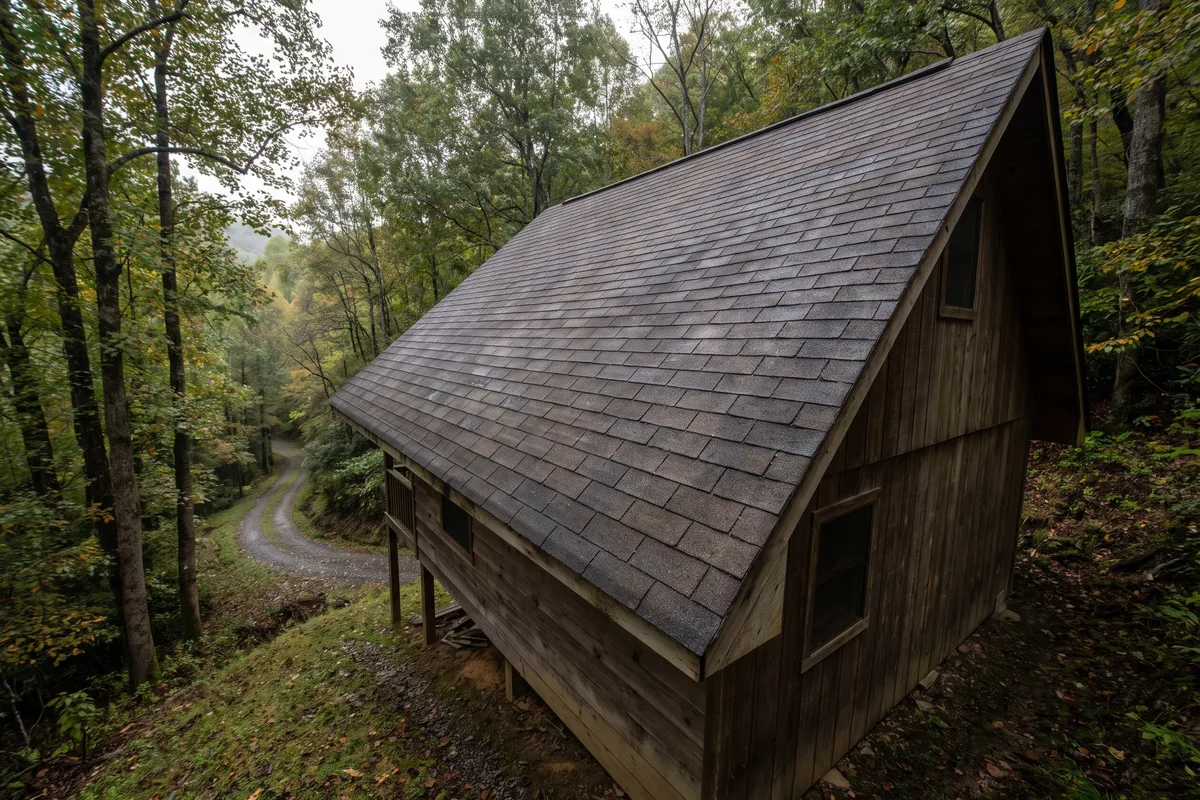
Homes in the North Georgia mountains — from Ellijay to Dahlonega — tend to have steeper roof pitches than homes in flatter parts of the state. Steeper pitches shed rain and snow more effectively, but they increase both material and labor costs. Many mountain homes also feature complex rooflines with multiple valleys, dormers, and ridges that add complexity to the installation.
Elevation and Weather Patterns
North Georgia experiences more severe weather than the rest of the state. Higher elevations mean heavier ice and snow loads in winter, stronger wind gusts, and more frequent hailstorms. These conditions make material choice especially important. Investing in impact-rated shingles or metal roofing can save significant money over time by reducing storm damage repairs.
County-to-County Permit Variations
Permit costs and requirements vary across North Georgia counties. Cherokee County (which includes Canton and Ball Ground) has well-defined permitting processes with moderate fees. Fannin County (Blue Ridge) and Gilmer County (Ellijay) have different fee structures and timelines. An experienced local contractor navigates these differences seamlessly.
Seasonal Demand
Like most of the Southeast, North Georgia experiences peak roofing demand in late spring and summer — often driven by storm damage season. Scheduling your replacement in fall or early winter can sometimes result in better availability and competitive pricing.
Typical Cost by North Georgia City
The table below shows representative total ranges for a 2,000-square-foot home with architectural shingles across the communities we serve. The spread is driven mostly by roof pitch and access, not by ZIP code — the steeper, more wooded mountain markets sit at the higher end because those roofs take longer and need more safety setup.
| City / Area | County | Typical Range (2,000 sq ft, architectural) |
|---|---|---|
| Canton | Cherokee | $11,000 – $16,000 |
| Ball Ground | Cherokee | $11,000 – $16,000 |
| Jasper | Pickens | $11,500 – $17,000 |
| Dawsonville | Dawson | $11,500 – $17,000 |
| Ellijay | Gilmer | $12,500 – $18,000 |
| Blue Ridge | Fannin | $12,500 – $18,000 |
| Dahlonega | Lumpkin | $12,500 – $18,000 |
Representative 2026 ranges for planning only — a free on-site measurement is the only way to price your specific roof. Metal and premium shingles run higher; three-tab runs lower.
What to Expect: The Roof Replacement Timeline
Understanding the timeline helps you plan and set realistic expectations. Here’s the typical process from start to finish:
- Professional Inspection (Day 1): A thorough, hands-on inspection of your existing roof identifies all damage, structural concerns, and ventilation issues. We take detailed photos and measurements. This inspection is always free at True Hand Roofing.
- Detailed Estimate (1-3 days): After the inspection, you'll receive a written estimate with a full scope of work, material options, pricing, and warranty details. No surprises, no hidden fees.
- Material Selection: Choose your shingle style, color, and brand. We'll walk you through options that fit your budget, home style, and performance needs.
- Permits (1-2 weeks): We handle all permitting with your local county office.
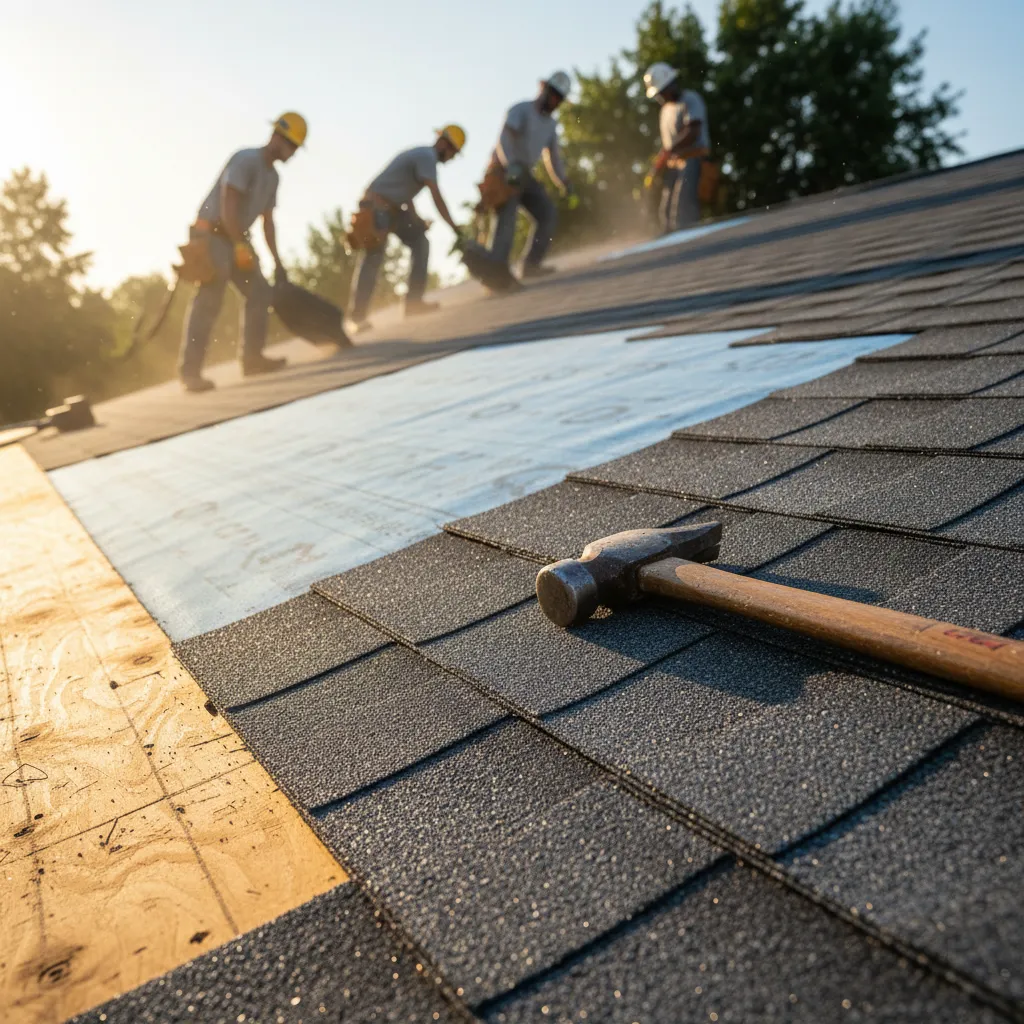
- Installation (1-2 days): Most residential roof replacements are completed in 1-2 days. Larger or more complex homes may take 3-4 days. We protect your landscaping, thoroughly clean up all debris, and run magnetic sweeps for stray nails.
- Final Walkthrough: We walk the property with you to ensure everything meets your expectations and ours. You'll receive all warranty documentation and our direct contact information for any future questions.
Signs You Need a Roof Replacement
Not sure if you need a full replacement or just a repair? Here are the warning signs that your roof is at or near the end of its useful life:
- Age: Asphalt shingle roofs last 20-30 years depending on quality. If yours is in that range, it's time for a professional assessment.
- Widespread Granule Loss: Finding excessive granules in your gutters or downspout splash areas means your shingles are deteriorating. Small amounts are normal for new roofs, but heavy granule loss on an older roof is a red flag.
- Multiple or Recurring Leaks: One leak can often be repaired. But if leaks are appearing in different areas of your home, the underlying roofing system is failing.
- Sagging Roof Deck: A visible sag in your roofline is a serious structural concern. This means the decking — or in some cases the rafters — may be compromised by moisture damage.
- Daylight Through Roof Boards: Go into your attic during the day. If you can see pinpoints of light coming through the roof deck, water is getting in too.
- Rising Energy Bills: A failing roof loses its ability to insulate effectively. If your heating and cooling costs are climbing without an obvious explanation, poor roof performance could be the cause.
- Curling, Cracking, or Missing Shingles: Individual missing shingles can be replaced. But if curling or cracking is widespread across large sections of the roof, patching won't solve the underlying problem.
Repair vs. Replace: Making the Right Decision
This is one of the most common questions we get, and the honest answer depends on your specific situation.
When repair makes sense: Your roof is less than 15 years old, the damage is isolated to a small area (a few missing shingles, a single leak around a vent or flashing), and the rest of the roof is in good condition. Repairs typically cost $300-$1,500 depending on the scope. A targeted repair can extend the life of an otherwise healthy roof by years.
When replacement is the smarter investment: Your roof is over 20 years old, damage affects more than 30% of the surface, you're spending more than $1,000-$2,000 per year on recurring repairs, or you're seeing signs of structural deck damage. At that point, continuing to patch is throwing good money after bad. A full replacement gives you a fresh system with a new warranty, better energy efficiency, and decades of protection.
We'll always give you an honest recommendation. If a repair will solve the problem, we'll tell you. If replacement is the right call, we'll explain exactly why and walk you through your options.
Financing and Insurance Options
A new roof is a significant investment, but there are several ways to make it manageable:
Insurance Claims for Storm Damage
If your roof was damaged by hail, wind, or a fallen tree, your homeowners insurance likely covers part or all of the replacement cost. Our team has extensive experience working with insurance companies. We provide thorough documentation, meet with adjusters on-site, and help ensure your claim reflects the full scope of damage. Read our complete guide to filing a roof insurance claim in Georgia for step-by-step instructions.
The Value of a Free Inspection
Whether you’re planning ahead or dealing with storm damage, a professional inspection is the best place to start. It gives you a clear, documented picture of your roof’s condition — no guesswork, no sales pressure. Many homeowners are surprised to find storm damage they didn’t know existed, which can be covered by insurance.
Every roof inspection from True Hand Roofing is free, thorough, and comes with a written report you can use for insurance claims, home sales, or your own peace of mind.
Get Your Free Roof Replacement Estimate
Every roof is different, and the best way to know exactly what your replacement will cost is to get a professional estimate tailored to your home. At True Hand Roofing, we provide detailed, transparent quotes with no pressure and no hidden fees.
Ready to get started? Visit our roof replacement service page to learn more about our process, or get a quick ballpark with our free instant estimate tool. You can also call us directly at (706) 455-9009 to schedule your free inspection.
We proudly serve homeowners across North Georgia, including Canton, Blue Ridge, Ellijay, Jasper, Dawsonville, Ball Ground, and the surrounding communities. Your roof protects everything underneath it — let's make sure it's up to the job.